Moody Living Room Ideas for a More Personal Home
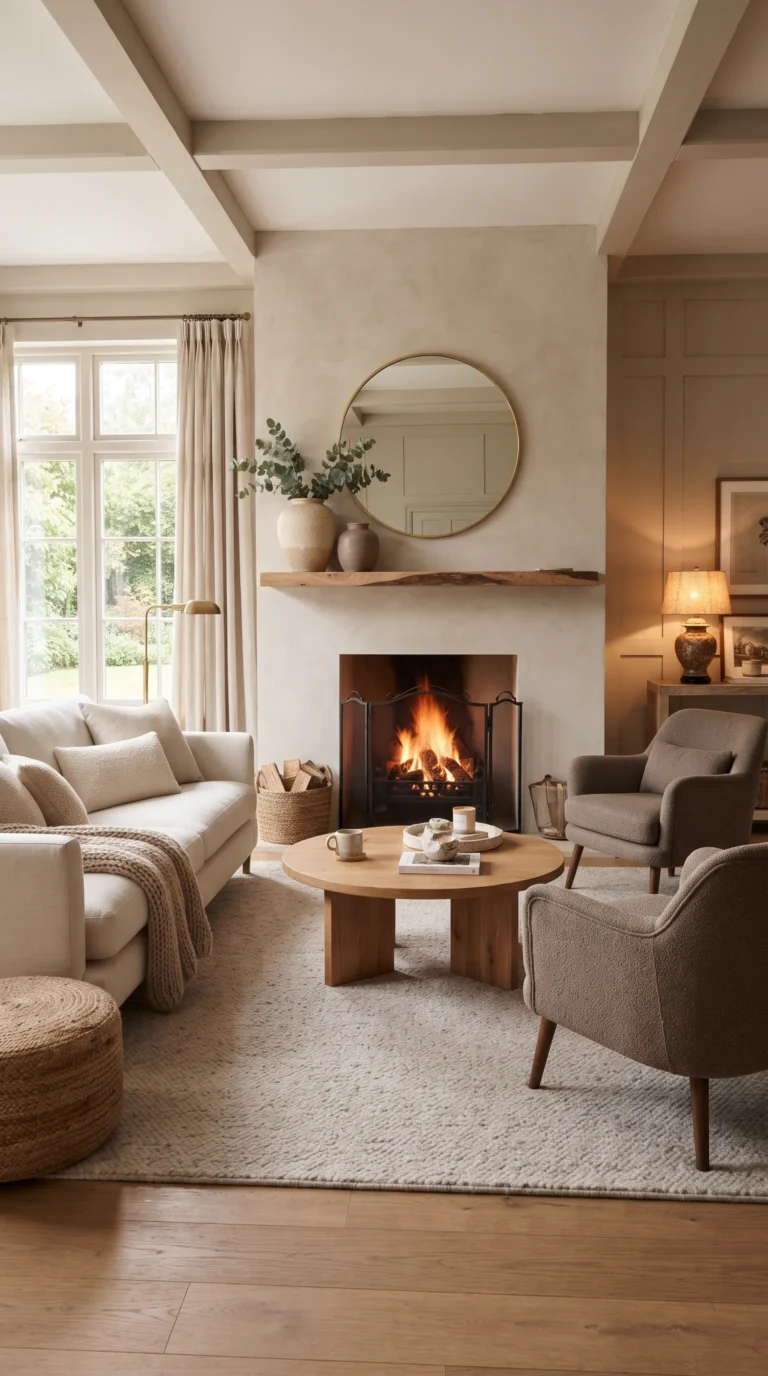
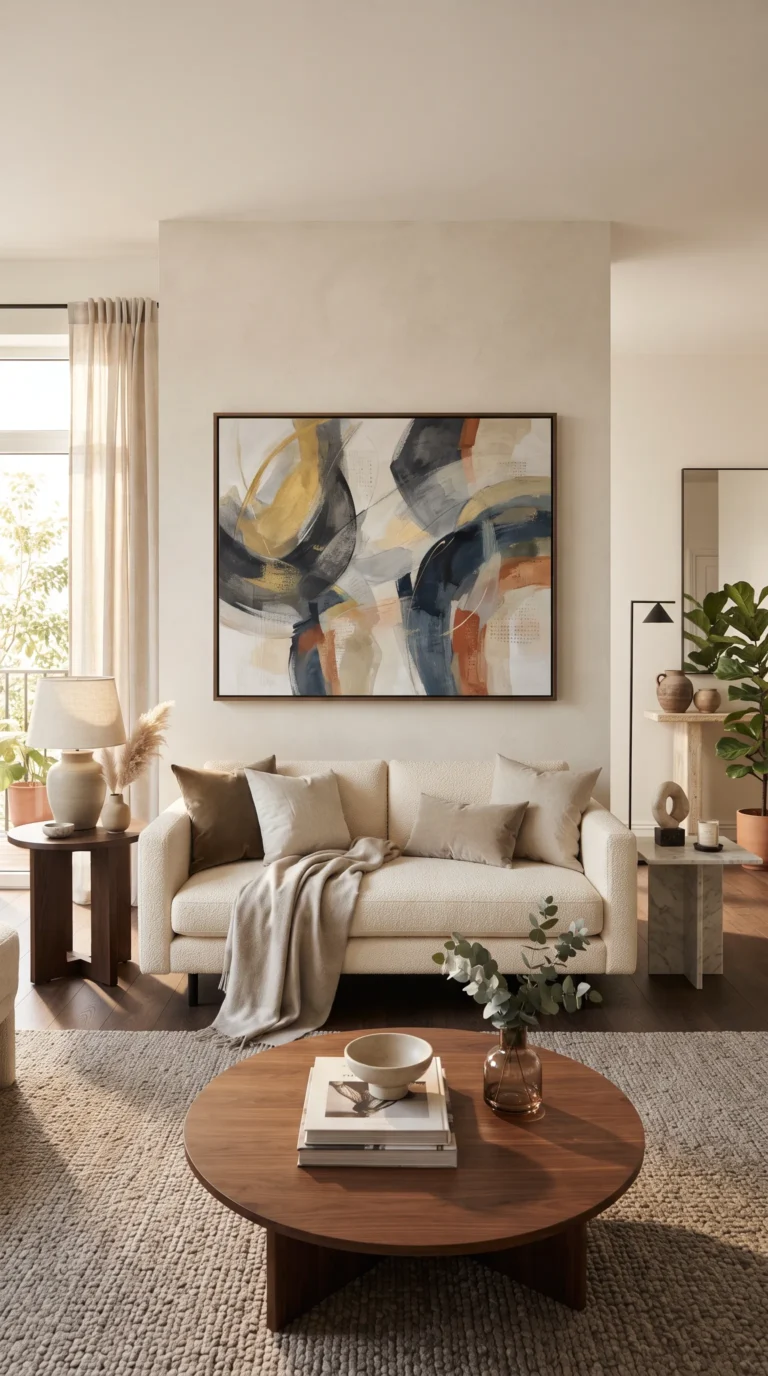
Stacy and Home shares these moody living room ideas to help you create a space that feels warm, personal, and full of character. A moody living room does not have to feel dark or uncomfortable. The right colors, textures, lighting, and personal details can create a cozy atmosphere with plenty of visual depth.
Deep colors, warm wood, vintage pieces, soft fabrics, and layered lighting can all contribute to a moody look. You can make the style dramatic or keep it subtle by using darker accents against a lighter foundation.
1. Create a Moody Living Room Color Foundation
Color is one of the easiest ways to establish a moody atmosphere. You do not need to paint every wall a dark shade. A few carefully chosen colors can change the feeling of the entire room.
Paint the Walls a Deep Color
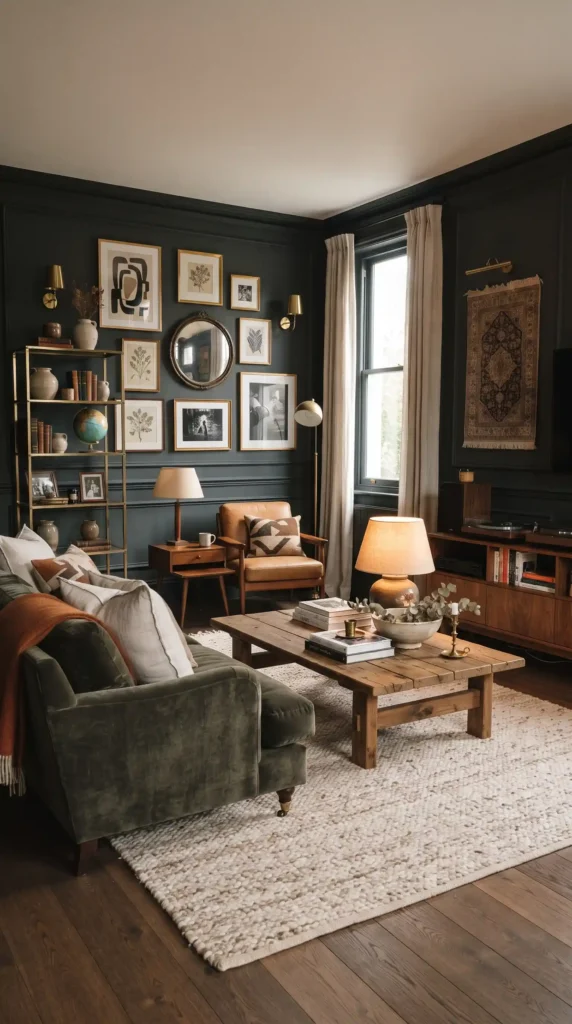
Deep green, charcoal, navy, brown, or warm gray can create a dramatic backdrop for your living room. Dark walls also make lighter furniture, artwork, and decorative objects stand out.
If you are unsure about using a very dark color throughout the room, try it on one feature wall first.
Use Warm Neutrals for a Softer Moody Look
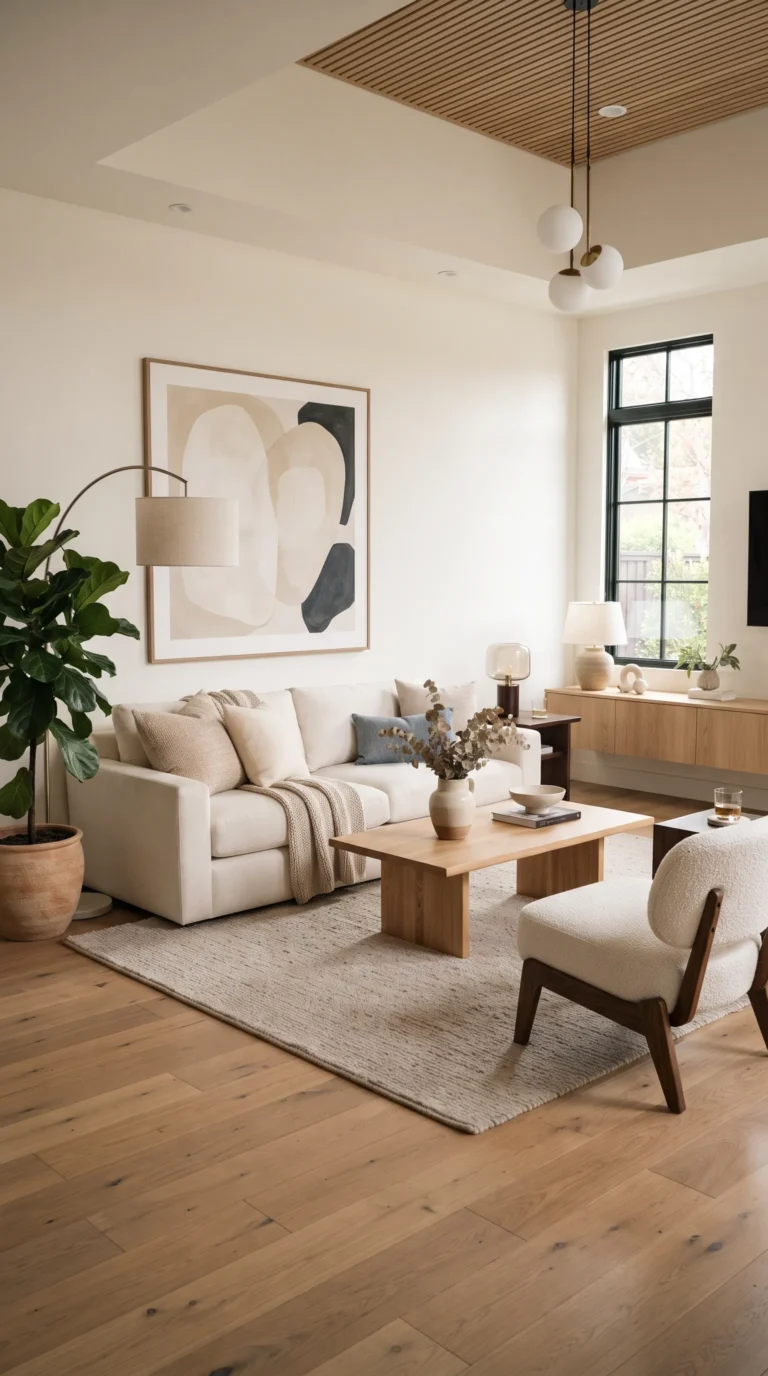
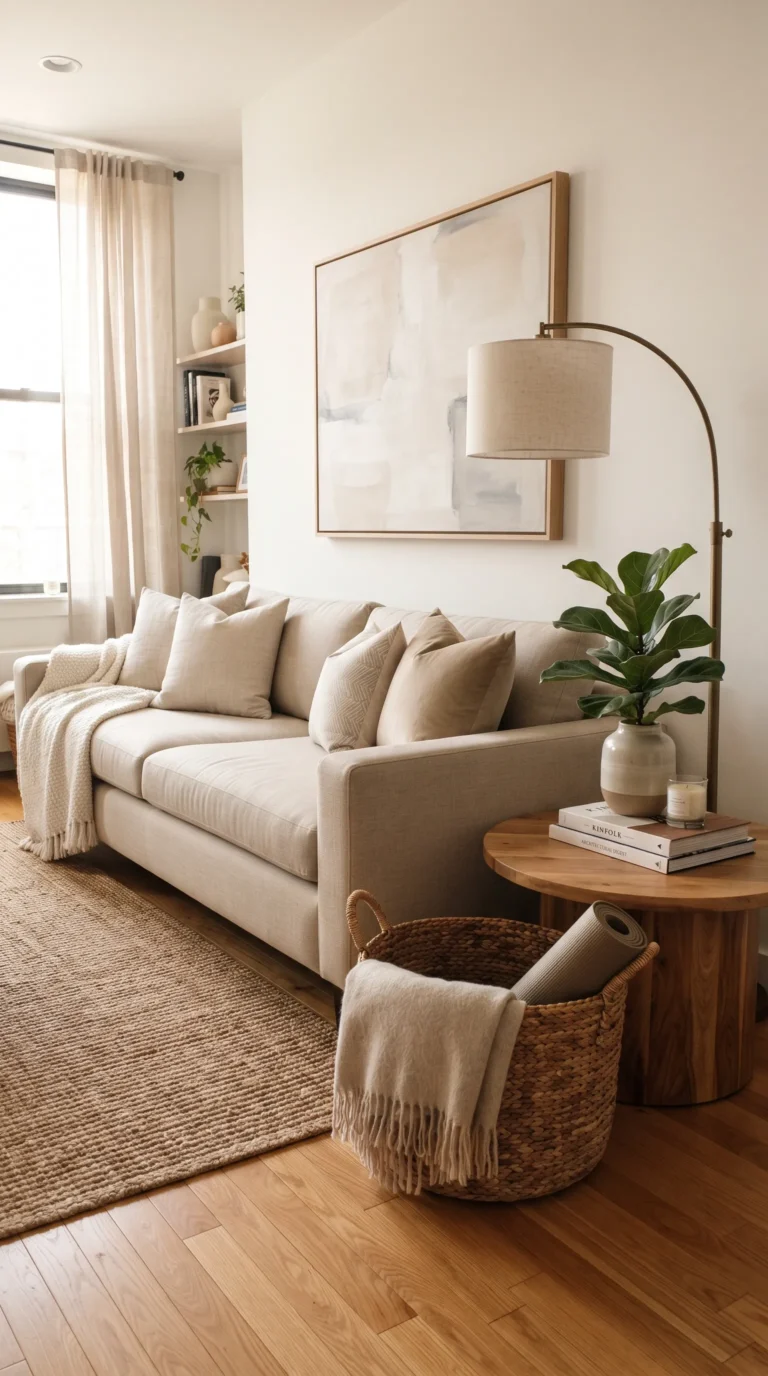
Moody rooms do not have to rely only on dark colors. Warm beige, taupe, cream, mushroom, and brown can create a quieter version of the style.
Layer several warm neutral shades to give the room depth without making it feel too dark.
Add Dark Furniture for Contrast
A dark sofa, coffee table, accent chair, or cabinet can help establish the moody aesthetic. Pair darker furniture with warm wood, cream textiles, or lighter artwork to maintain balance.
Choose comfortable pieces that make the room feel inviting rather than overly formal.
2. Add Rich Textures to Make the Room Feel Cozy
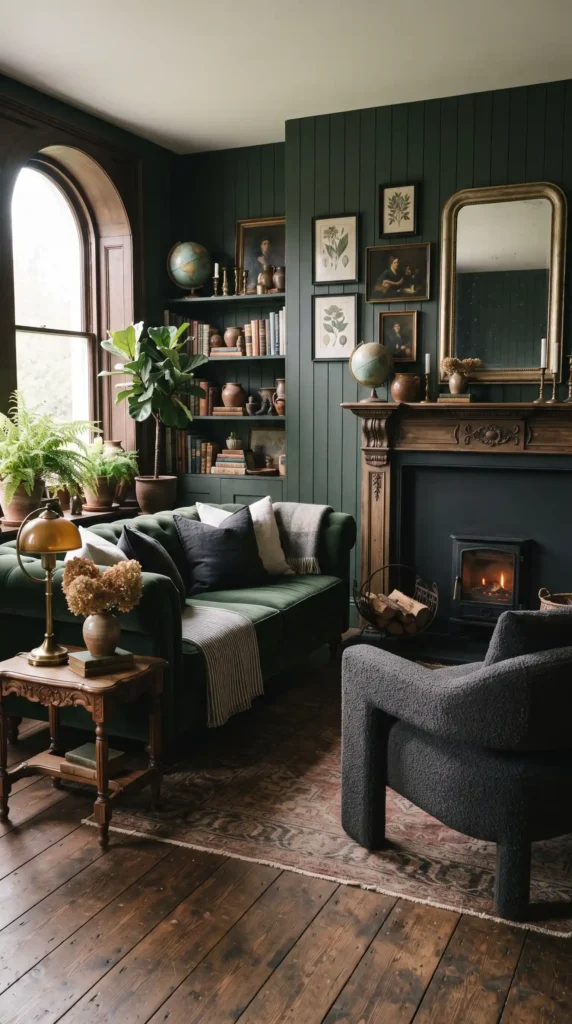
Texture is especially important in a moody living room. Different materials prevent dark colors from looking flat and create a warmer atmosphere.
Layer Velvet and Soft Fabrics
Velvet cushions, upholstered chairs, curtains, and throws can add softness and visual depth. Deep green, burgundy, navy, brown, or rust-colored textiles work particularly well.
You do not need velvet everywhere. One or two pieces can be enough to introduce the texture.
Add a Plush Area Rug
A large rug can make a moody living room feel more comfortable and connected. Choose a rug with subtle patterns or rich neutral colors that complement the rest of the room.
A textured rug can also help define the seating area.
Use Natural Wood Accents
Wood can warm up a room with dark walls or furniture. Try a wooden coffee table, side table, shelves, or decorative objects.
Choose warm or medium wood tones if you want the room to feel cozy and grounded.
3. Create a Moody Living Room With Layered Lighting
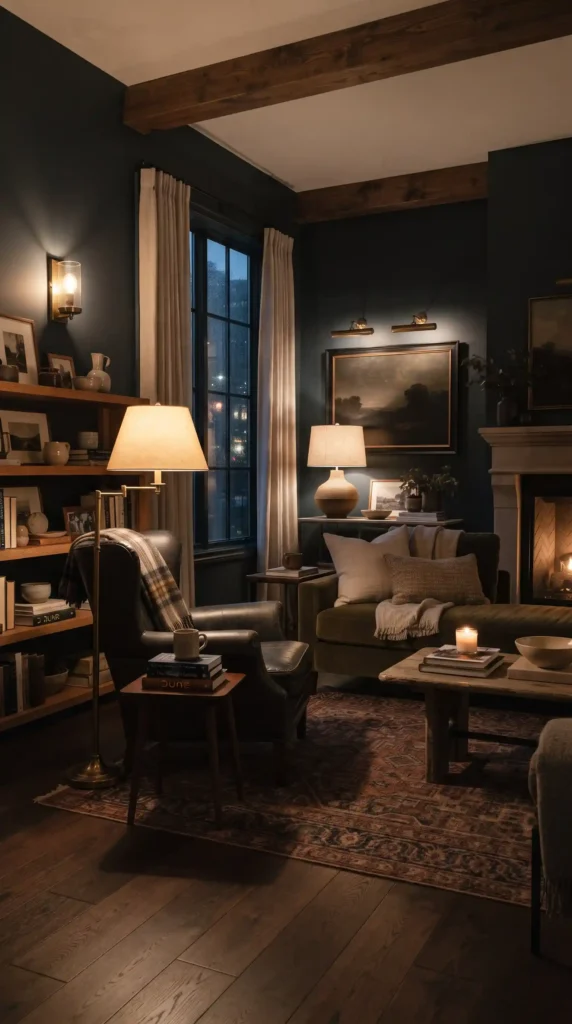
Lighting can completely change the appearance of dark colors. Instead of relying on one bright ceiling fixture, use several light sources around the room.
Add Warm Table Lamps
Table lamps provide soft pools of light that make a moody room feel more intimate. Place them on side tables, consoles, or shelves.
Choose lamps with warm bulbs and shades that diffuse the light gently.
Use Floor Lamps for Height
A floor lamp can add both light and vertical interest. Place one beside a sofa or reading chair to create a cozy spot for reading or relaxing.
Choose a design that works with the room’s overall style.
Add Wall Sconces
Wall sconces can provide another layer of lighting while adding architectural interest. Use them beside artwork, a fireplace, or a reading area.
Warm lighting is especially useful when you want dark walls to feel inviting rather than heavy.
4. Personalize the Moody Living Room With Artwork and Decor
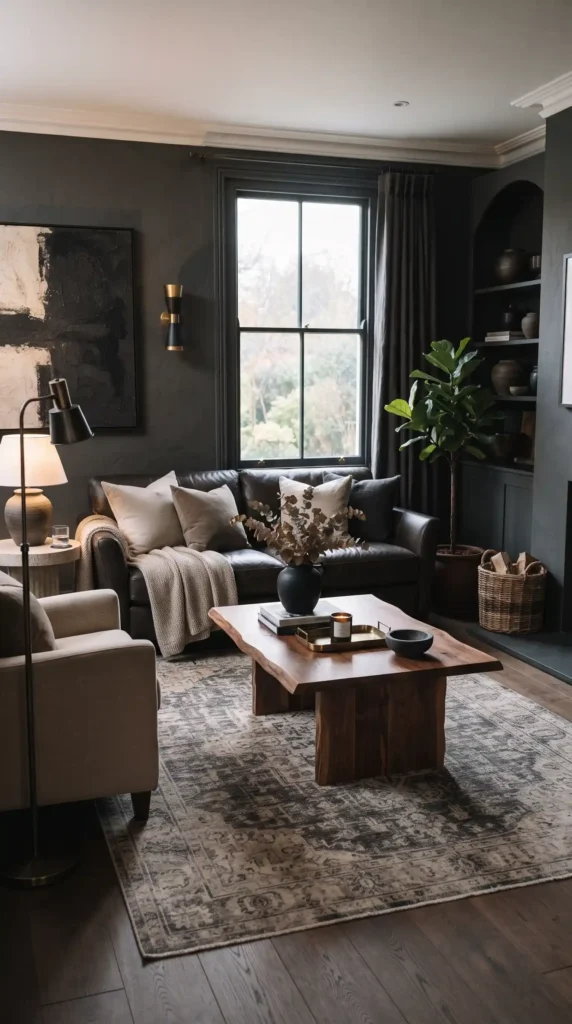
A moody living room should feel personal rather than like a staged space. Artwork, books, collected objects, and meaningful pieces can give the room character.
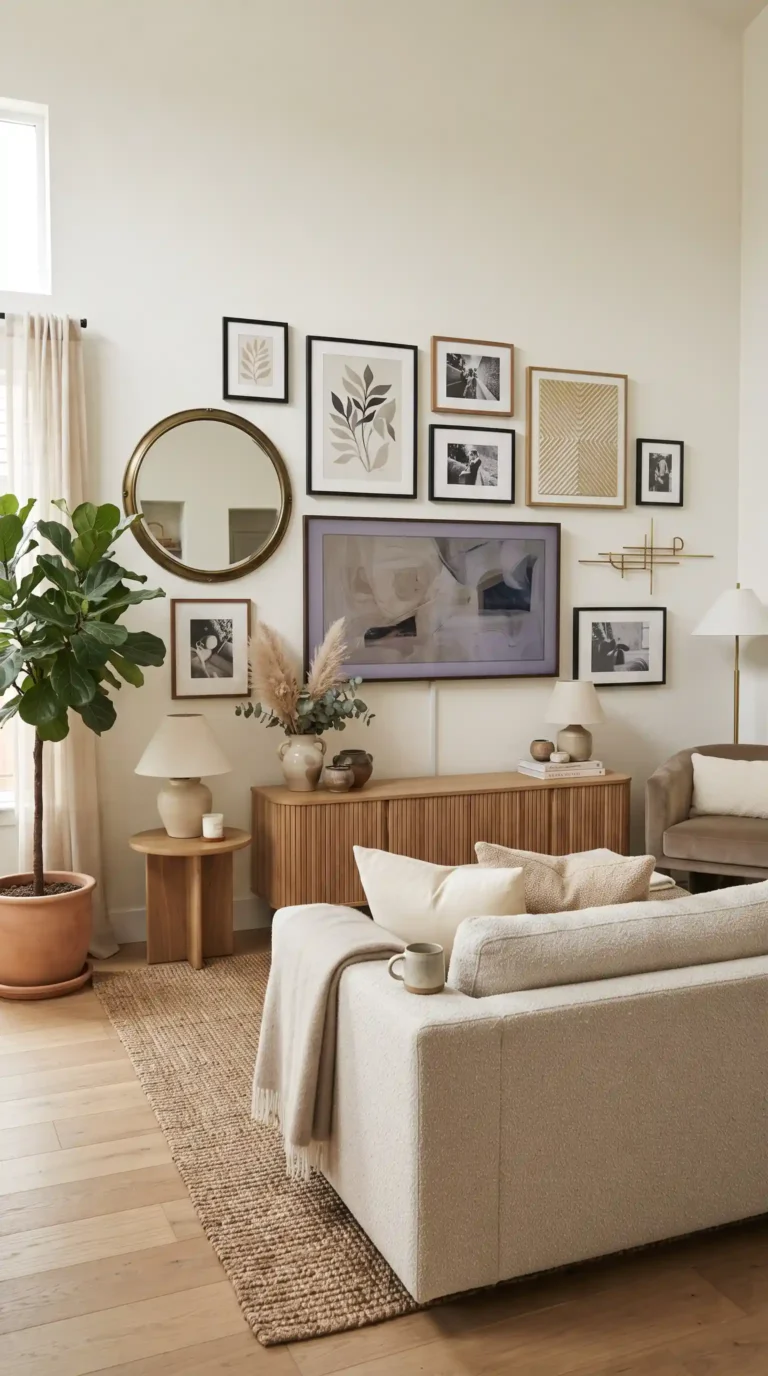
Create a Moody Gallery Wall
Combine vintage-inspired artwork, photography, abstract prints, and personal images in a coordinated display.
Dark wood, black, or antique-style frames can strengthen the moody atmosphere while keeping the collection visually connected.
Display Books and Collected Objects
A stack of books, pottery, candles, vintage objects, and small sculptures can make shelves and tables feel more personal.
Choose pieces that you genuinely enjoy rather than filling the room with random accessories.
Add Moody Botanical Artwork
Botanical prints featuring dark greens, earthy tones, or detailed plant illustrations can work beautifully with a moody interior.
Pair the artwork with real greenery to introduce a natural element.
5. Try Different Moody Living Room Styles
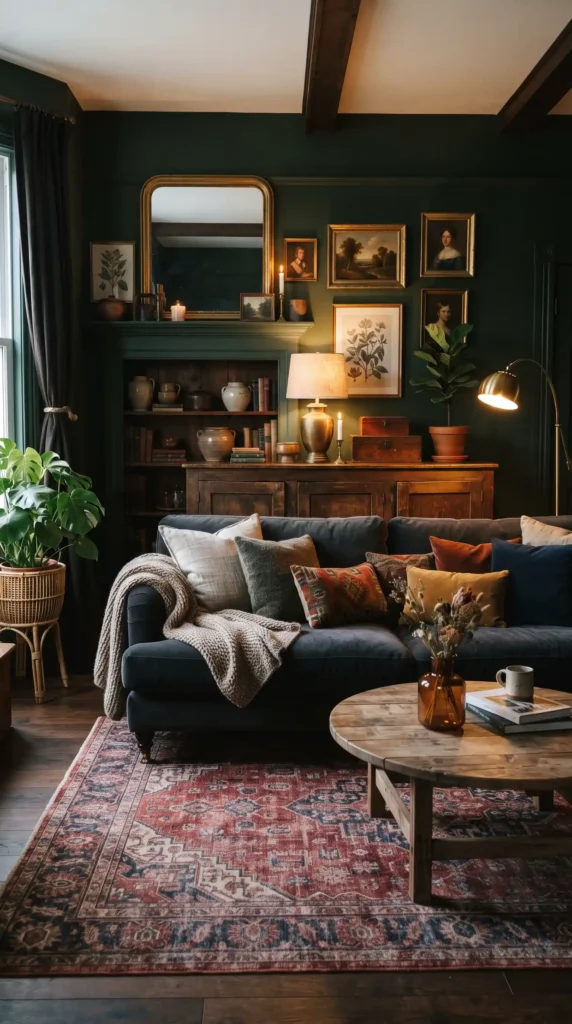
There are many ways to interpret a moody living room. Your choice of colors, furniture, and accessories can make the room feel modern, vintage, rustic, or eclectic.
Create a Dark Cottage-Style Living Room
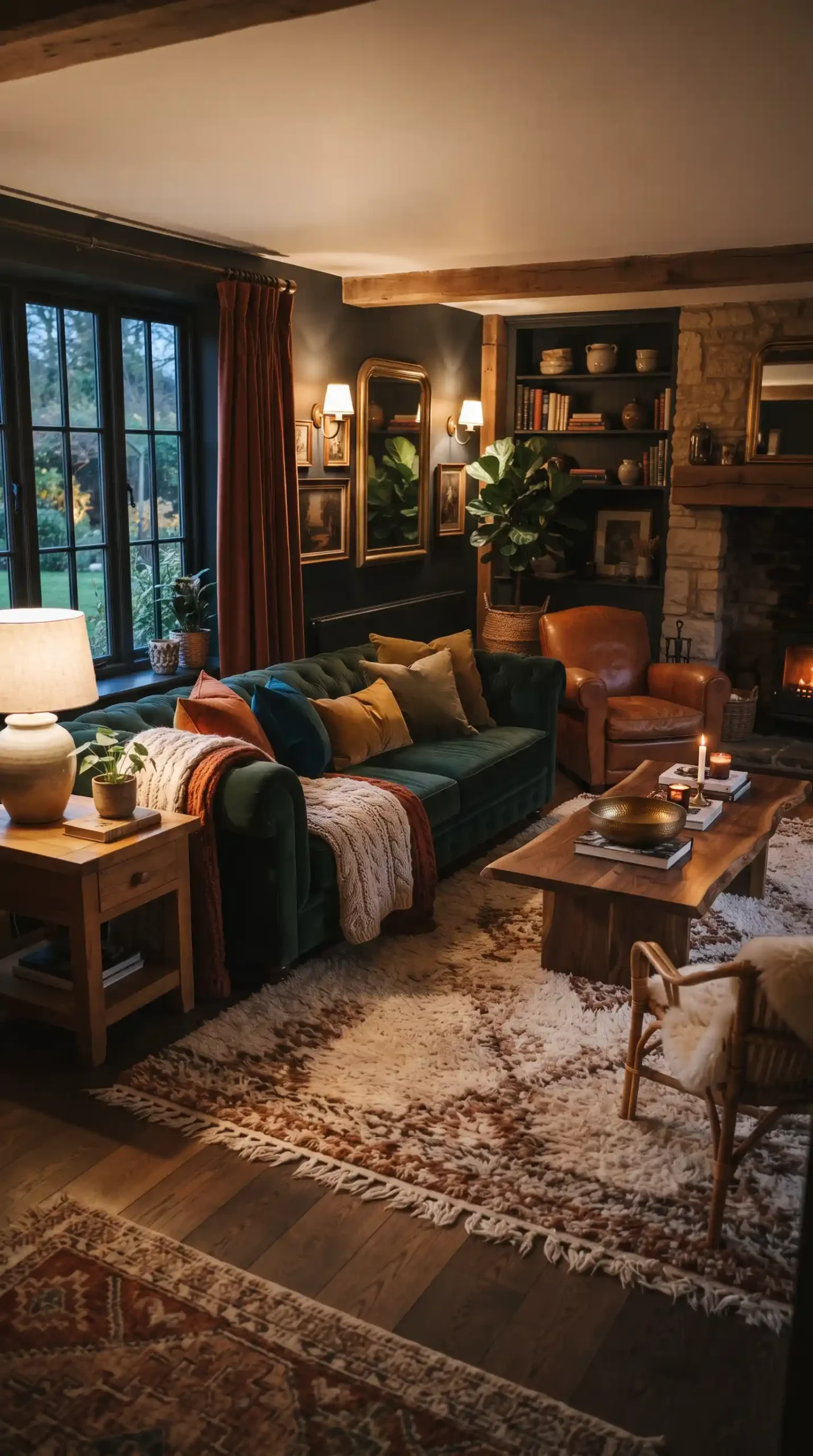
Use deep green or brown walls, vintage furniture, floral artwork, warm wood, and layered textiles for a cozy cottage-inspired look.
Add old books, ceramic pieces, and soft lighting to create a collected atmosphere.
Try a Modern Moody Living Room
For a modern approach, use charcoal, black, deep brown, or navy with simple furniture and clean lines.
Keep the décor limited and focus on strong materials, lighting, and a few statement pieces.
Create a Moody Vintage Living Room
Mix dark colors with antique-style furniture, old photographs, patterned rugs, and vintage artwork.
The room should feel collected rather than perfectly matched. A few different finishes can add character.
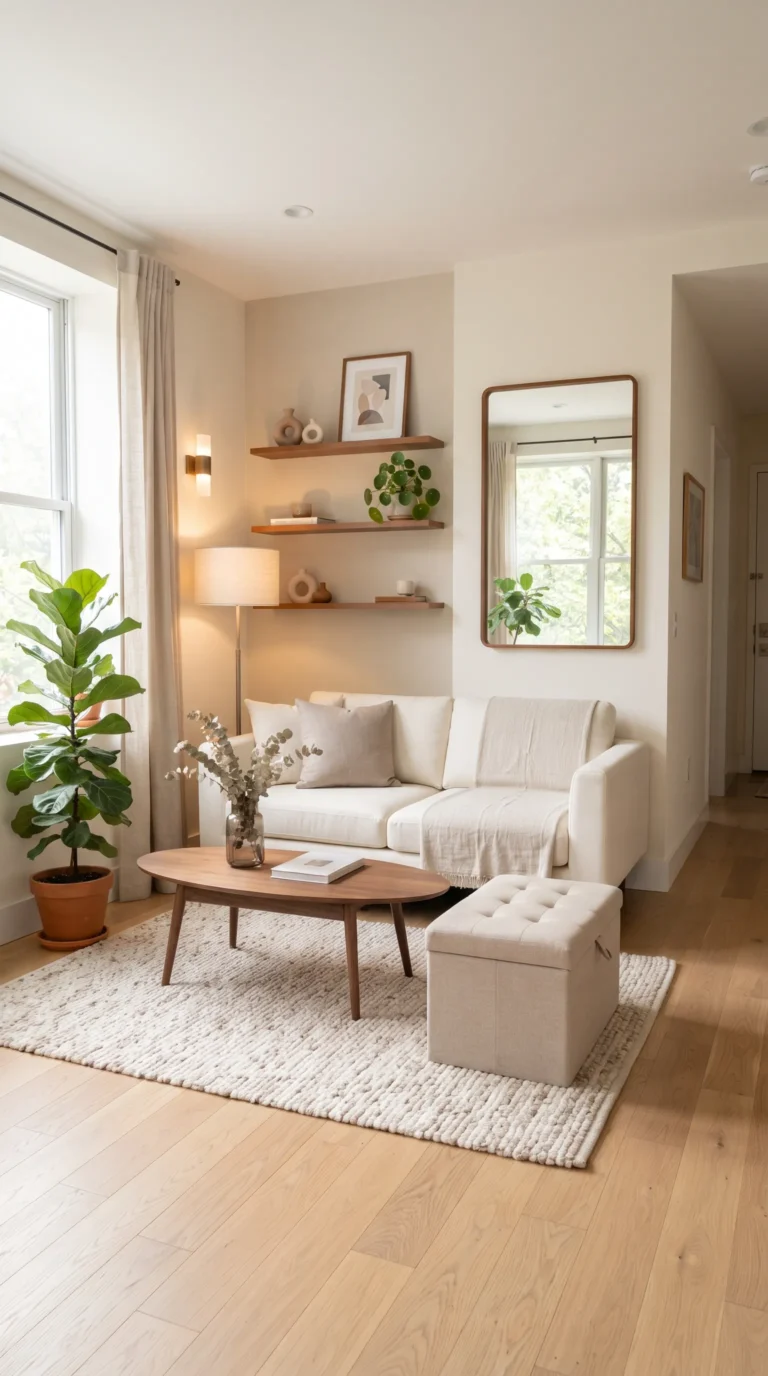
Add Moody Style to a Small Living Room
A small room can still use dark colors. Instead of covering every surface, use one deep wall color and balance it with lighter furniture, mirrors, and warm lighting.
Keep the furniture proportional so the room remains comfortable to move around.
6. Finish Your Moody Living Room With Balanced Details
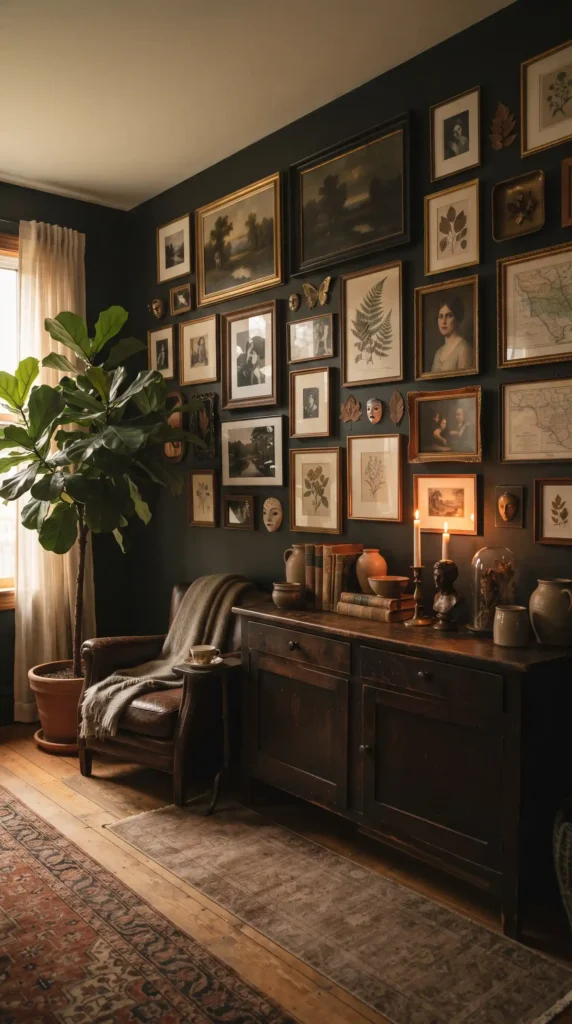
The best moody living room ideas create depth without making the space feel heavy. Once the main colors and furniture are in place, focus on balance, comfort, and personal expression.
Balance Dark Colors With Lighter Details
Use cream cushions, light artwork, pale curtains, or a lighter rug to break up darker surfaces.
This gives the eye places to rest while allowing the moody colors to remain the main feature.
Repeat Colors Around the Room
If you use deep green on the walls, repeat small touches of green through cushions, artwork, plants, or decorative objects.
Repeating colors helps the room feel intentional rather than randomly decorated.
Mix Old and New Pieces
A combination of modern furniture and vintage accessories can make the room feel more personal.
Try pairing a simple modern sofa with an antique-style coffee table, vintage artwork, or traditional ceramic pieces.
Keep the Room Comfortable
A moody living room should still be easy to live in. Choose comfortable seating, practical surfaces, useful lighting, and enough open space for movement.
The goal is to create a room that looks beautiful but also feels natural for everyday life.
Frequently Asked Questions
What colors work best for a moody living room?
Deep green, navy, charcoal, brown, burgundy, warm gray, and rich neutral shades can all create a moody atmosphere. Warm neutrals are useful when you want a softer version of the style.
Does a moody living room have to be dark?
No. You can create a moody look with warm neutrals, dark furniture, rich textures, and layered lighting without using dark paint on every wall.
How do I make a dark living room feel cozy?
Add warm lighting, soft textiles, natural wood, comfortable furniture, rugs, and personal décor. These details can make darker colors feel inviting.
Can a small living room have a moody style?
Yes. Use dark colors selectively and balance them with lighter furniture, mirrors, warm lighting, and open floor space.
What lighting is best for a moody living room?
Warm table lamps, floor lamps, wall sconces, and other layered light sources work well. Avoid relying only on one bright overhead fixture.
How do I decorate a moody living room without making it look cluttered?
Choose a limited color palette and display only meaningful or useful pieces. Leave some empty space between furniture and decorative objects so the room can breathe.
Final Thoughts
A moody living room can feel dramatic, cozy, personal, and welcoming at the same time. Start with a strong color foundation, then add texture, warm lighting, natural materials, artwork, and objects that reflect your personality.
You do not need to make every surface dark to create the look. A few deep colors combined with lighter details and comfortable furniture can give your living room the depth and character you want.
With these moody living room ideas, you can create a space that feels collected, comfortable, and genuinely connected to your personal style.