Kids Room Homework Zones for Learning and Creativity
Stacy and Home shares these homework zones kids room ideas to help you create a comfortable place where children can study, read, draw, and complete schoolwork. A homework area does not need to take up an entire room. Even a small corner can become a useful learning space with the right desk, lighting, storage, and organization.
The best homework zones combine function with personality. Comfortable furniture, accessible supplies, good lighting, and a few colorful details can make studying easier while keeping the kids’ room fun and inviting.
1. Create a Dedicated Homework Zone in the Kids’ Room
Set Up a Small Desk
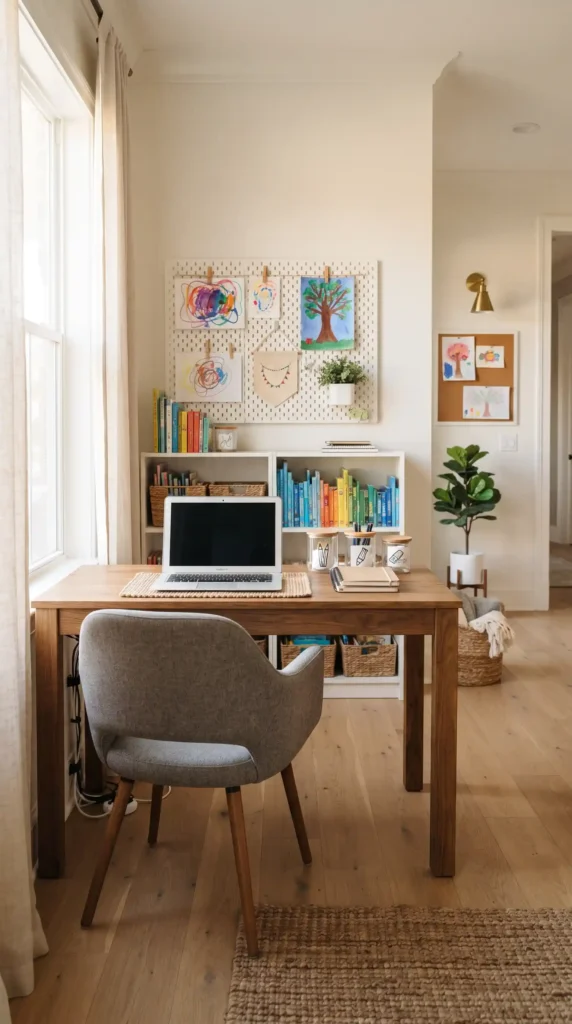
A simple desk can give children a clear place for homework and creative activities. Choose a size that fits the room without taking away too much floor space.
Keep the surface large enough for notebooks, a laptop if needed, and everyday school supplies.
Use a Wall-Mounted Desk
A wall-mounted desk can be useful in a small bedroom. It provides a dedicated work surface while keeping more floor space available for play.
Choose a sturdy design and install it securely according to the manufacturer’s instructions.
Create a Corner Homework Station
An unused corner can become a practical study area. Place a compact desk against two walls or use an existing corner near a window.
Add a comfortable chair, small storage containers, and suitable lighting to complete the setup.
Use a Shared Homework Desk
If two children share a room, a longer desk can provide separate work areas for each child. Give each child their own section for books, supplies, and personal items.
Simple dividers or separate storage containers can help keep the workspace organized.
2. Add Smart Storage to Homework Zones: Kids Room Ideas
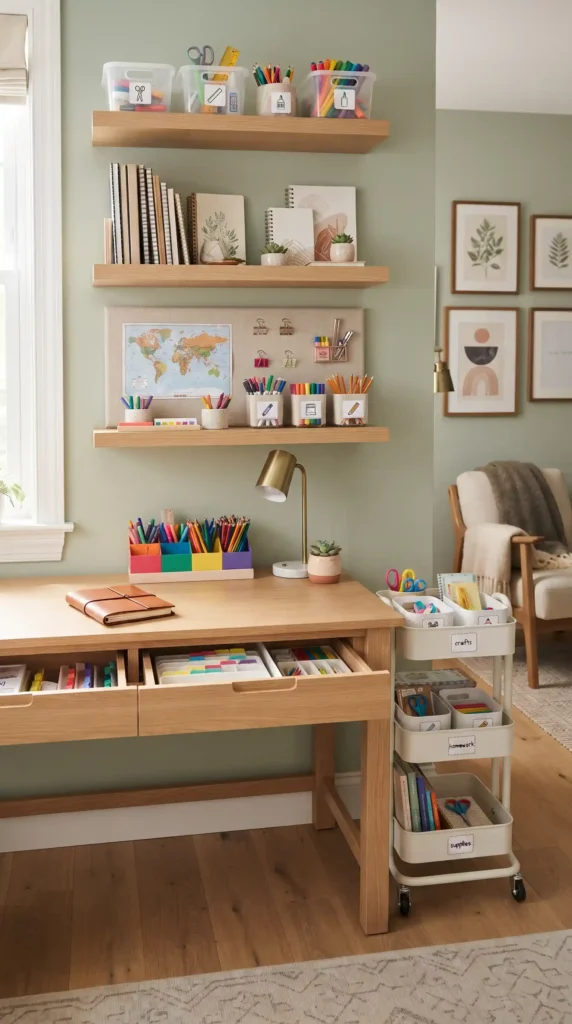
Use Wall Shelves
Wall shelves can keep books and school supplies within easy reach without using valuable floor space. Arrange frequently used items on lower shelves.
Use matching containers to make the storage look organized and connected to the room.
Add Desk Drawers and Organizers
Small drawers, pencil cups, and desktop organizers can keep everyday supplies under control. Give common items a clear place so children can find them quickly.
Avoid filling the entire desk with containers. Leave enough open space for actual schoolwork.
Create a Homework Supply Station
Group pencils, crayons, markers, scissors, rulers, notebooks, and other supplies in labeled containers.
A dedicated supply station can make homework routines easier because children know where to find and return their materials.
Use Rolling Storage
A small rolling cart can provide flexible storage beside the desk. Children can move it when they need additional supplies or floor space.
Choose one with separate sections so different types of materials stay organized.
3. Make Homework Zones Comfortable and Inspiring
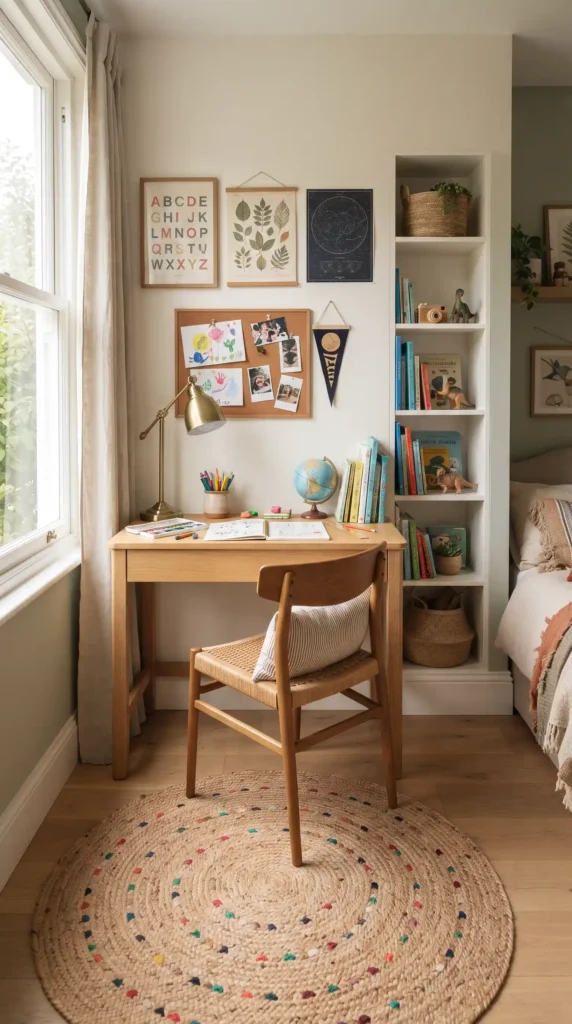
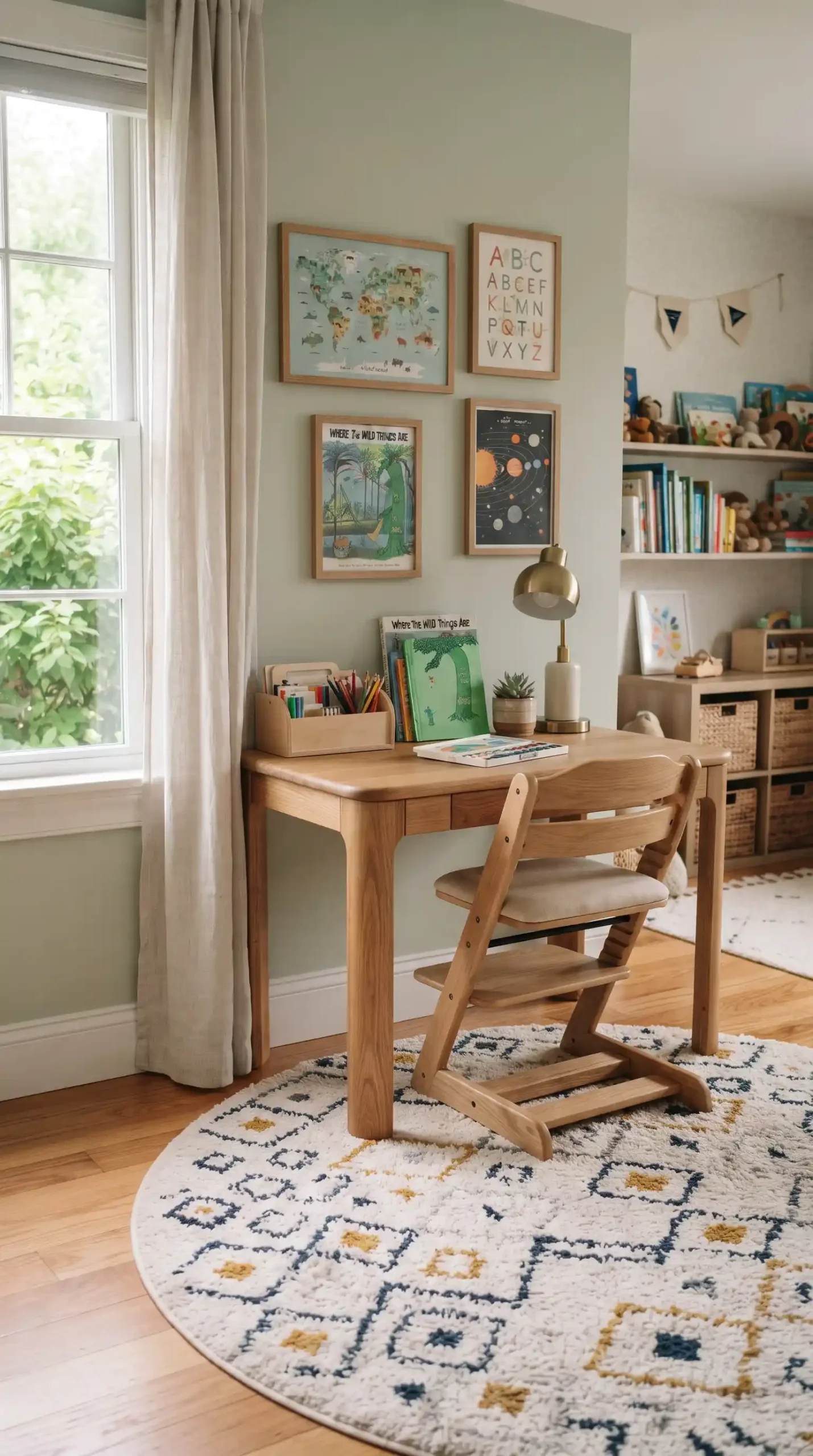
Choose a Comfortable Study Chair
A suitable chair can make a major difference during homework sessions. Choose one that supports comfortable sitting and fits the height of the desk.
For younger children, make sure the chair and desk are appropriately sized for their age and height.
Add Good Task Lighting
A desk lamp can provide focused light for reading, writing, and drawing. Position it so it illuminates the work surface without creating distracting glare.
Natural light can also be helpful during daytime homework when the desk is positioned appropriately near a window.
Add a Soft Rug
A small rug can make the homework area feel more comfortable and visually separate it from the rest of the room.
Choose an easy-to-clean material that can handle everyday use.
Display Educational Artwork
Maps, alphabet prints, number charts, science illustrations, or inspirational artwork can add personality to the learning zone.
Choose a few useful or attractive pieces rather than covering every wall with educational material.
4. Design Homework Zones for Learning and Creativity

Create a Drawing and Art Station
Add a small container for crayons, colored pencils, sketchbooks, and craft materials. This allows the homework zone to support creative activities as well as schoolwork.
Keep art supplies organized so the desk can be cleared easily after projects.
Add a Reading Area
Place a small bookshelf beside the homework desk or create a nearby reading corner. A comfortable chair or floor cushion can give children another place for quiet activities.
Keep favorite books within easy reach so children can choose them independently.
Use a Magnetic or Cork Board
A magnetic board or corkboard can display school schedules, artwork, notes, reminders, and projects. It also gives children a place to personalize their learning area.
Keep the board organized so important information does not disappear among too many decorations.
Create a Small Project Display
Give children a designated place to display finished school projects or artwork. A few clip frames, a picture ledge, or simple hanging clips can work well.
Rotating the display keeps the space fresh while celebrating their work.
5. Try Different Homework Zones Kids Room Styles
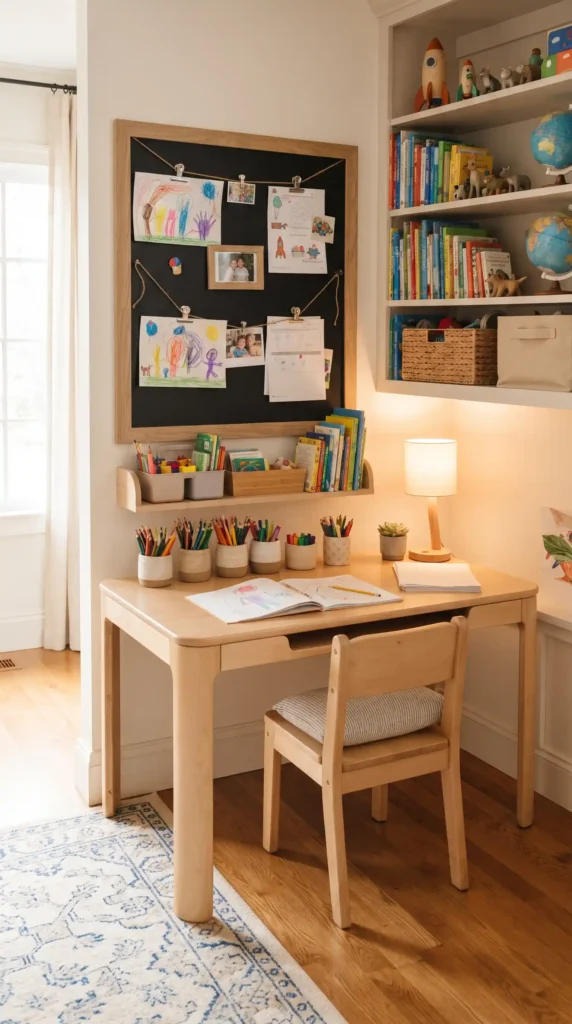
Create a Colorful Homework Zone
Use bright accessories, colorful storage containers, playful artwork, and a cheerful desk chair to create an energetic study space.
Keep the main furniture simple so the colors do not make the area feel visually overwhelming.
Style a Calm Neutral Homework Zone
For a more peaceful learning area, use cream, beige, soft green, light blue, or warm white. Add natural wood furniture and woven storage for texture.
A calm palette can also make the homework area blend naturally with the rest of the bedroom.
Create a Modern Homework Station
Choose a clean-lined desk, simple chair, minimal storage, and a small amount of artwork. Black, white, natural wood, and muted colors can create a modern appearance.
Keep the desktop mostly clear to support focused work.
Build a Creative Kids’ Homework Corner
Combine school supplies with art materials, books, display boards, and colorful accessories. Use open shelves so children can see their supplies and projects.
This approach works especially well when the same area needs to support homework, drawing, crafts, and reading.
6. Finish Your Homework Zone With Practical Details
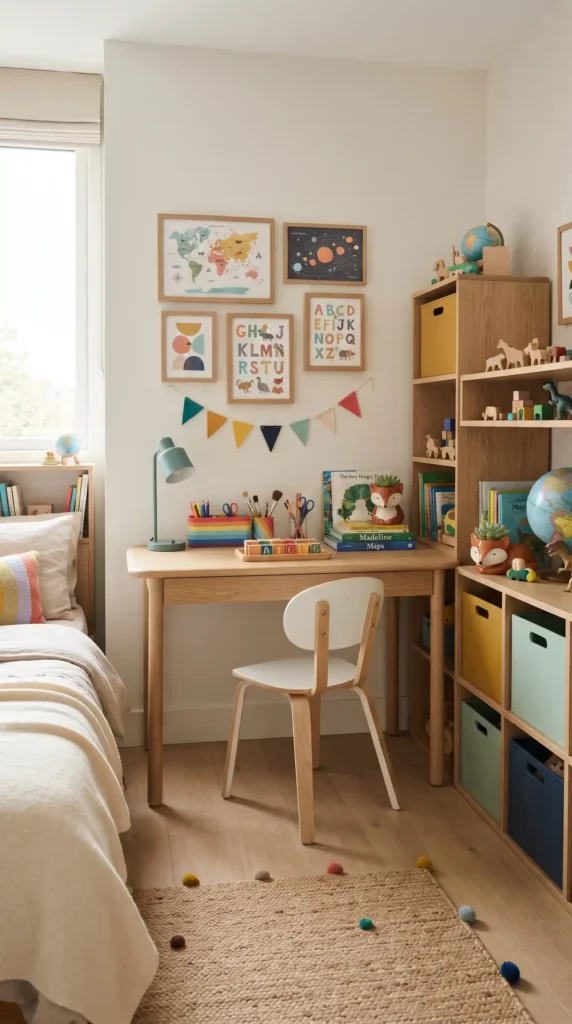
Keep the Desk Organized
A homework area works better when children can quickly find what they need. Use simple containers and storage categories for school supplies.
Encourage a quick cleanup after homework so the desk remains ready for the next activity.
Keep Screens and Cables Organized
If the homework zone includes a computer, tablet, or other device, keep charging cables organized and away from walkways.
Use suitable cable-management solutions and position devices safely on the desk.
Make the Layout Easy to Use
The chair should pull out comfortably, drawers should open fully, and shelves should be accessible. Avoid placing the desk where it blocks doors, windows, or main walking paths.
A practical layout makes the learning area easier to use every day.
Let Children Personalize the Space
Allow children to choose some artwork, colors, storage labels, or decorative accessories. A learning zone feels more inviting when children have a sense of ownership.
Keep the main setup functional while leaving room for their personality.
FAQs
How do I create a homework zone in a small kids’ room?
Use a compact desk, wall-mounted desk, vertical shelves, and small storage containers. Keeping the floor open can help the room feel larger while still providing a dedicated study area.
What should every kid’s homework zone have?
A suitable desk or work surface, a comfortable chair, good task lighting, basic school-supply storage, and enough open space for books and homework are useful starting points.
How can I make a homework area more fun for kids?
Add colorful artwork, personalized displays, creative supplies, a small rug, or cheerful storage. Let children choose some décor so the area feels like their own.
Where should a homework desk be placed in a kids’ room?
A quiet corner or area near a window can work well. Make sure the desk does not block doors, windows, storage, or the main walking path.
How can I keep a kids’ homework zone organized?
Give books, stationery, art supplies, and school papers separate storage areas. Use labels, trays, drawers, or small containers and encourage children to reset the desk after use.
Final Thoughts
A well-designed homework zone can give children a dedicated place to learn while still supporting creativity and play. Start with the available space, then choose a suitable desk, comfortable chair, useful storage, and good lighting.
Add personality through artwork, colors, books, and creative displays without overcrowding the workspace. The goal is to create an area that children can understand, use, and maintain easily.
With these homework zone kids’ room ideas, you can turn a small bedroom corner into a practical learning space that supports homework, reading, drawing, projects, and everyday creativity.