15 Gallery Wall Ideas for Living Rooms With Layouts That Look Collected
For beautiful living room inspiration, Stacy and Home offers creative ideas for stylish wall décor and comfortable home interiors. A gallery wall can completely transform an empty living room wall by adding personality, color, texture, and visual interest. Instead of relying on one large artwork, you can combine photographs, prints, paintings, mirrors, and decorative pieces to create a collection that feels personal and thoughtfully designed.
The best gallery walls look collected rather than perfectly matched. By mixing different sizes, shapes, frames, and artwork styles while maintaining a visual connection, you can create a beautiful arrangement that works with almost any living room style.
1. Choose the Right Gallery Wall Layout
Create a Classic Grid
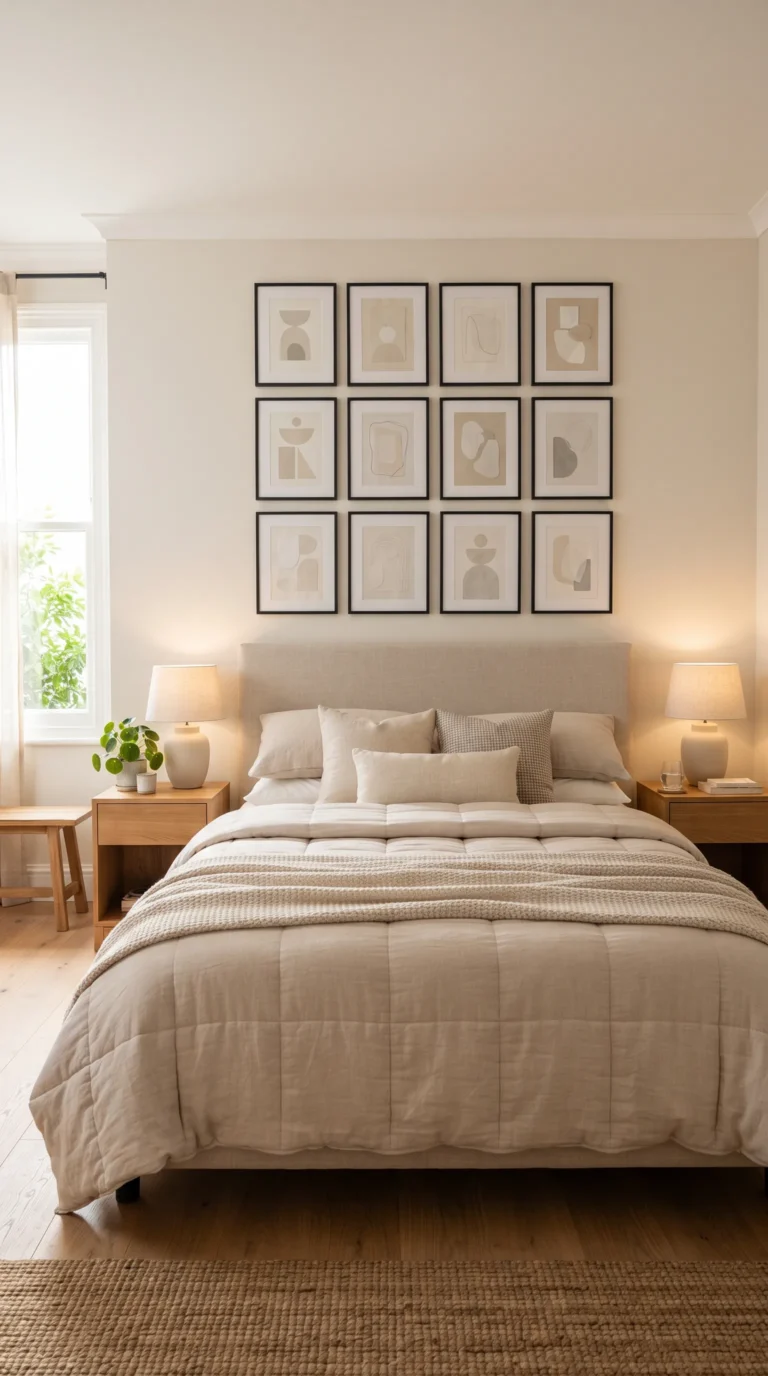
A classic grid is one of the easiest gallery wall layouts to create. Arrange artwork in straight horizontal and vertical rows with consistent spacing. This works particularly well when your artwork is similar in size and style.
For a polished appearance, use matching black, white, or natural wood frames and artwork with a coordinated color palette.
Try a Symmetrical Layout
Symmetry can make a living room feel organized and sophisticated. Start with the center of the sofa or wall and build the arrangement outward using similarly sized pieces.
This layout works especially well in modern, traditional, and minimalist living rooms.
Use a Large Centerpiece
Place one large artwork in the center and surround it with smaller pieces. The centerpiece becomes the main focal point while the surrounding frames add balance and visual interest.
This arrangement works beautifully above a sofa, fireplace, or console table.
2. Create a Collected and Eclectic Gallery
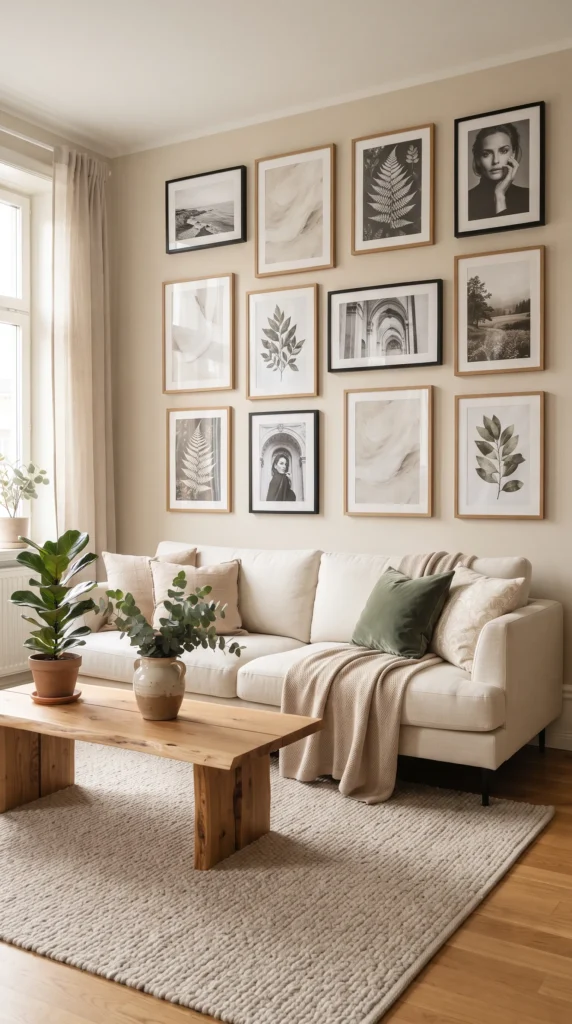
Try a Salon-Style Arrangement
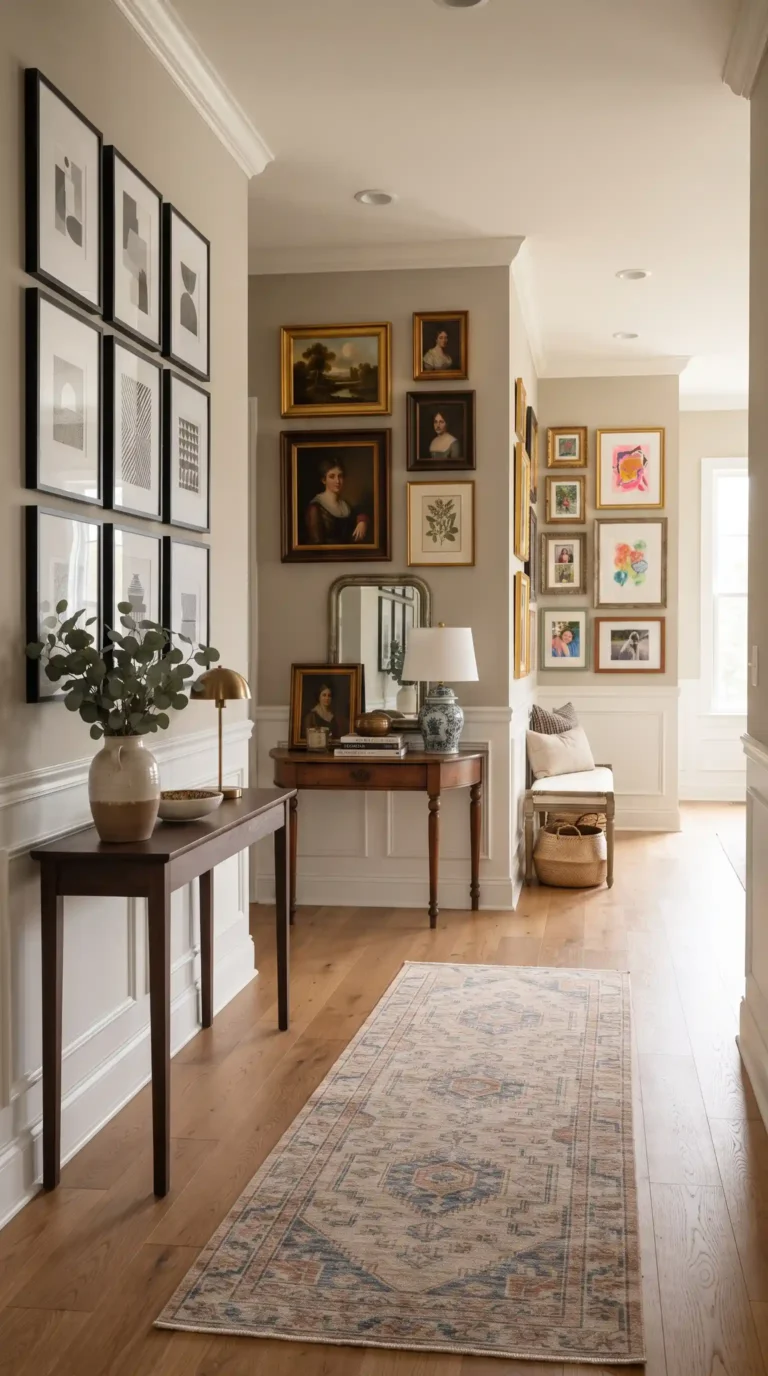
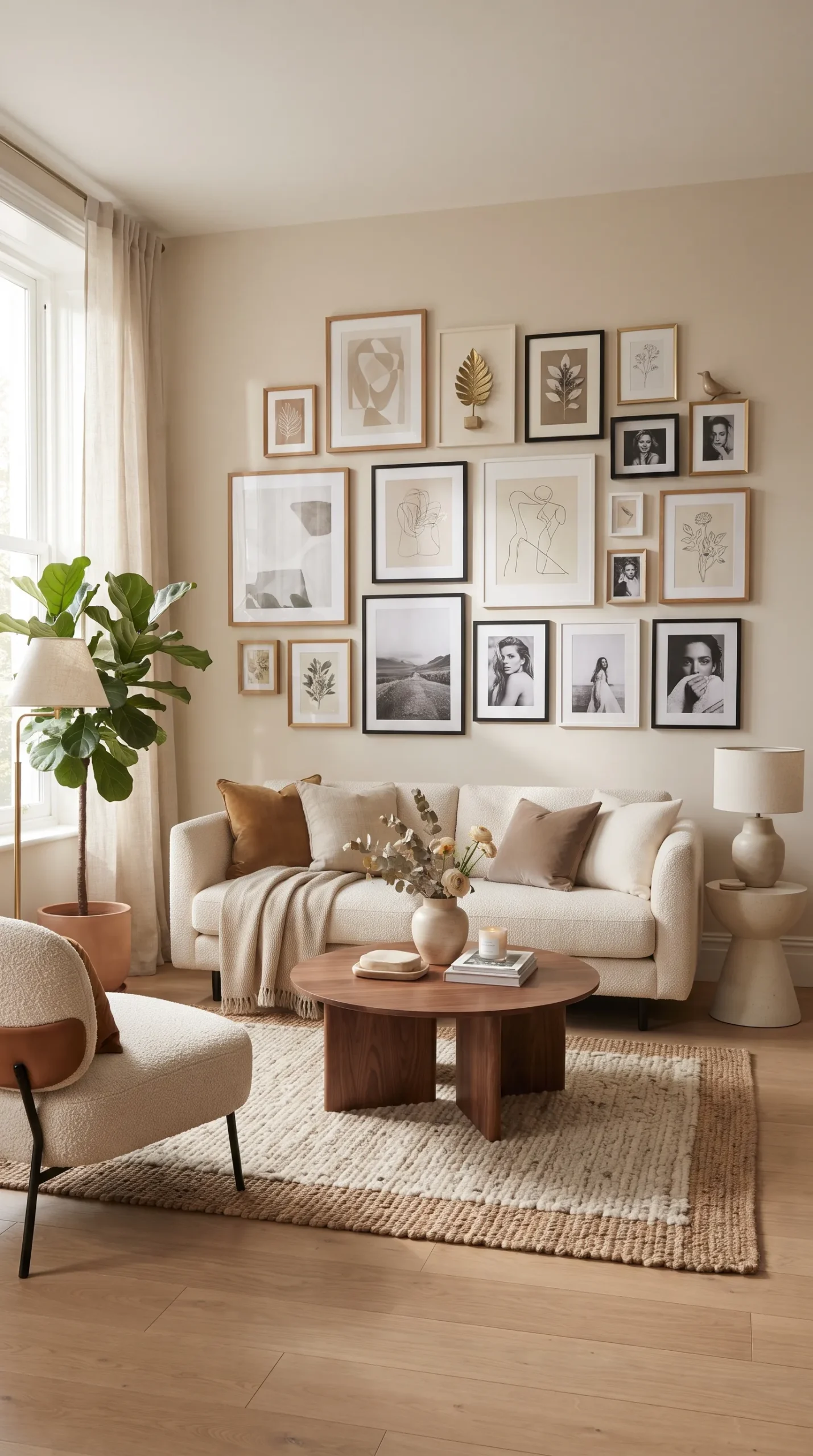
A salon-style gallery wall combines large, medium, and small pieces in a relaxed composition. Mix photographs, paintings, illustrations, and typography to create a display that feels collected over time.
Although the arrangement can be less structured, repeat colors, materials, or themes to keep everything connected.
Mix Frame Styles
Do not be afraid to combine wooden, black, brass, white, or vintage-style frames. Mixed frames can give the wall more character.
If you use several frame styles, repeat at least one visual element, such as a common color or finish, to prevent the arrangement from looking random.
Add Personal Memories
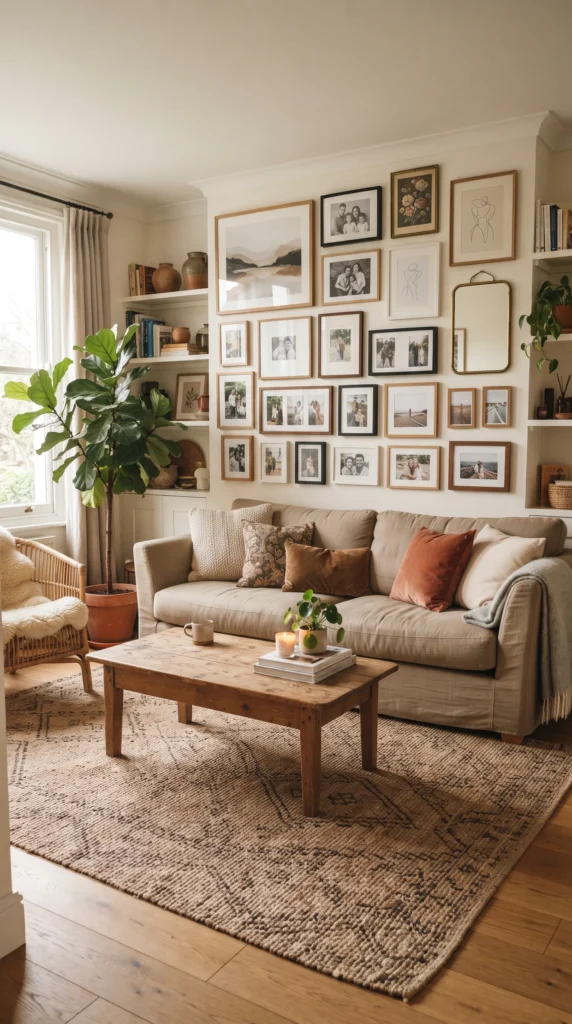
Family photographs, vacation pictures, favorite artwork, and meaningful objects can make your gallery wall much more personal. A collection does not need to look professionally purchased to look beautiful.
3. Explore Color and Theme-Based Ideas
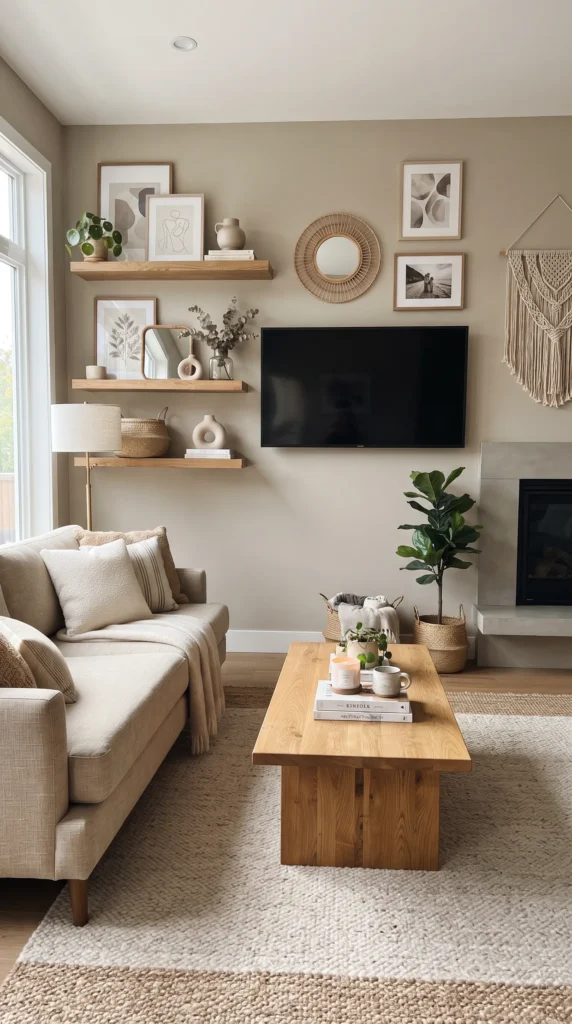
Create a Black-and-White Gallery
A black-and-white gallery wall provides a clean and timeless appearance. Use black frames with photography, line drawings, architectural prints, or minimalist artwork.
This approach works particularly well against white, cream, beige, or light gray walls.
Try Nature-Inspired Artwork
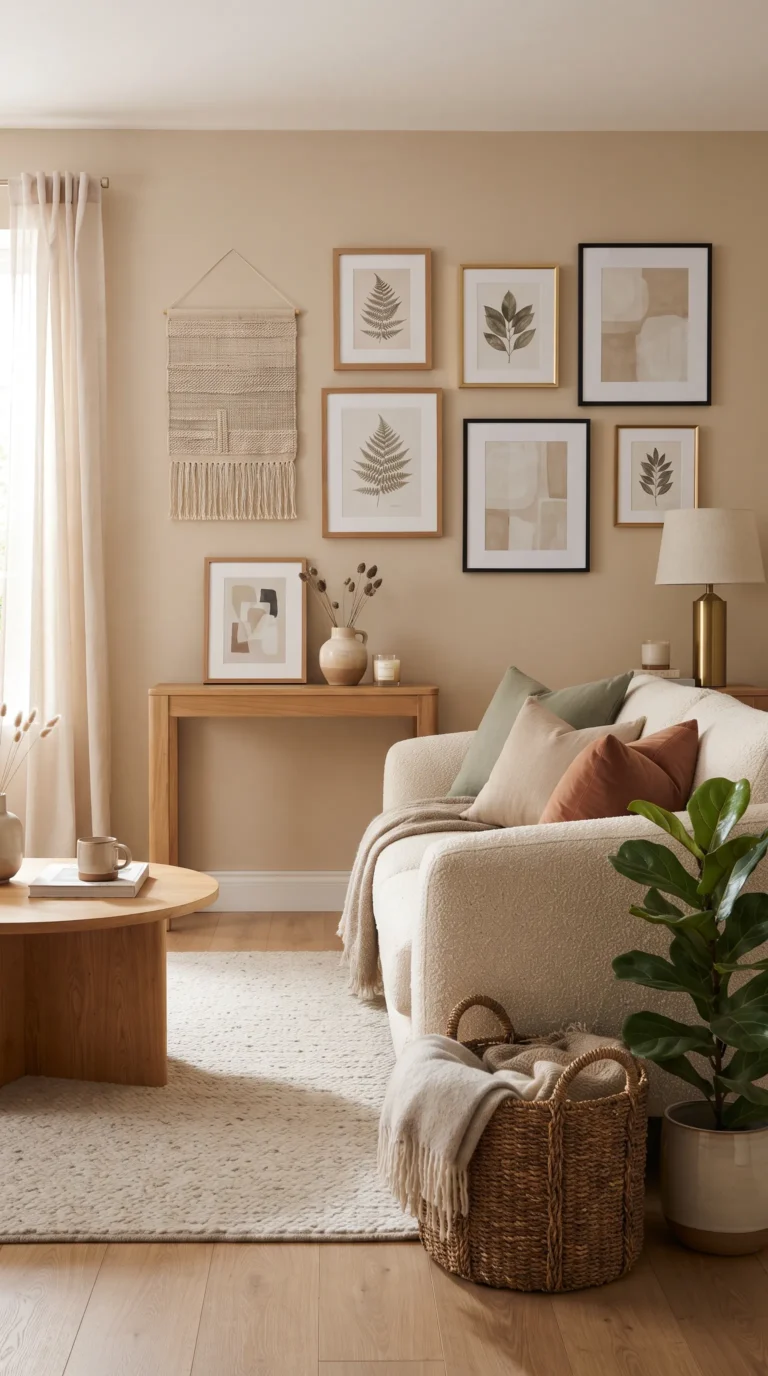
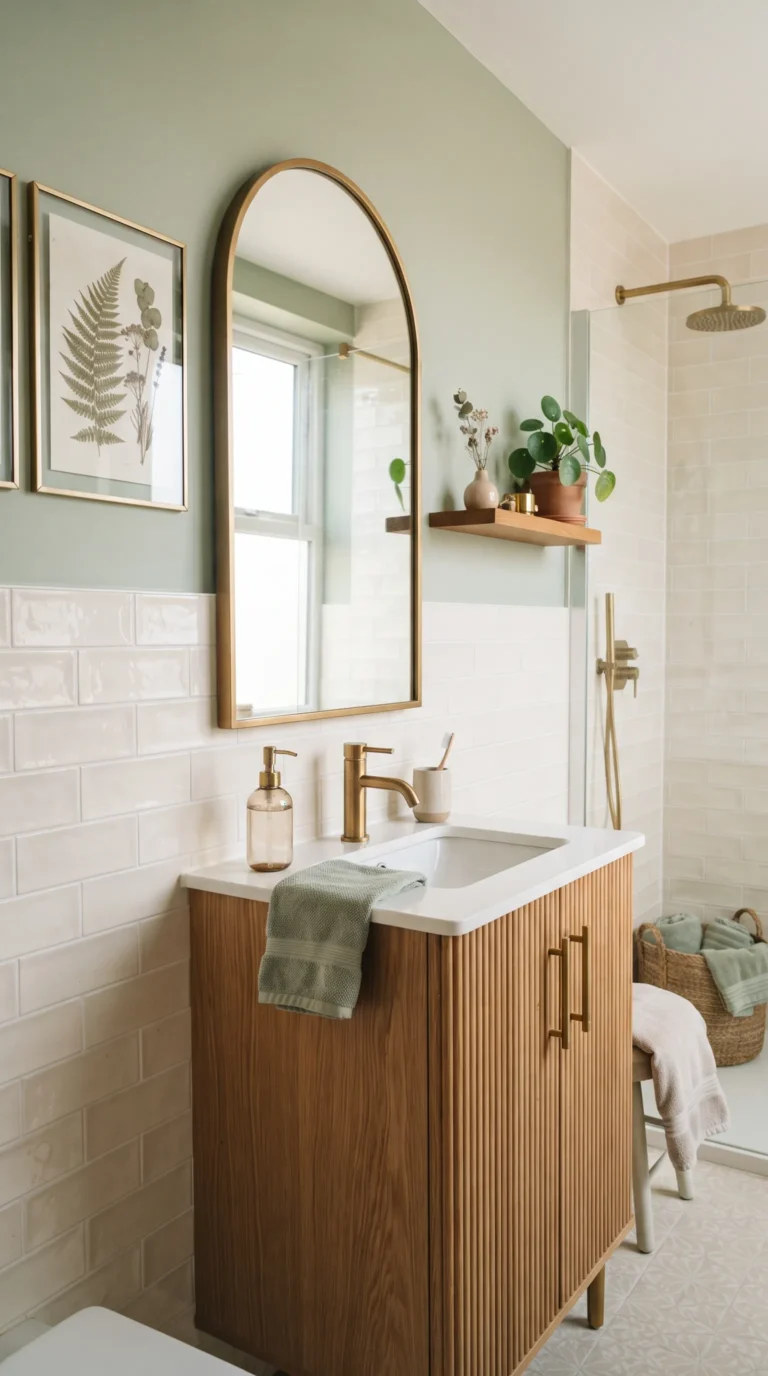
Botanical prints, landscapes, floral artwork, and nature photography can bring a peaceful feeling into the living room. Green, beige, brown, and muted earthy tones work especially well.
Natural wood frames can strengthen the connection with nature.
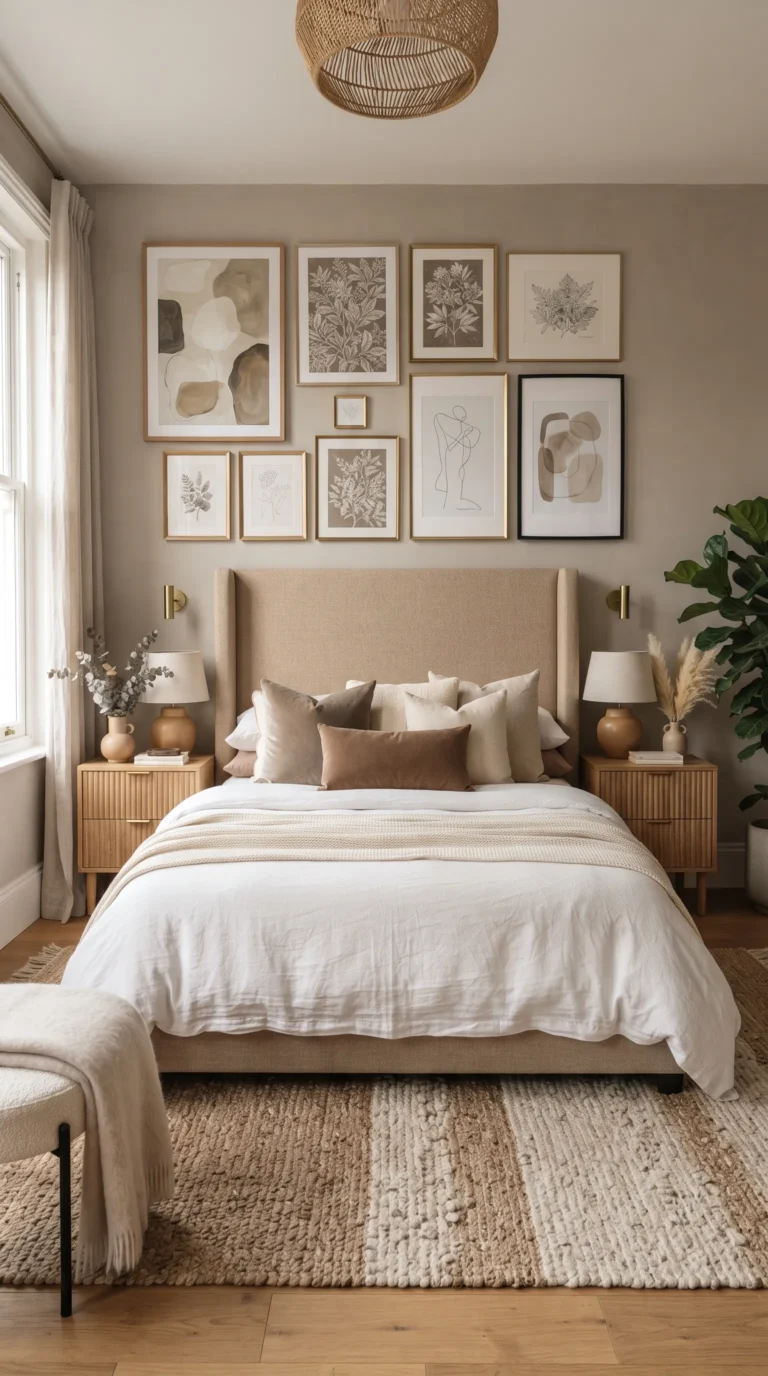
Use a Neutral Gallery
For a soft and sophisticated living room, choose artwork in cream, ivory, taupe, beige, brown, black, and soft gray.
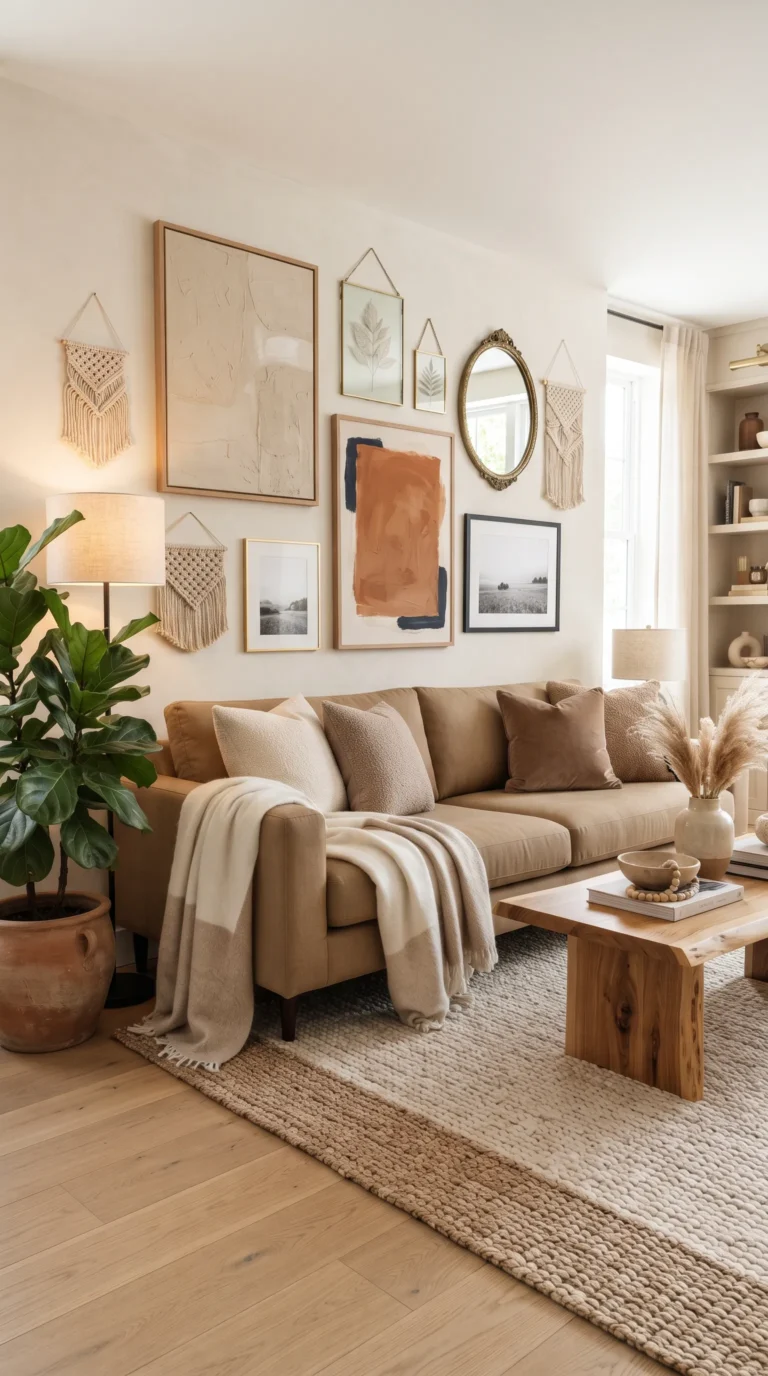
Different textures can keep a neutral gallery from looking flat. Consider canvas artwork, woven wall décor, textured prints, and subtle three-dimensional pieces.
4. Use Creative Gallery Wall Alternatives
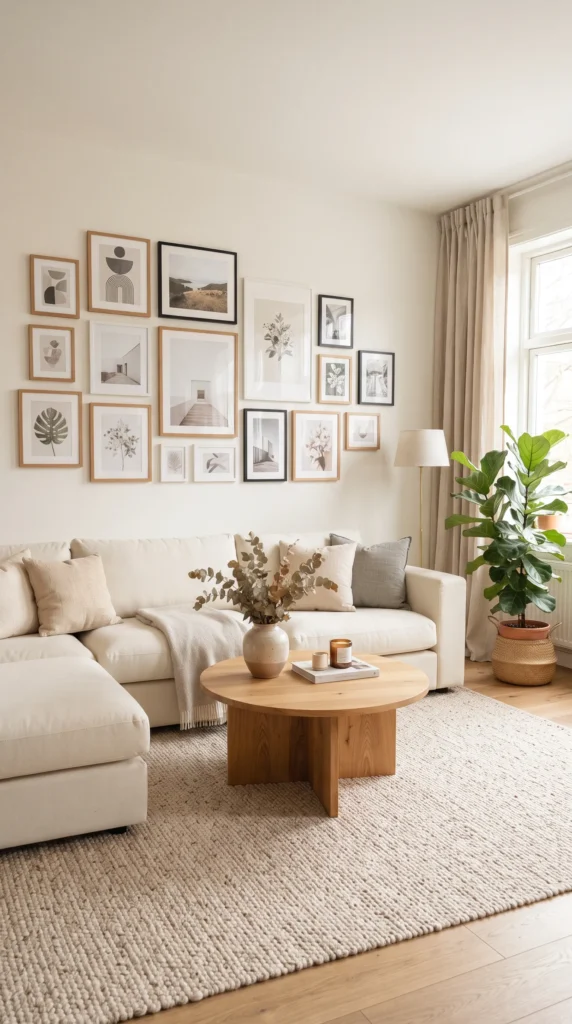
Decorate Around the TV
Instead of allowing the television to dominate the room, surround it with carefully arranged artwork. Use different frame sizes to integrate the TV into the overall wall design.
Keep enough space around the television and make sure artwork does not interfere with ventilation, cables, or access.
Add Floating Shelves
Floating shelves provide a flexible alternative to permanently hanging every piece. Lean larger frames against the wall and layer smaller artwork in front.
You can also add books, small plants, ceramics, or other lightweight decorative objects.
Mix Art With Decorative Objects
A gallery wall can include more than framed pictures. Consider adding mirrors, woven pieces, decorative plates, small sculptures, or other suitable wall décor.
Repeating materials such as wood, brass, ceramic, or glass can help connect different objects.
5. Match the Layout to Your Living Room
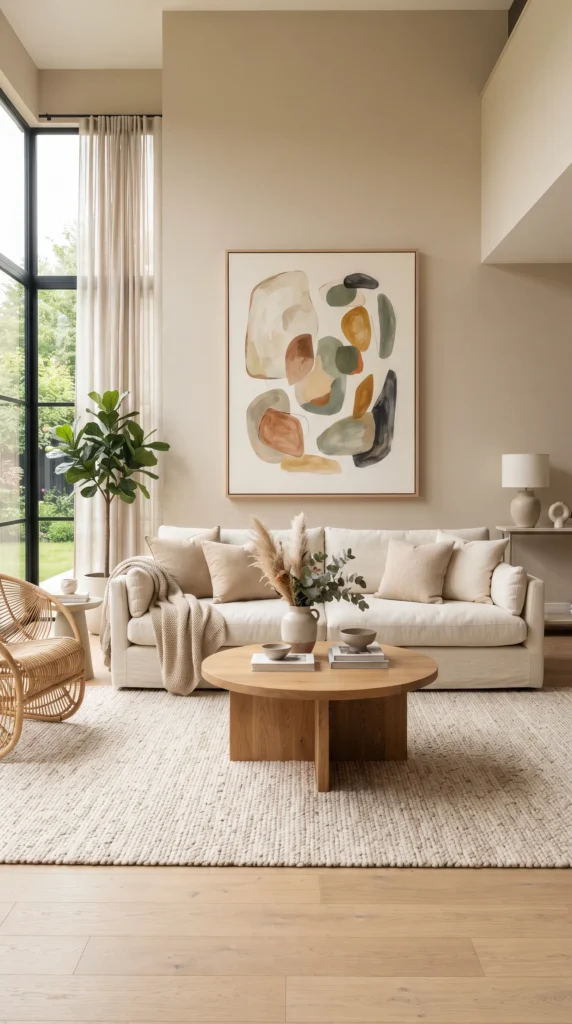
Create a Horizontal Gallery Above the Sofa
A long horizontal gallery works particularly well above a large sofa. Arrange several pieces across the width of the furniture to create a strong visual connection.
Keep the arrangement proportional to the sofa. A gallery that is too narrow can appear disconnected from the seating area.
Try a Stair-Step Arrangement
A stair-step layout creates movement by gradually changing the height of the artwork. It is useful when you have different frame sizes and want something more dynamic than a straight grid.
Start with one or two larger pieces and gradually build the arrangement using smaller artwork.
Consider a Small-Space Layout
For smaller living rooms, avoid covering an entire wall with artwork. A compact grid, vertical arrangement, or small symmetrical display can provide visual interest without overwhelming the room.
6. Plan, Style, and Personalize Your Gallery Wall
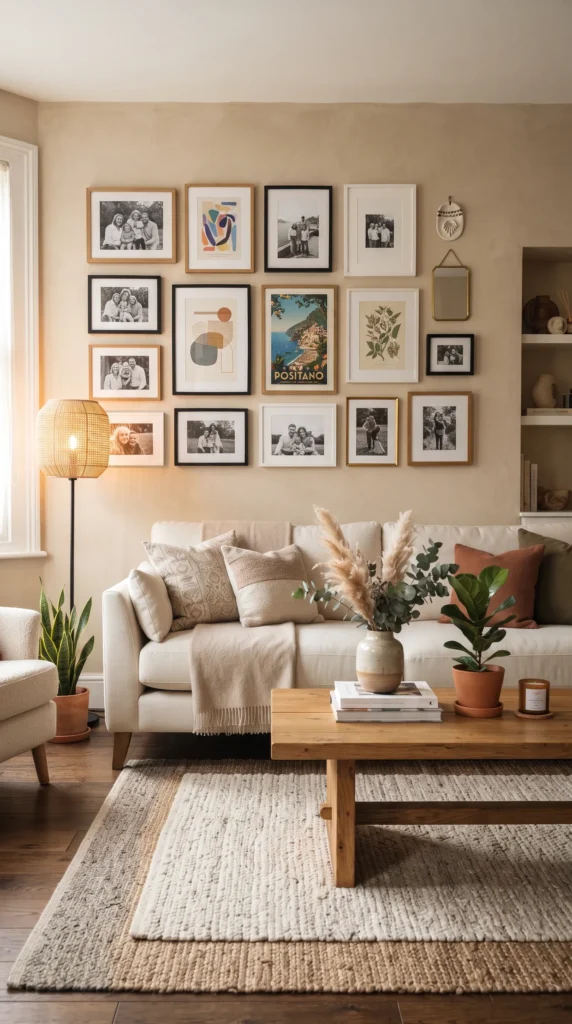
Plan Before Hanging
Place your artwork on the floor before putting anything on the wall. Experiment with different arrangements until you find a composition you like.
You can also create paper templates the size of your frames and temporarily attach them to the wall. This makes it easier to adjust spacing and positioning before hanging the actual pieces.
Maintain Balanced Spacing
Consistent spacing generally creates a more polished appearance. For organic arrangements, slightly varied spacing can create a relaxed effect, but avoid placing pieces so close together that they visually compete.
Let Your Collection Evolve
Your gallery wall does not have to be completed in one day. Start with your favorite pieces and gradually add artwork, photographs, and meaningful objects.
This approach can create the authentic collected-over-time appearance that makes gallery walls so appealing.
FAQs About Living Room Gallery Walls
How many pieces should a living room gallery wall have?
There is no fixed number. A small arrangement might contain five or six pieces, while a large wall can accommodate 15 or more. The available wall space, furniture size, and artwork dimensions should determine the number.
Should all gallery wall frames match?
No. Matching frames create a clean and structured appearance, while mixed frames can create a more eclectic and collected look. If you mix frames, repeat colors or materials to maintain visual harmony.
How high should a gallery wall be?
The gallery wall should relate to the furniture underneath it. When placing artwork above a sofa, leave comfortable visual space between the sofa and the lowest artwork while keeping the overall arrangement at a natural viewing height.
Can I mix photographs with paintings?
Yes. Combining photographs, paintings, illustrations, prints, and decorative objects can make the gallery wall more personal and visually interesting.
What gallery wall layout works best for a small living room?
A simple grid, vertical arrangement, or compact symmetrical layout usually works well. Avoid oversized arrangements that make the room feel visually crowded.
How can I make a gallery wall look professionally styled?
Use a clear color connection, balance large and small pieces, maintain thoughtful spacing, and relate the gallery to the furniture below it. A combination of personal pieces and coordinated artwork can create a polished but authentic result.
Final Thoughts
A gallery wall can turn an ordinary living room wall into a meaningful focal point. Whether you prefer a structured grid, elegant symmetry, a relaxed salon-style arrangement, or an eclectic collection, the right layout can add personality and character to your home.
The 15 gallery wall ideas above give you plenty of options for experimenting with artwork, photographs, mirrors, shelves, natural materials, and decorative objects. You do not need to buy everything at once. Begin with a few pieces you genuinely love and build the collection gradually.
The most successful gallery walls are not necessarily the most expensive or perfectly matched. They are the ones that reflect your personality and create a visual story. With thoughtful spacing, balanced proportions, complementary colors, and meaningful pieces, you can create a living room gallery wall that feels collected, stylish, personal, and timeless.