Layered Textures Bedroom Decor Ideas for a More Beautiful Space
Stacy and Home shares these layered textures bedroom ideas to help you create a cozy bedroom that feels warm, comfortable, and visually interesting. Mixing bedding, rugs, curtains, wood, woven materials, and soft accessories can add depth without requiring major changes to the room.
1. Start With Layered Textures on the Bed
Layer Different Bedding Materials
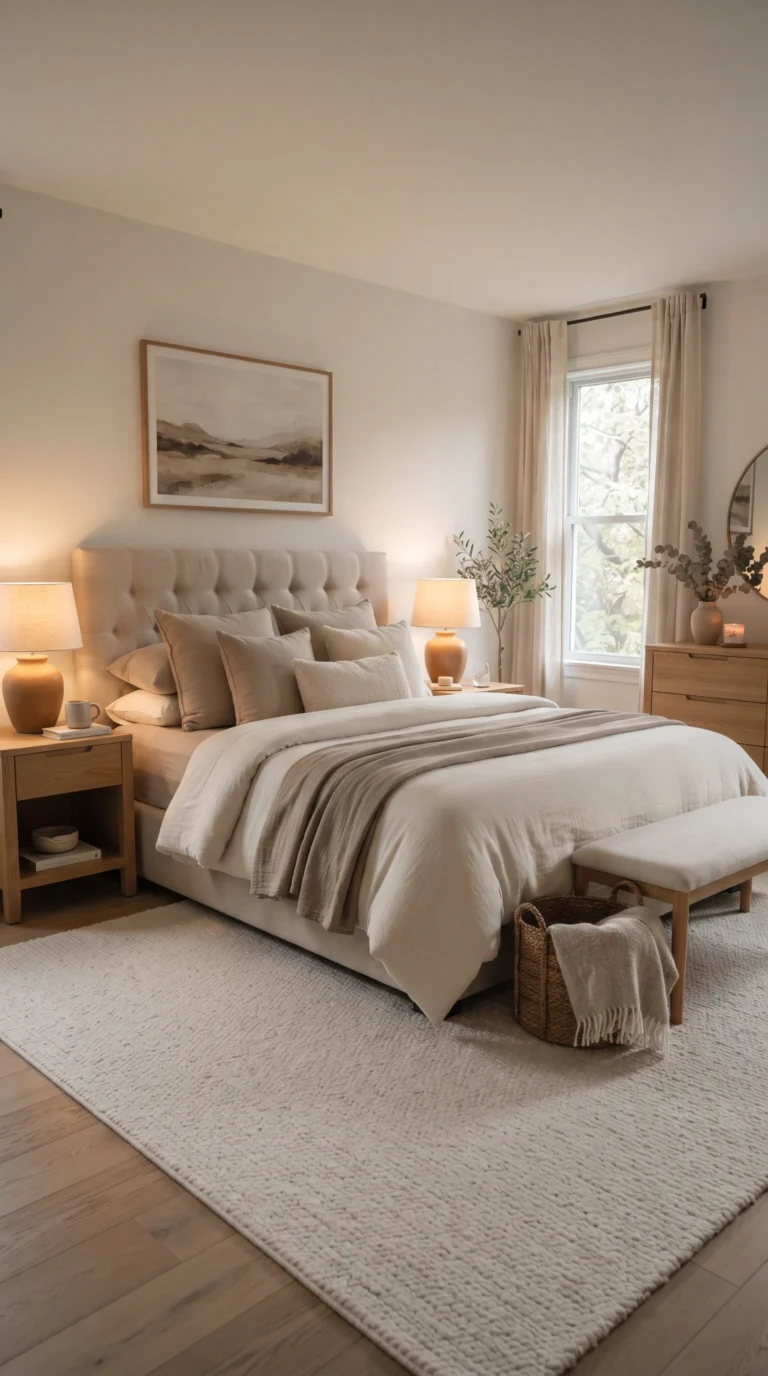
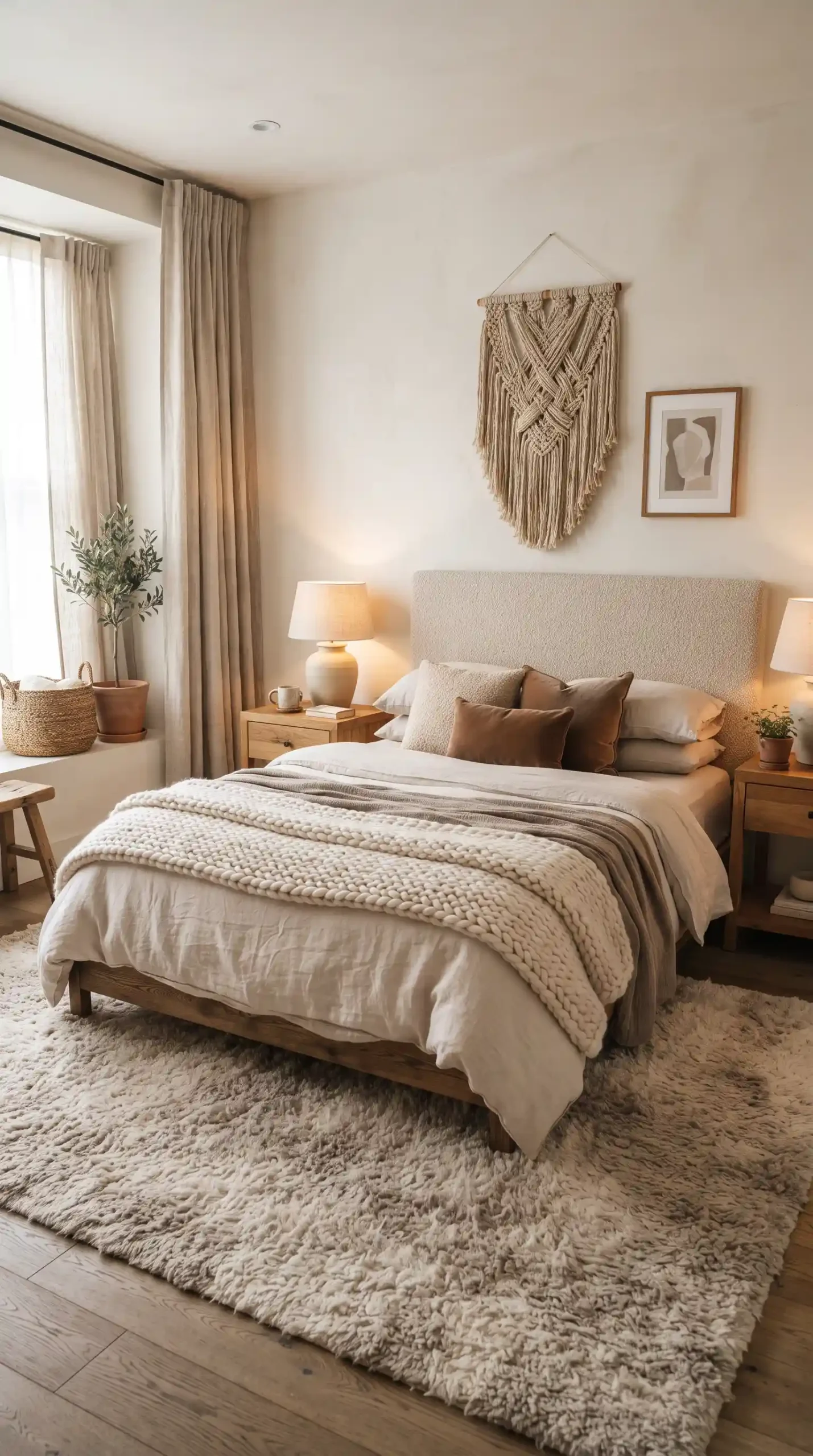
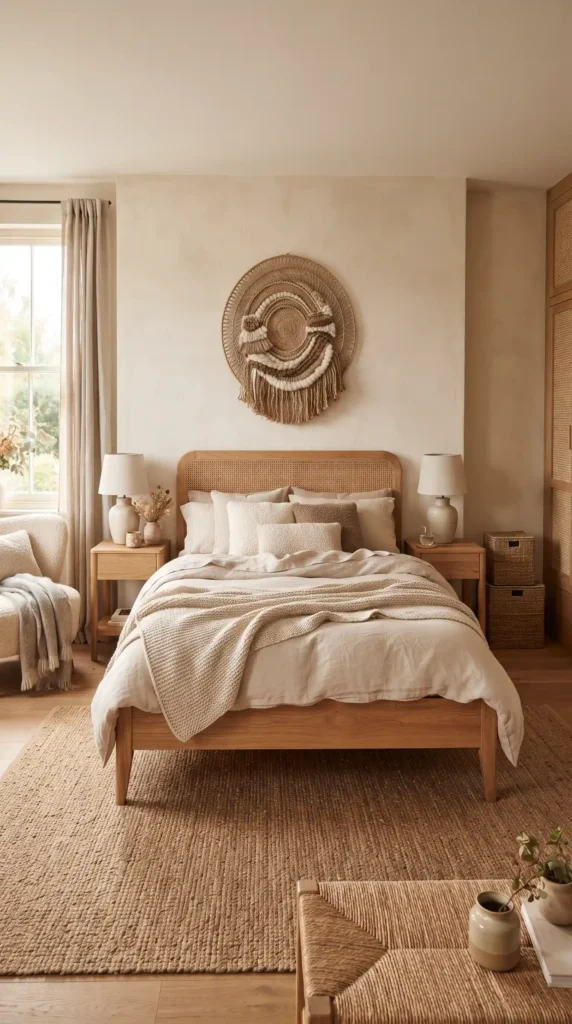
Start by mixing bedding with different textures. Combine cotton sheets, a linen duvet, a knitted blanket, and soft decorative pillows to create a comfortable layered look.
Keep the colors related so the different materials feel connected rather than messy.
Add a Chunky Knit Throw
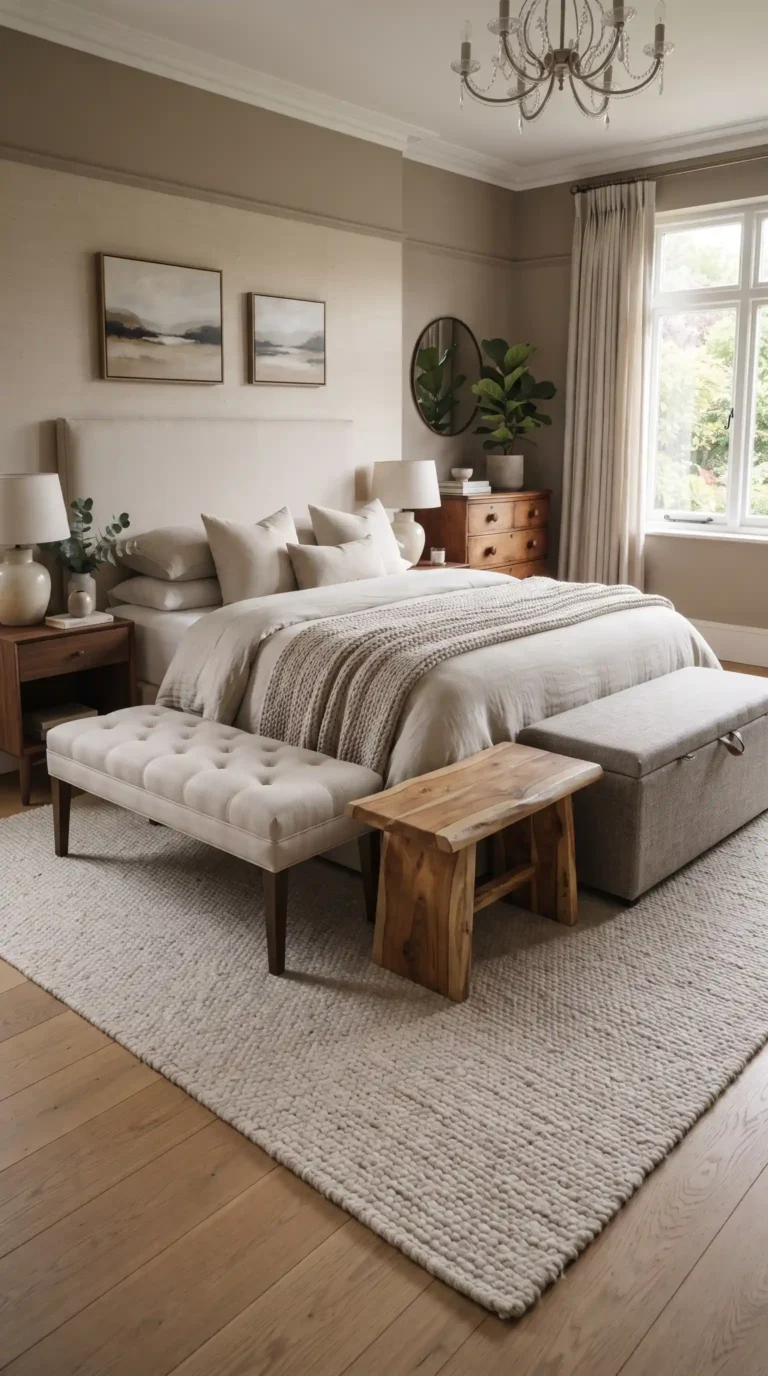
A chunky knit throw can instantly make the bed feel warmer and more inviting. Fold it across the bottom of the bed or casually drape it over one corner.
Choose a neutral shade if the bedding already has patterns or stronger colors.
Mix Different Pillow Textures
Use pillows with different fabrics and finishes to add depth to the bed. Combine linen, velvet, cotton, boucle, or knitted covers in complementary shades.
Vary the sizes and shapes while keeping the overall arrangement balanced.
2. Add Texture Through Bedroom Fabrics
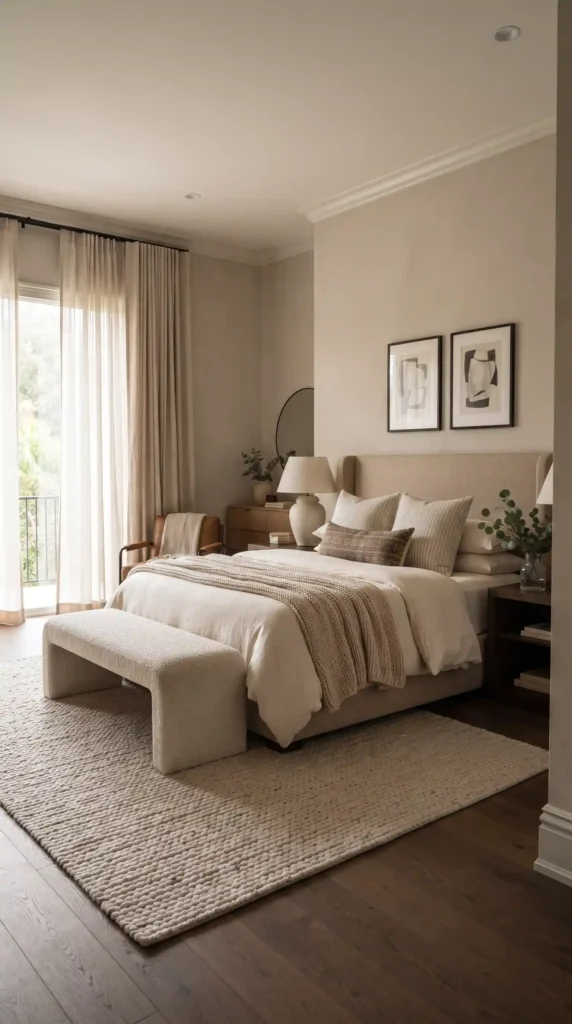
Use Soft Layered Curtains
Curtains can add softness and texture to the bedroom while also controlling natural light. Combine lightweight sheers with heavier curtains for a richer layered effect.
Neutral linen, cotton, or textured fabrics can create a relaxed and cozy appearance.
Add a Plush Area Rug
A soft area rug can make the bedroom feel warmer underfoot while adding another layer of texture. Choose wool, shag, woven, or other tactile materials that complement the bedding.
Place the rug partially under the bed to visually connect the sleeping area.
Add a Fabric Bench at the Foot of the Bed
A fabric-covered bench can add both function and texture. Choose linen, boucle, velvet, or another soft upholstery that complements the room.
It can provide a convenient place to sit while also making the end of the bed feel more finished.
3. Bring Natural Textures Into the Bedroom
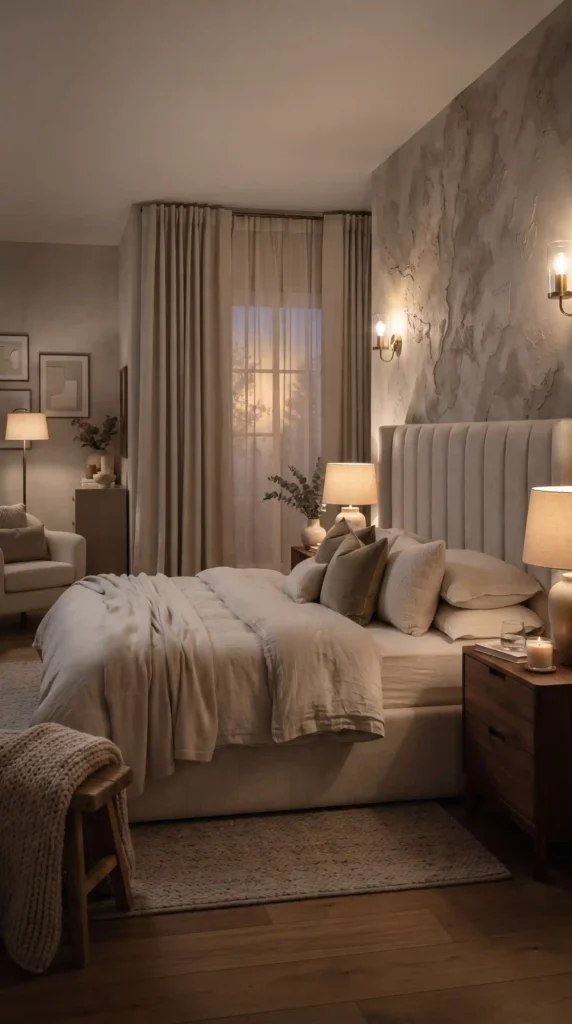
Add Woven Baskets
Woven baskets bring natural texture and useful storage into the bedroom. Use them for extra blankets, pillows, laundry, or everyday accessories.
Place one beside the dresser, near the bed, or in an unused corner.
Use Natural Wood Furniture
Wood adds warmth and a natural visual texture to a cozy bedroom. Try a wooden bed frame, nightstand, dresser, bench, or floating shelf.
Choose a wood tone that works with the room’s main colors instead of introducing too many different finishes.
Decorate With Woven Wall Art
Woven wall art can add texture without taking up floor space. Try woven baskets, macramé, textile art, or other natural fiber pieces above the bed or on an empty wall.
Keep the colors soft and coordinated for a calm bedroom atmosphere.
4. Create Depth With Small Decorative Details
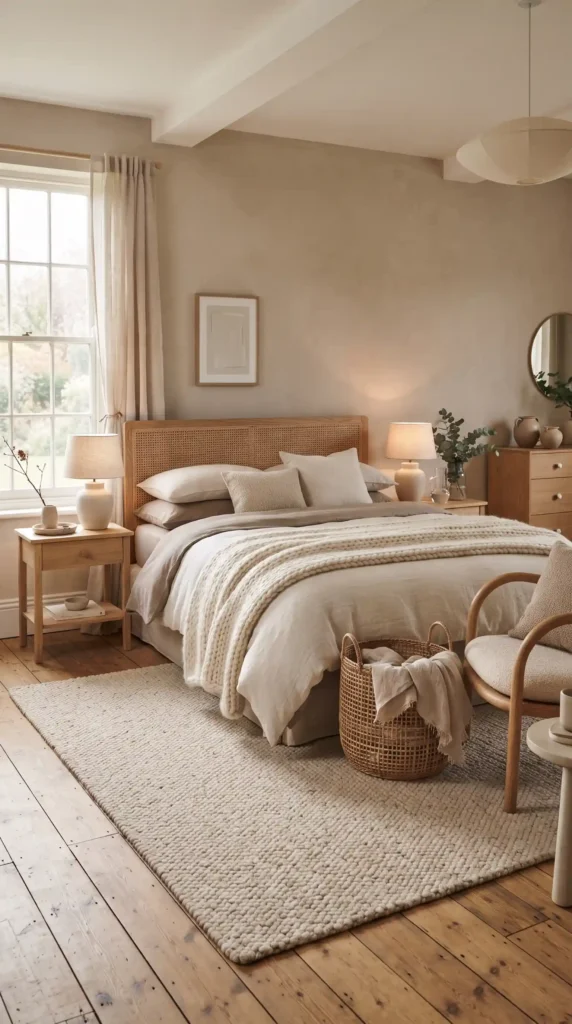
Layer Soft Bedroom Throws
Use two or more throws with different weights or textures to make the room feel extra cozy. Place one neatly folded at the foot of the bed and another casually draped over a chair.
Choose fabrics that feel different but share similar colors.
Add Textured Decorative Pillows
Decorative pillows can introduce small amounts of texture throughout the bedroom. Try boucle, velvet, knitted, quilted, or embroidered covers.
Use a few statement textures instead of filling the bed with too many pillows.
Mix Ceramic and Glass Accessories
Hard surfaces can balance the softness of fabrics. Add ceramic lamps, glass vases, stone objects, or small decorative pieces to your nightstand or dresser.
The contrast between smooth and soft materials makes the bedroom feel more layered.
5. Use Lighting and Walls to Add More Texture
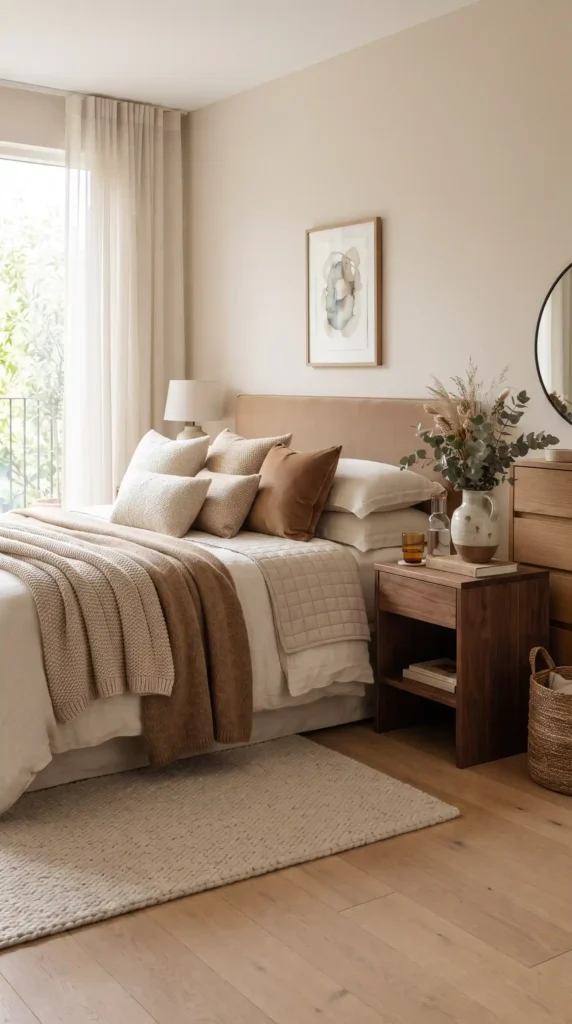
Add Warm Layered Lighting
Lighting can make different textures more noticeable. Combine bedside lamps, a ceiling fixture, wall sconces, or subtle accent lighting to create different levels of illumination.
Warm light works especially well with soft fabrics, wood, and neutral colors.
Create a Textured Accent Wall
A textured wall can become a strong bedroom feature. Try wood panels, limewash-style finishes, subtle wallpaper, or fabric-inspired wall treatments.
Keep the surrounding décor simple so the wall remains a focal point.
Add a Soft Upholstered Headboard
An upholstered headboard can bring a large amount of texture into the bedroom. Choose linen, boucle, velvet, or another tactile fabric depending on the style you want.
Pair it with simpler bedding so the room does not feel visually heavy.
6. Finish Your Layered Texture Bedroom With Balanced Details
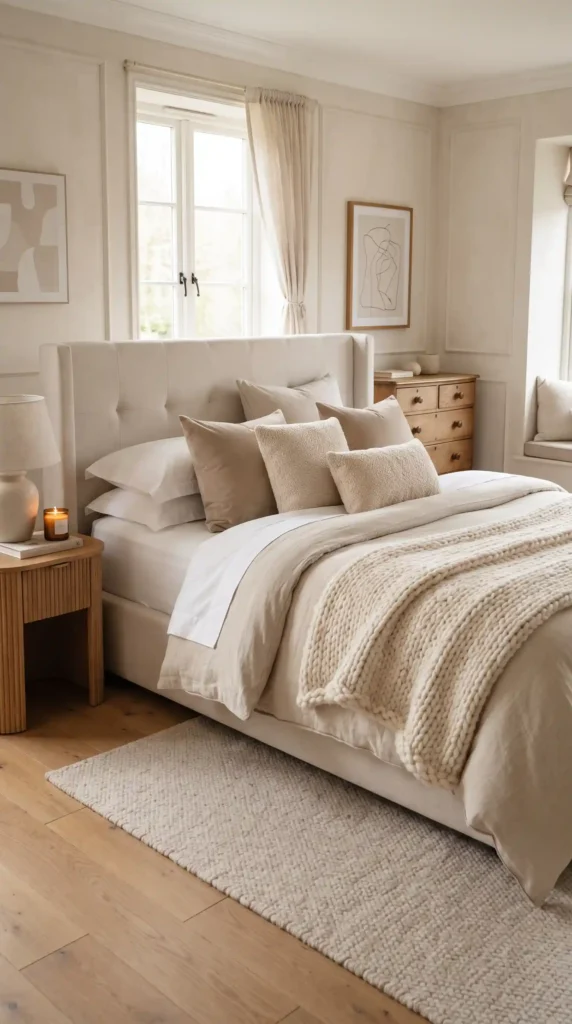
Mix Textures Without Overcrowding
Layering textures works best when each material has enough space to stand out. Combine soft fabrics with wood, woven materials, ceramics, and subtle wall textures instead of using too many similar pieces.
A balanced mix will make the bedroom feel cozy without becoming visually busy.
Keep the Color Palette Cohesive
Use a simple color palette to connect different textures. Cream, beige, warm white, taupe, brown, soft gray, and muted earthy colors can create a calm foundation.
You can add one or two deeper accent shades for extra depth.
Repeat Textures Around the Room
Repeat key materials in different areas to make the design feel intentional. For example, use woven baskets near the dresser and woven artwork on the wall, or repeat wood through the bed and nightstands.
This creates a visual connection between separate parts of the room.
FAQs
How do I layer textures in a bedroom?
Start with the bed and combine different materials such as cotton, linen, knitted fabrics, velvet, and boucle. Then add texture through rugs, curtains, wood furniture, woven baskets, and decorative accessories.
What textures make a bedroom feel cozy?
Knitted fabrics, linen, velvet, boucle, wool, cotton, woven materials, and natural wood can all make a bedroom feel warmer and more comfortable.
How many textures should I use in a bedroom?
There is no exact number, but using several different textures across bedding, rugs, curtains, furniture, and accessories can create depth. Keep the colors coordinated so the room still feels calm.
Can layered textures work in a small bedroom?
Yes. Use texture through bedding, pillows, curtains, rugs, and wall décor instead of adding too much furniture. This creates visual depth without taking up much floor space.
How do I make a textured bedroom look elegant instead of cluttered?
Use a limited color palette and choose a few strong textures rather than decorating every surface. Leave some areas simple so the layered materials have room to stand out.
Final Thoughts
The best layered textures bedroom ideas combine different materials to create a space that feels warm, comfortable, and visually rich. Soft bedding, woven baskets, natural wood, textured rugs, curtains, wall art, and warm lighting can all contribute to a more inviting bedroom.
Start with the bed, then build texture throughout the room using a controlled color palette. When soft fabrics are balanced with natural materials and smooth decorative pieces, the bedroom can feel cozy and beautiful without looking overcrowded.