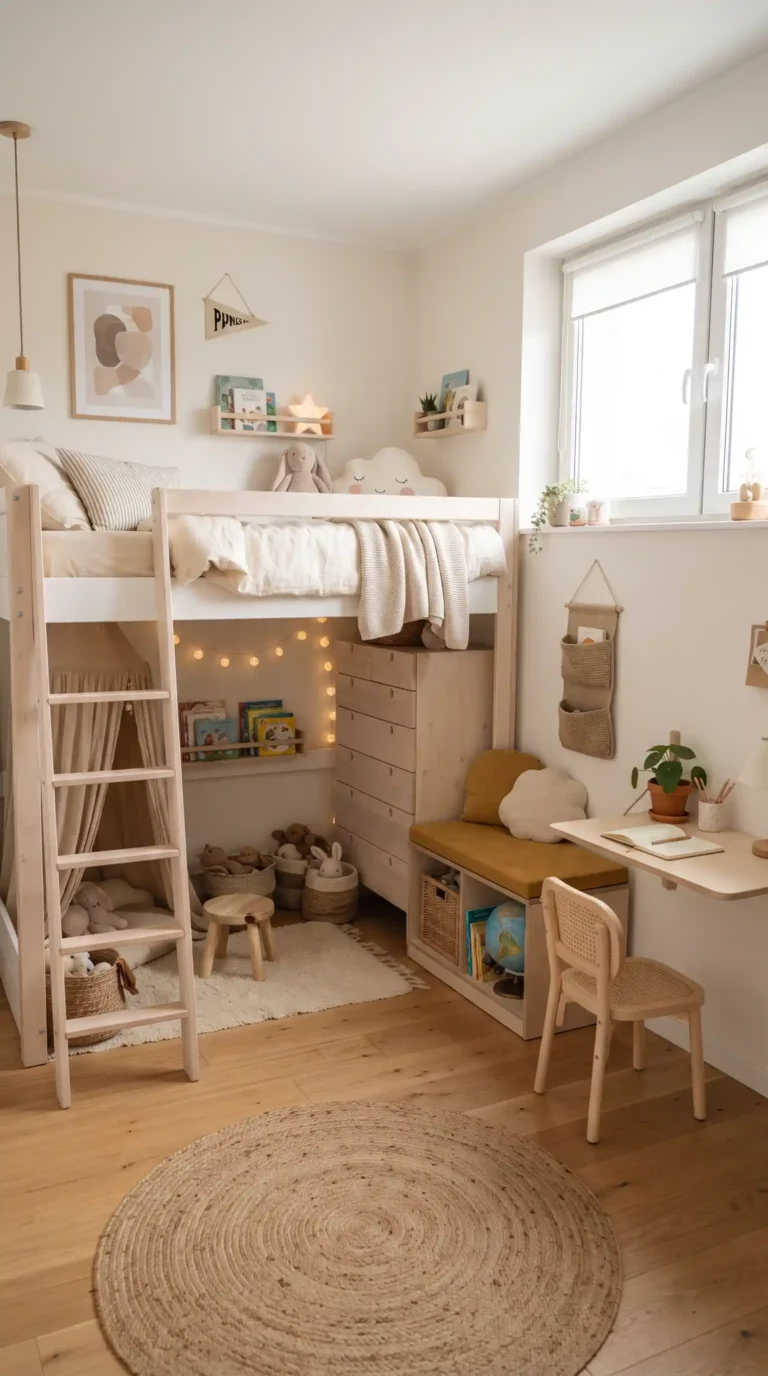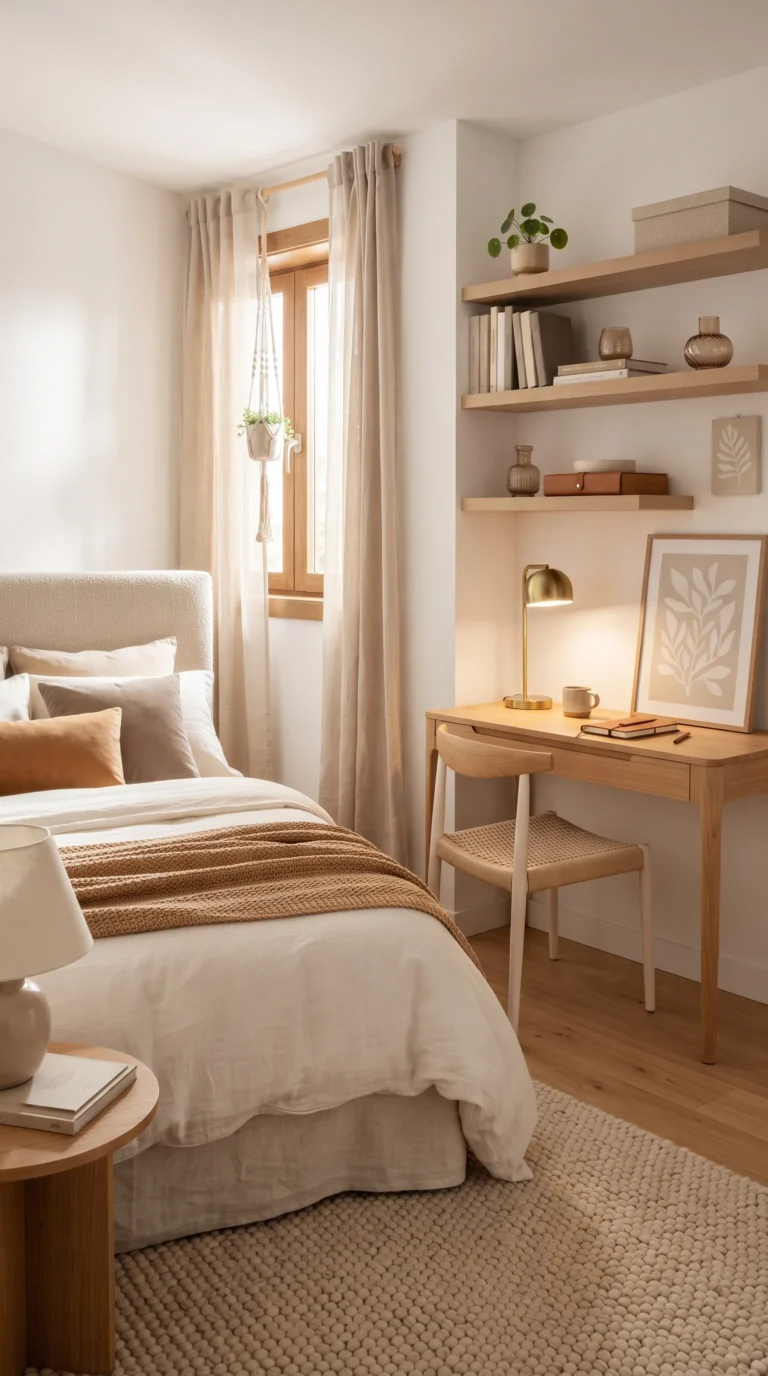
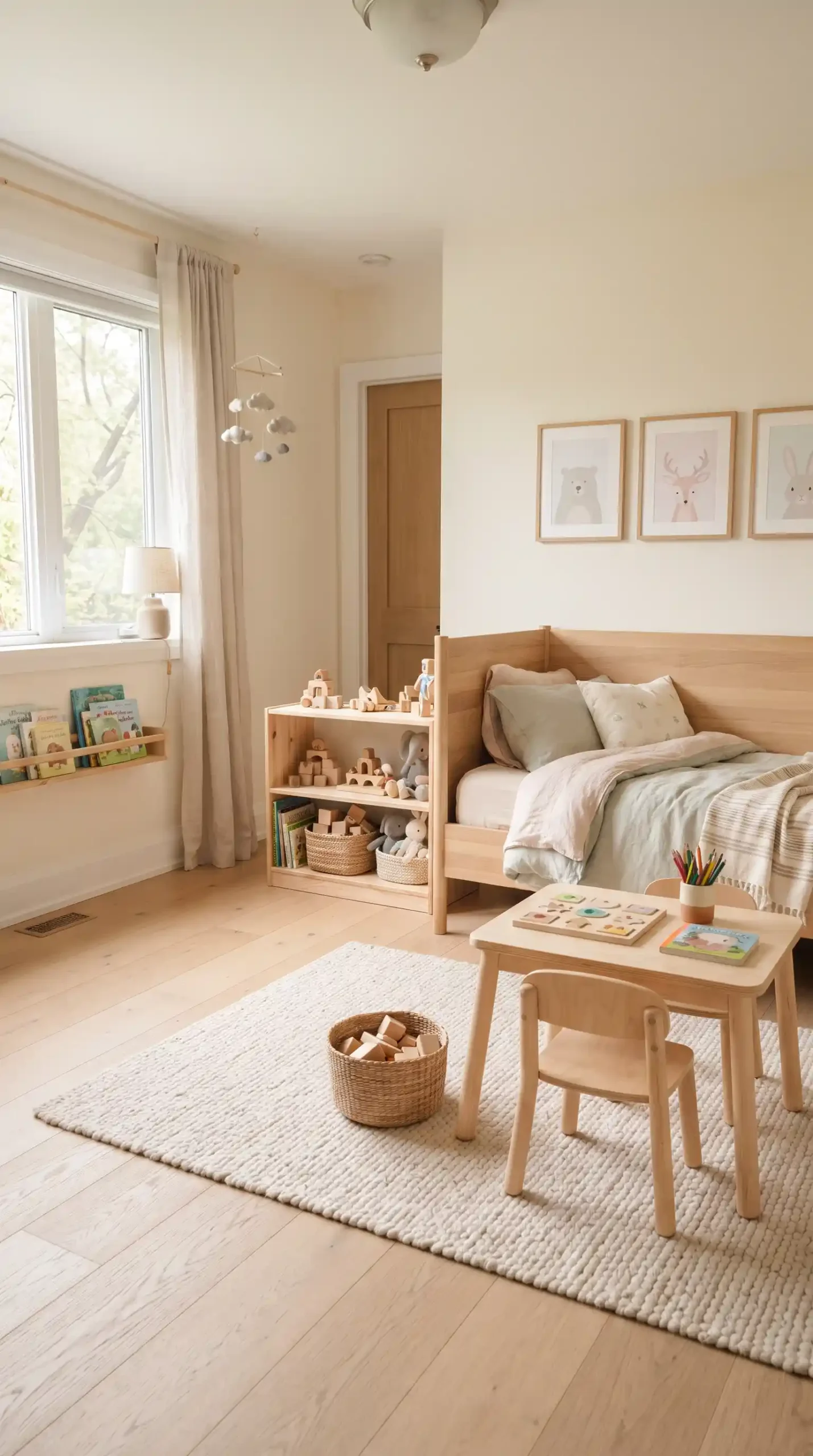
Kids Bedroom Ideas for Preschoolers That Can Grow With Them
Stacy and Home shares these preschool kids’ room ideas to help you create a bedroom that feels playful, comfortable, organized, and easy to update. Preschoolers are becoming more independent, so their room should give them space to sleep, play, read, create, and practice simple daily routines.
The best preschooler bedrooms combine flexible furniture, accessible storage, soft colors, and playful details. Instead of designing a room that feels perfect for only one age, choose a flexible foundation that can grow with your child and adapt to changing interests.
1. Create a Flexible Preschooler Bedroom Foundation
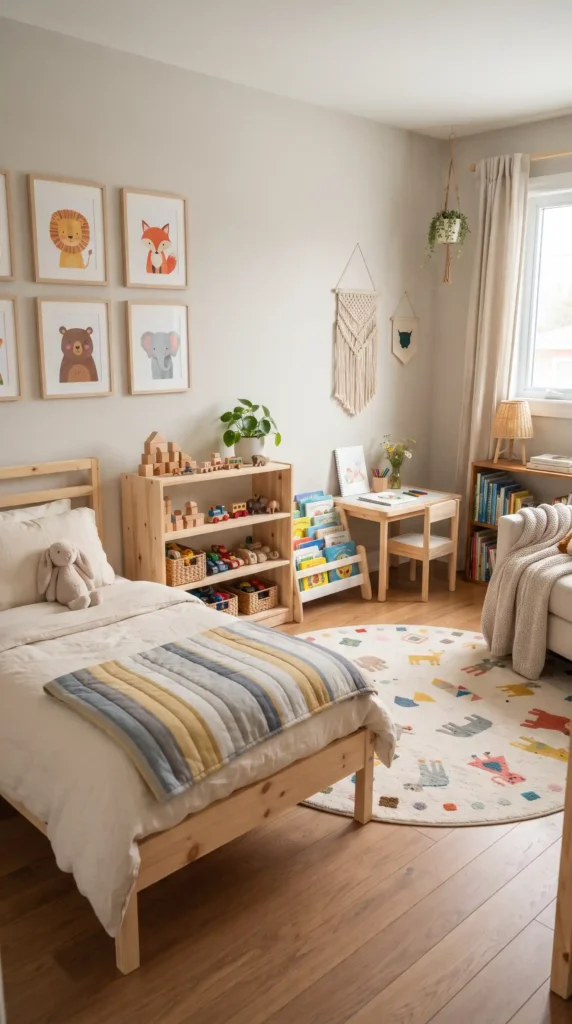
Start with the larger elements of the room, including walls, furniture, and the main color palette. These choices should remain useful as your child grows.
Choose Soft and Flexible Wall Colors
Cream, warm white, beige, soft green, dusty blue, and muted yellow can create a calm background for a preschooler’s bedroom.
Neutral or softly colored walls are also easier to update when your child’s favorite themes and colors change.
Choose a Bed That Can Grow With Your Child
A simple bed with a timeless design can remain useful for several years. Choose a comfortable size and style that works with different bedding and room themes.
Avoid overly themed furniture that may feel too young as your child gets older.
Add a Small Table and Chair
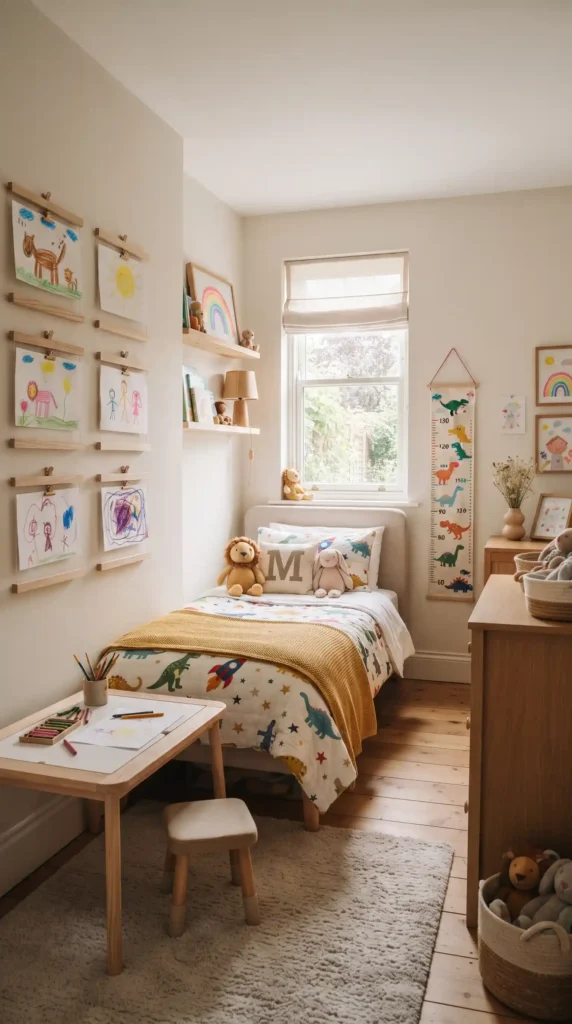
A child-sized table can provide space for drawing, puzzles, crafts, and simple activities. Choose a sturdy design that can remain useful for creative play.
As your child grows, the same area can become a reading, homework, or hobby space.
2. Create Smart Storage for Preschoolers
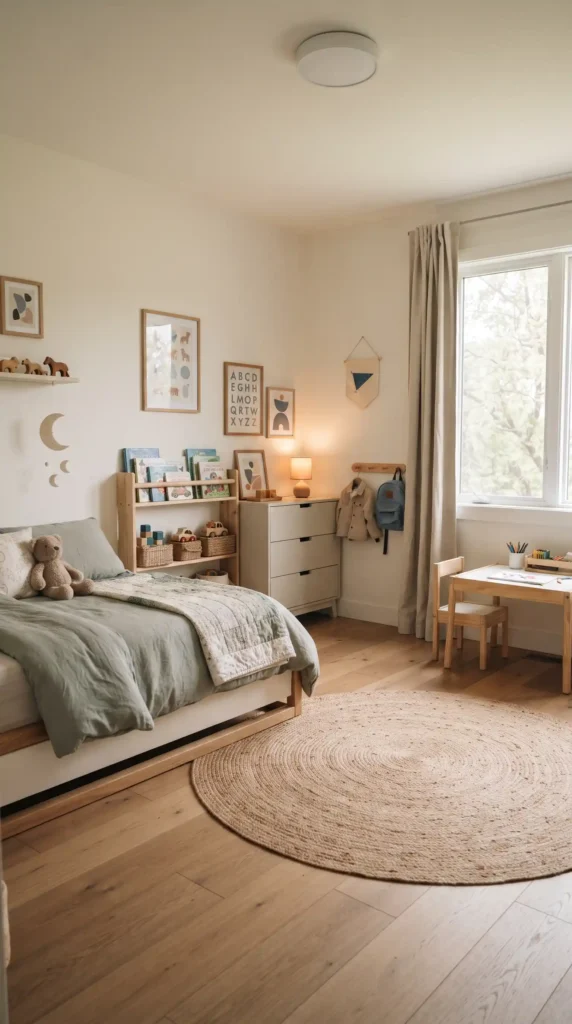
Accessible storage can help preschoolers learn simple organization habits while keeping the bedroom easier to maintain.
Use Low Toy Shelves
Low shelves allow children to see and safely reach their favorite toys. Keep the most frequently used items on the lower levels.
Use baskets or bins to group smaller toys and make cleanup easier.
Add Accessible Book Storage
A low bookshelf or forward-facing book display can make reading materials easy to see. Keep favorite books within comfortable reach so your child can choose a story independently.
As your child grows, the same storage can hold larger books, school materials, or collections.
Create a Simple Clothing Storage Area
Use low drawers, open baskets, or accessible sections of a dresser for everyday clothing. This can help preschoolers begin participating in simple dressing routines.
Keep anything that is not appropriate for independent access stored securely elsewhere.
3. Add Playful Decor Without Making the Room Too Young
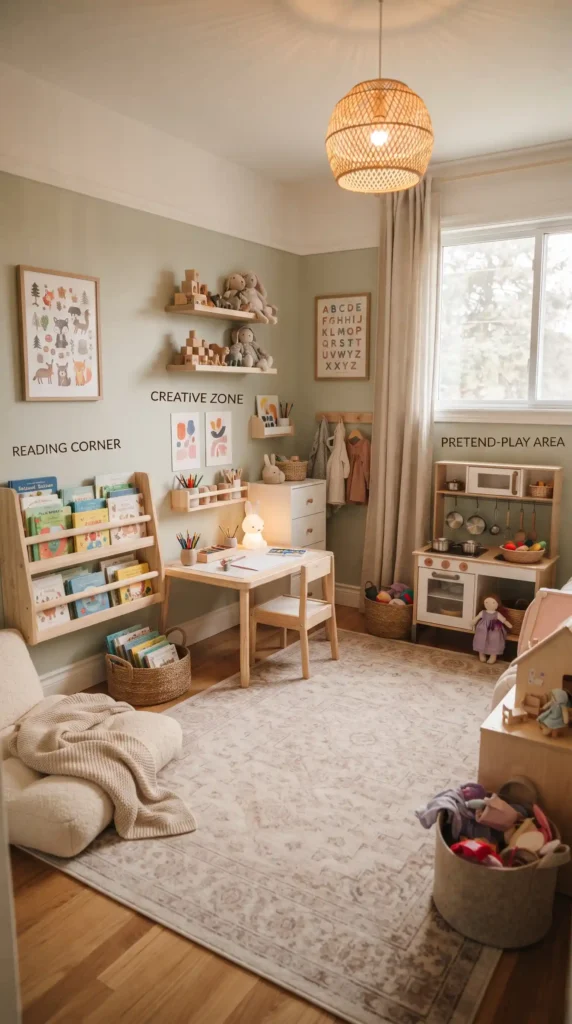
Preschool bedrooms should feel fun, but the décor does not need to be based on a short-lived character or theme.
Create an Animal-Themed Bedroom
Animal artwork, bedding, rugs, and small accessories can create a playful room without requiring permanent themed furniture.
Woodland animals, safari animals, farm animals, or ocean creatures can all work well.
Add Colorful Wall Art
Use rainbows, clouds, stars, nature prints, transportation artwork, or simple illustrations to add personality.
Choose removable or easy-to-change artwork when possible so the room can evolve with your child’s interests.
Add a Fun Area Rug
A colorful or patterned rug can define the play area while adding comfort. Choose a durable, easy-to-clean material because preschool bedrooms often experience everyday spills and messes.
A simple geometric or nature-inspired pattern can continue working as your child gets older.
4. Create Dedicated Areas for Play, Reading, and Creativity
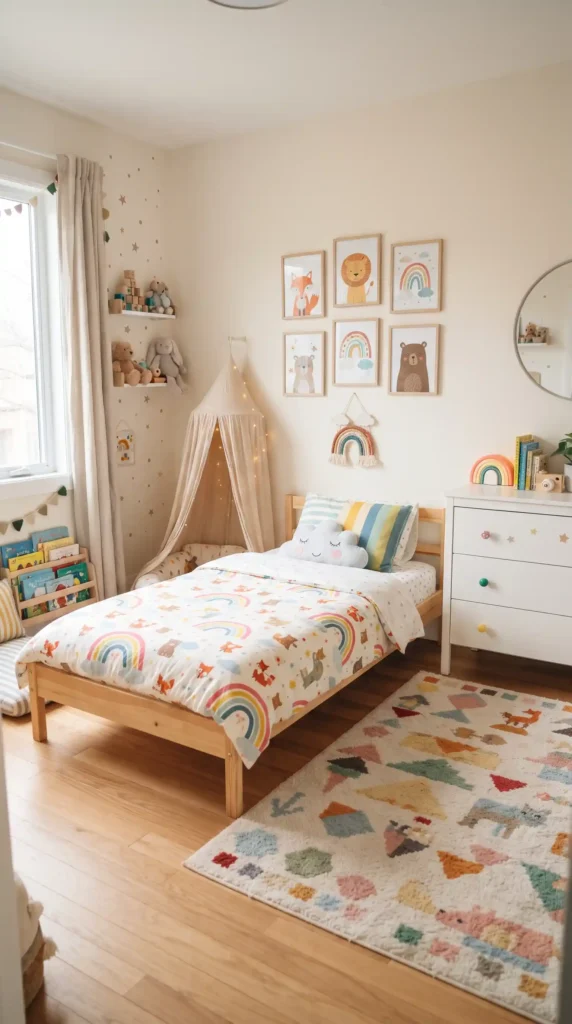
Dividing the room into simple activity zones can make the space easier for preschoolers to understand and use.
Create a Cozy Reading Corner
Place a small bookshelf beside a floor cushion, beanbag, or comfortable chair. Add a soft lamp or nearby wall light for a cozy reading atmosphere.
Keep the area simple so your child can easily choose and return books.
Set Up a Creative Activity Area
A small table with washable art supplies, paper, puzzles, or building activities can give your preschooler a dedicated creative space.
Use nearby storage containers so the materials can be put away after activities.
Create a Small Pretend-Play Zone
A play kitchen, doll corner, building area, or dress-up station can encourage imaginative play. Keep the zone organized so it does not take over the entire bedroom.
Choose furniture that can be removed or repurposed when your child’s interests change.
5. Personalize the Preschooler Bedroom With Flexible Details
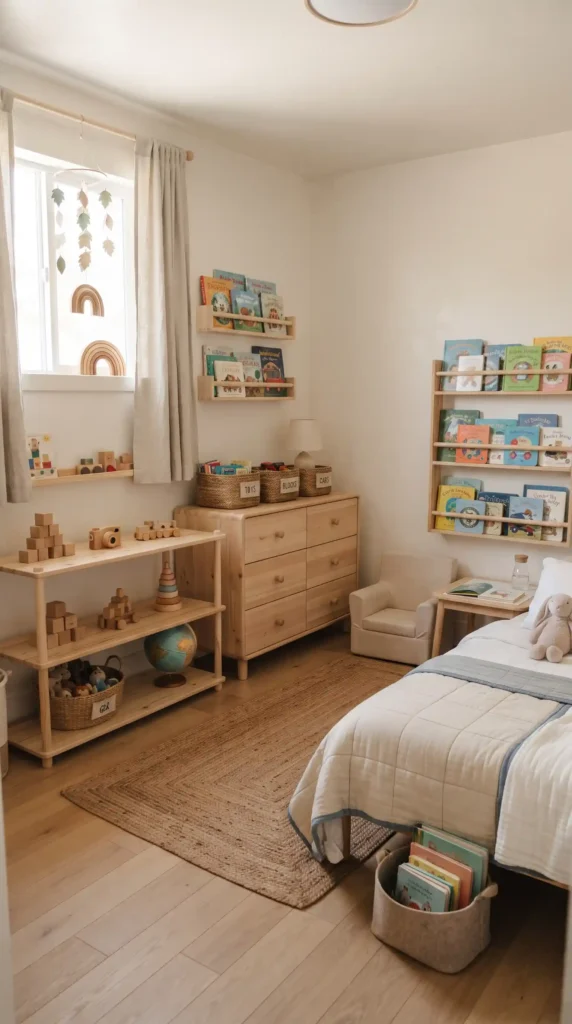
Personal touches can make a child’s bedroom feel special without making permanent changes to the room.
Add a Personalized Name Display
A simple name sign or framed name print can create a personal focal point. Choose a timeless design that works with the room’s colors.
Place it where it can be enjoyed without creating a safety concern.
Display Your Child’s Artwork
Create a small rotating art display using a suitable frame system, clips, or a dedicated display area. This gives your child a place to see their creative work.
Rotate the pieces regularly so the display remains fresh.
Add a Growth or Milestone Chart
A simple height chart can become a fun and meaningful part of the room. Choose a design that complements the overall décor instead of looking too heavily themed.
It can remain useful for several years as your child grows.
Use Bedding to Change the Theme
Bedding is one of the easiest ways to update a preschooler’s bedroom. Choose neutral main furniture and change the duvet, sheets, pillows, or blanket when your child’s interests change.
This allows the room to feel new without replacing major furniture.
6. Finish Your Preschooler’s Bedroom With Safe and Balanced Details
A good preschool bedroom should support independence while remaining comfortable, organized, and appropriate for a growing child.
Keep Furniture Secure
Secure dressers, shelves, bookcases, and other furniture according to the manufacturer’s instructions. Avoid placing unstable furniture where a child could climb or pull it over.
Use age-appropriate furniture and follow current child-safety guidance.
Keep Frequently Used Items Accessible
Place books, toys, and everyday items at a safe height so your preschooler can participate in simple routines.
Store items that require adult supervision out of reach.
Leave Enough Open Floor Space
Preschoolers need room to move and play. Avoid filling every part of the bedroom with furniture.
An open central area can make the room feel more comfortable and flexible.
Choose Decor That Can Grow With Your Child
Simple artwork, natural materials, neutral furniture, and flexible textiles are easier to adapt as your child gets older.
Change smaller decorative details rather than redesigning the entire room whenever interests change.
Frequently Asked Questions
What should a preschooler’s bedroom include?
A preschool bedroom can include a suitable bed, accessible storage, books, a play area, and a small space for reading or creative activities. The exact setup depends on the child’s needs and available room.
How can I make a preschool bedroom grow with my child?
Choose timeless furniture, flexible colors, accessible storage, and removable décor. Bedding, artwork, rugs, and accessories can then change as your child grows.
What colors work well for a preschooler’s room?
Soft colors such as cream, warm white, beige, sage green, dusty blue, and muted yellow are flexible choices. Add brighter colors through artwork, bedding, rugs, and toys.
How do I organize a preschooler’s bedroom?
Use low shelves, labeled baskets, accessible book storage, and clearly defined areas for toys, clothing, and creative materials. Regularly remove items your child has outgrown.
How can I make a preschool bedroom more fun?
Add playful artwork, colorful bedding, animal designs, a fun rug, a reading corner, or a small pretend-play area. These details can make the room exciting without requiring permanent themed furniture.
Should a preschooler’s bedroom have a study area?
A small table can be useful for drawing, crafts, puzzles, and early learning activities. It does not need to be a formal desk, especially if your child is still in preschool.
Final Thoughts
The best for preschoolers kids room ideas create a balance between play, comfort, organization, and growing independence. Start with simple colors, flexible furniture, accessible storage, and open floor space.
Then add personality through artwork, bedding, rugs, books, and playful activity zones. By keeping the larger elements timeless and making smaller details easy to change, you can create a preschool bedroom that feels special today and remains useful for years to come.