Abstract Wall Art Ideas for a More Interesting Room
Stacy and Home shares these abstract wall art ideas to help you make any room feel more interesting, stylish, and personal. Abstract artwork can add color, movement, texture, and personality without requiring a complete room makeover.
From large statement paintings to simple line art and textured designs, abstract wall art works with many interior styles. You can use one large piece as a focal point or combine several artworks to create a more collected look.
1. Start With Simple Abstract Wall Art
Abstract art does not have to be complicated to make an impact. Simple shapes, soft colors, and clean lines can bring personality to an otherwise plain wall.
Hang a Large Abstract Painting
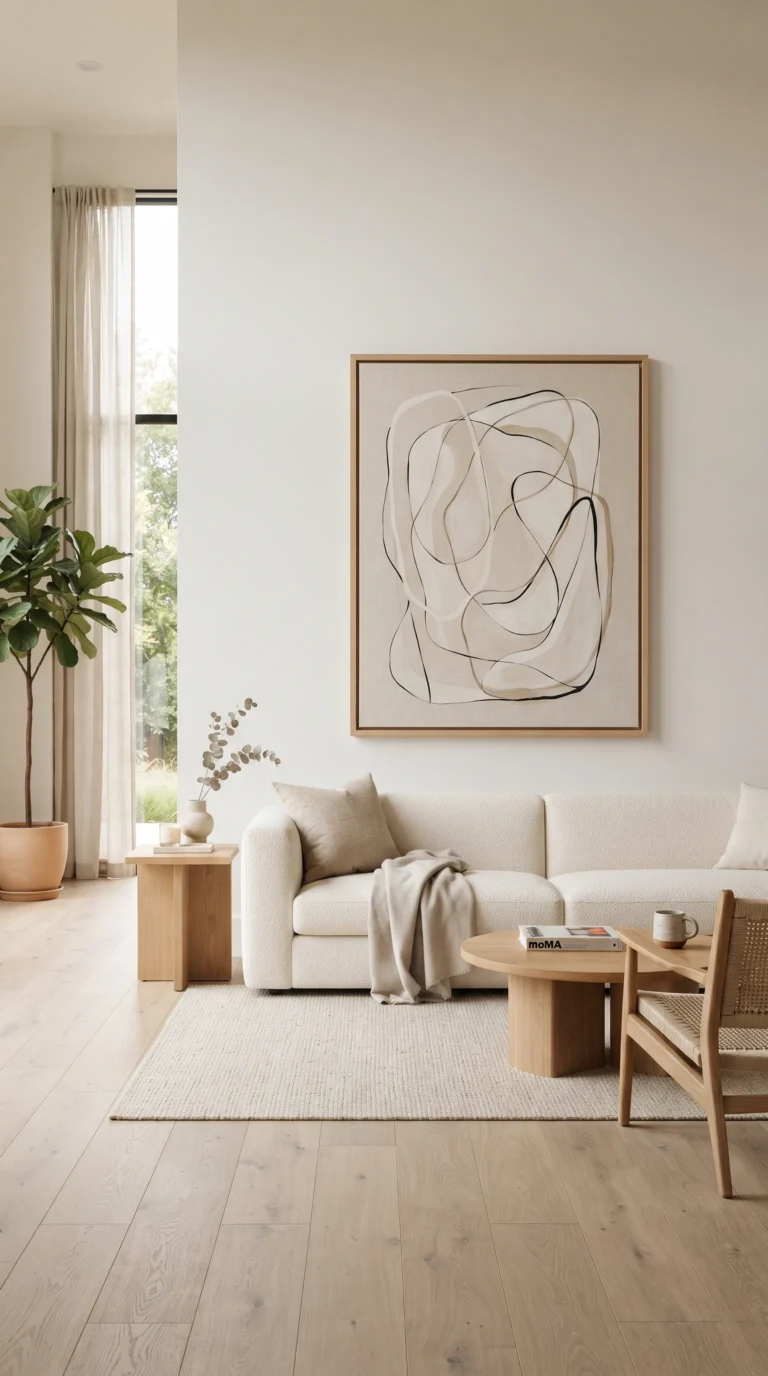
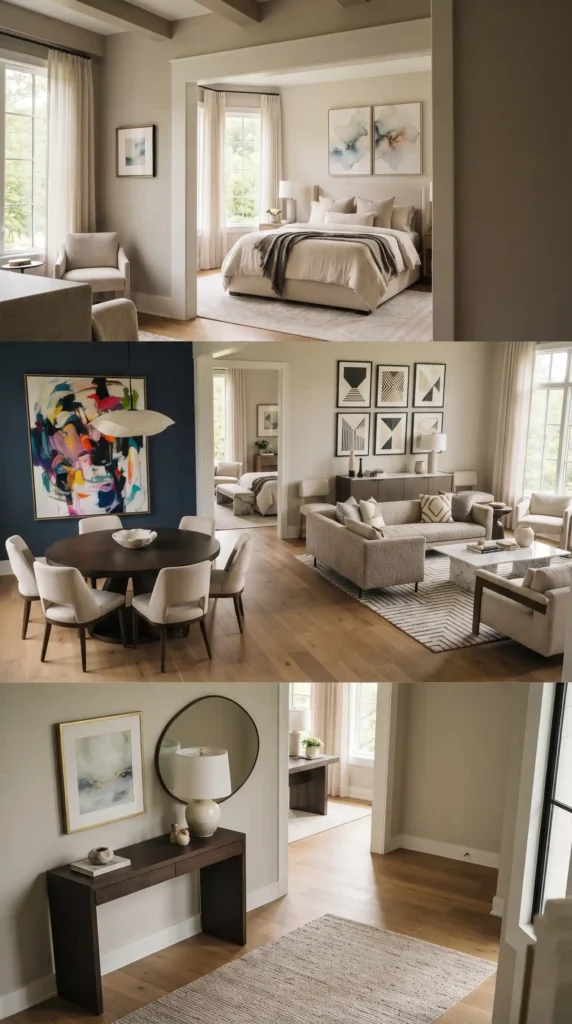
A large abstract painting can become the main focal point in a living room, bedroom, dining room, or entryway. Choose a design with colors that connect to your existing furniture and décor.
A large piece works especially well above a sofa, console table, bed, or dining table where it can visually anchor the space.
Try Minimal Abstract Line Art
Minimal line drawings are an easy way to add artistic detail without making a room feel busy. Black lines on a cream or white background work beautifully in modern and minimalist interiors.
You can also choose line art with muted colors if you want a softer appearance.
Use Geometric Abstract Art
Geometric artwork uses shapes such as circles, squares, arches, and rectangles to create visual interest. It can give a room a clean and structured appearance.
Choose simple geometric designs for a modern space or combine warmer colors for a more relaxed look.
Display Small Abstract Prints
Small abstract prints are useful when you have limited wall space. Place one above a small table or combine several prints to create a compact arrangement.
Use matching or coordinating frames to make the collection feel intentional.
2. Add Color With Abstract Wall Art
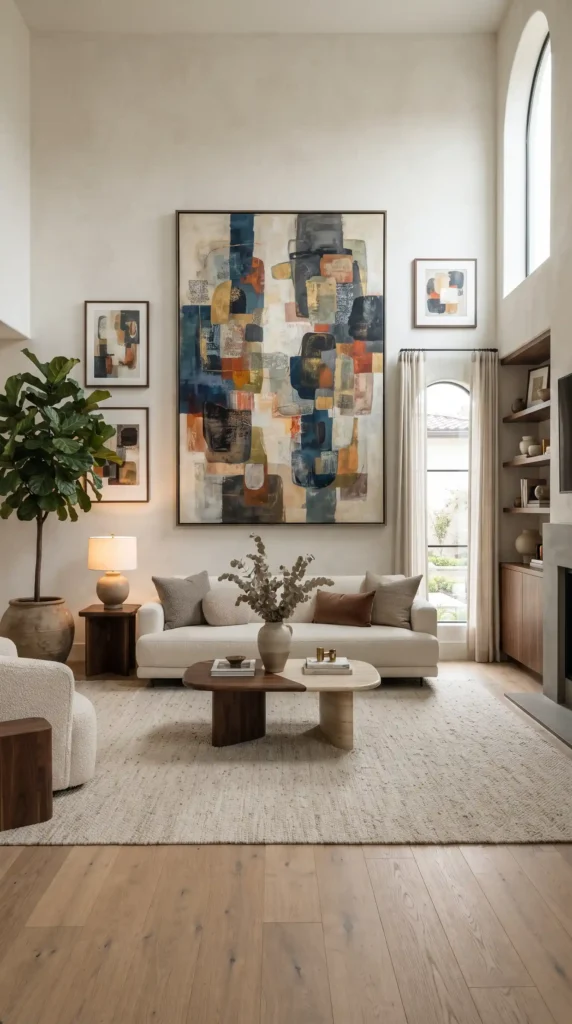
One of the easiest ways to use abstract art is to introduce color without repainting an entire room. Artwork can provide a controlled amount of contrast.
Choose Warm Earthy Colors
Terracotta, beige, brown, cream, rust, and muted orange can make abstract artwork feel warm and inviting. These shades work well with natural wood, woven materials, and neutral furniture.
Earthy abstract art is especially suitable for cozy living rooms and bedrooms.
Add Soft Blue and Green Artwork
Blue and green abstract paintings can create a calm and natural feeling. Muted shades work well in bedrooms, bathrooms, living rooms, and coastal-inspired interiors.
Repeat one or two colors from the artwork through cushions, rugs, curtains, or other small accessories.
Create Contrast With Black and White
Black-and-white abstract art can add strong visual contrast to a neutral room. It works particularly well with modern furniture and simple décor.
If the room already contains many colors, monochrome artwork can provide a more balanced appearance.
3. Create Interesting Abstract Wall Art Displays
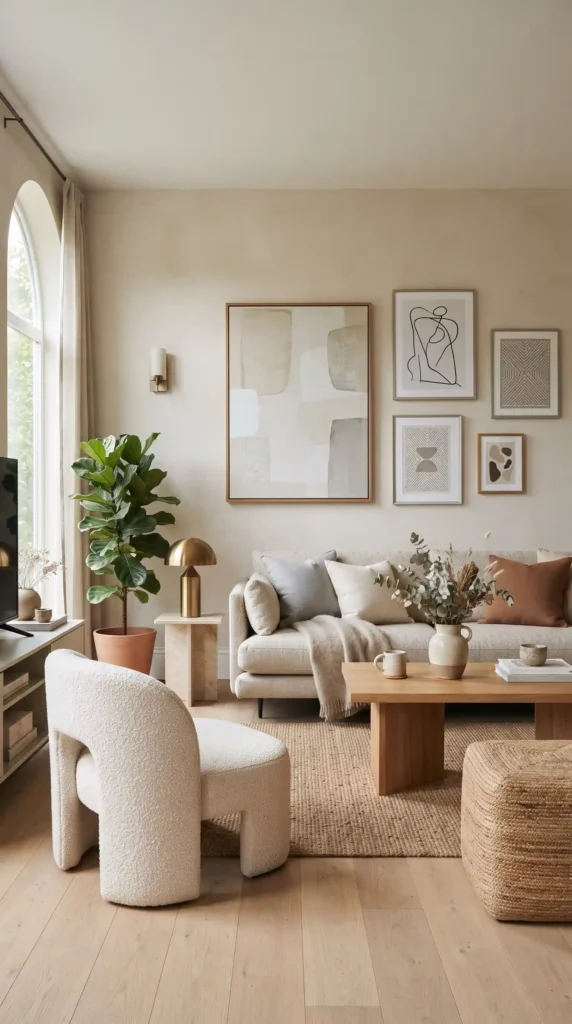
Instead of using a single artwork, create a display that gives the wall more depth and personality. The arrangement should still feel connected to the rest of the room.
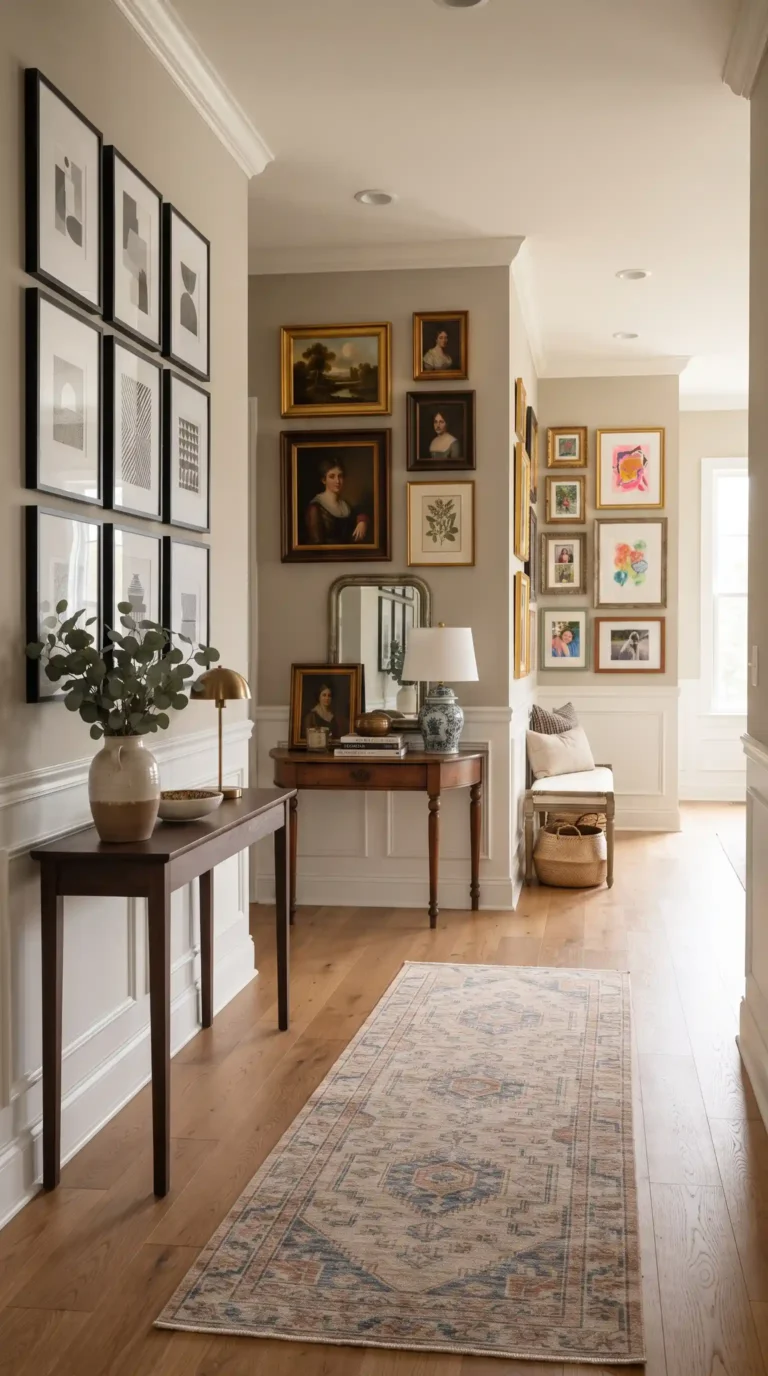
Build an Abstract Gallery Wall
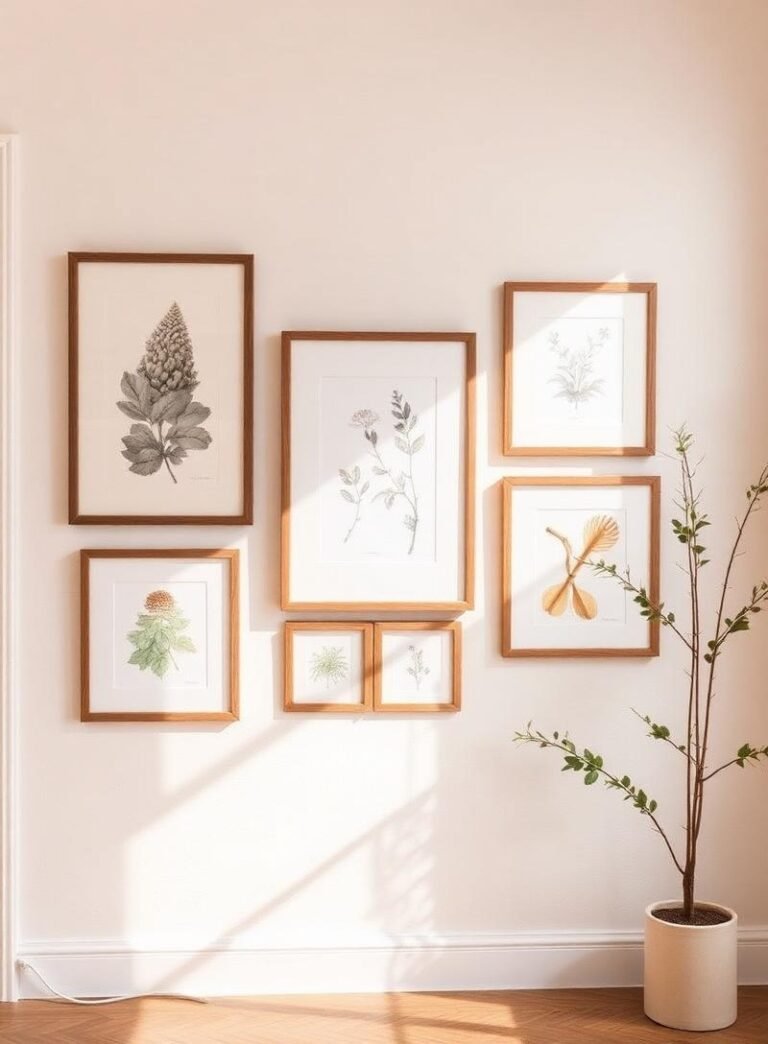
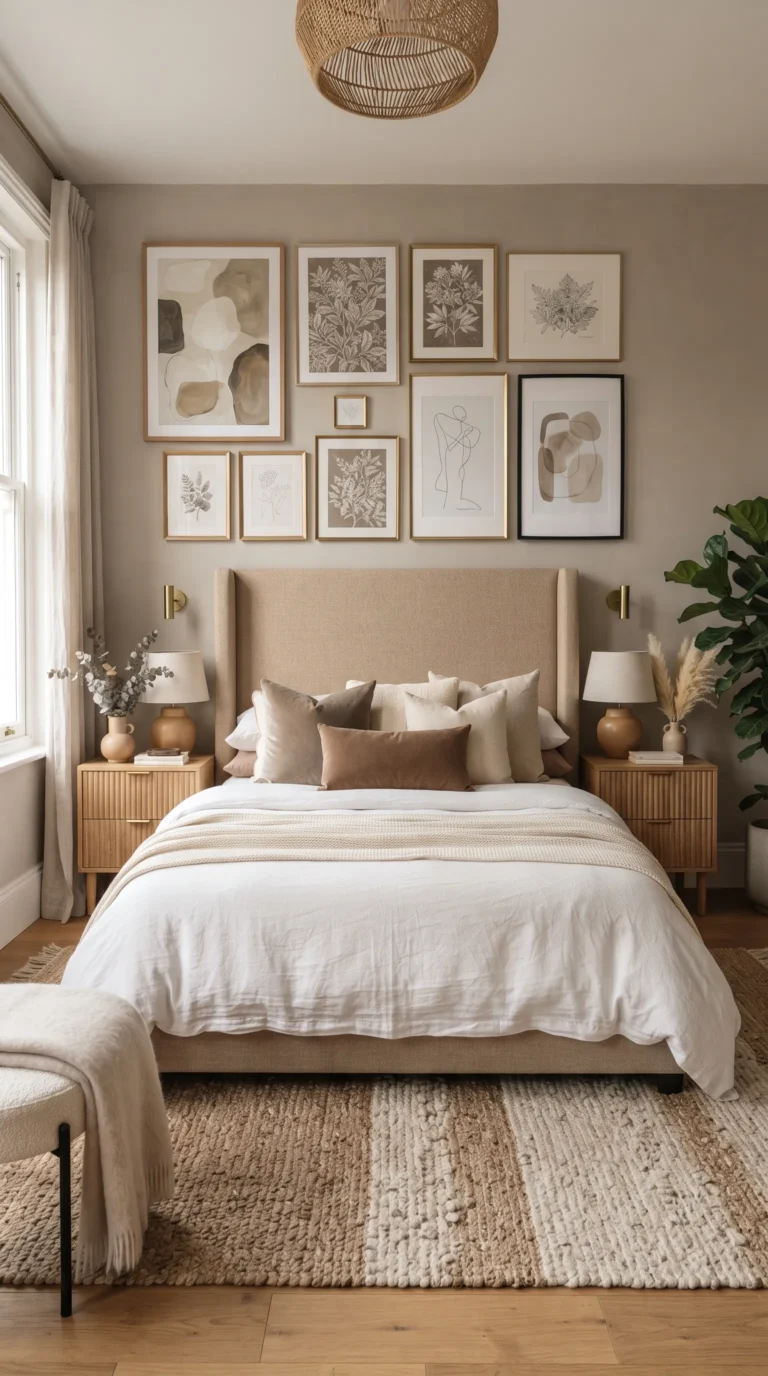
Combine several abstract prints with different shapes, patterns, and sizes. Keep at least one connecting element, such as a shared color palette or similar frame finish.
Lay the artwork on the floor first to test the arrangement before hanging it.
Mix Abstract Art With Photography
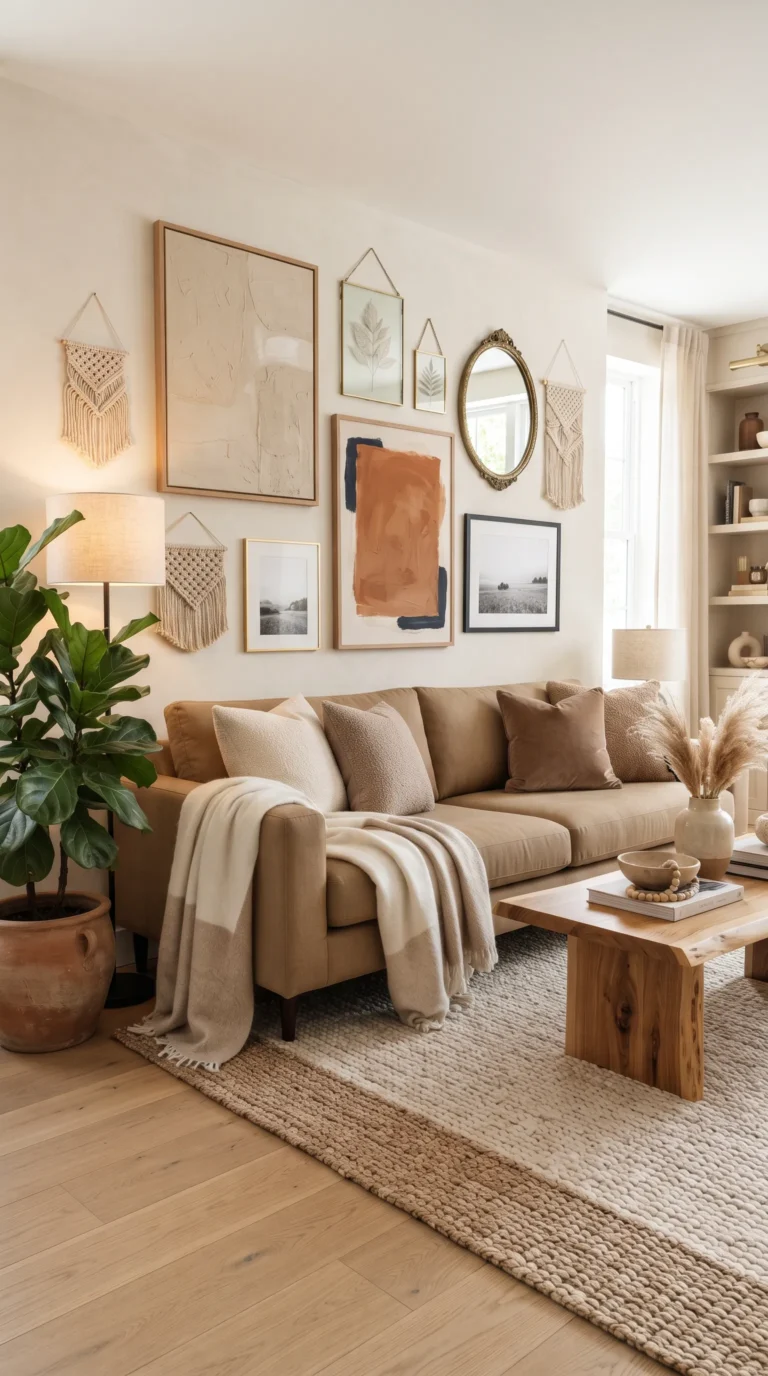
Abstract prints can look interesting alongside photographs. For example, combine a colorful abstract painting with neutral landscape or black-and-white photography.
The contrast between the different art styles can make the gallery wall feel more personal.
Combine Different Frame Sizes
Mixing large and small frames creates movement on the wall. Start with your largest piece and arrange smaller artwork around it.
Keep the spacing consistent enough to prevent the display from looking random.
4. Use Texture and Shape to Add More Interest
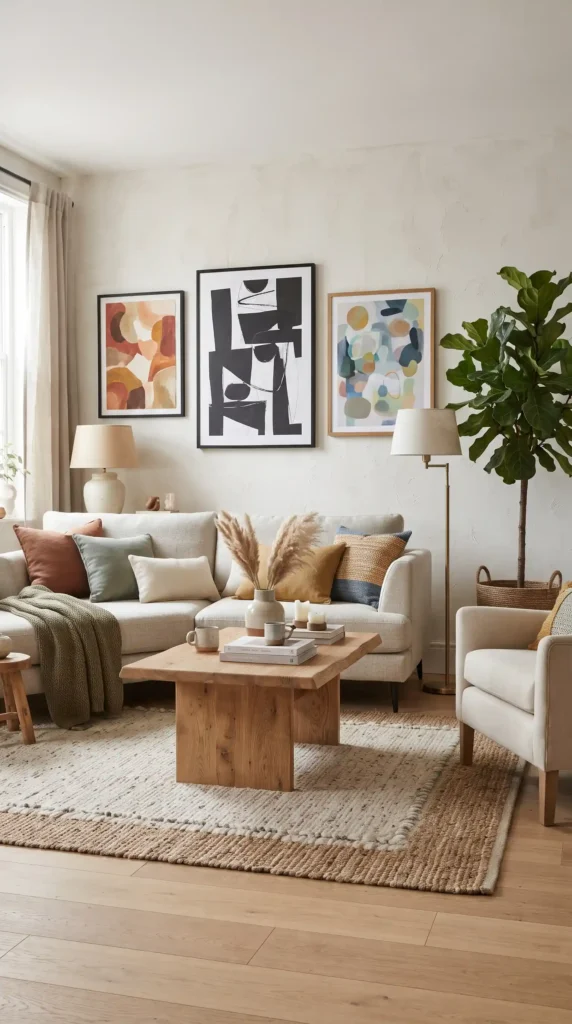
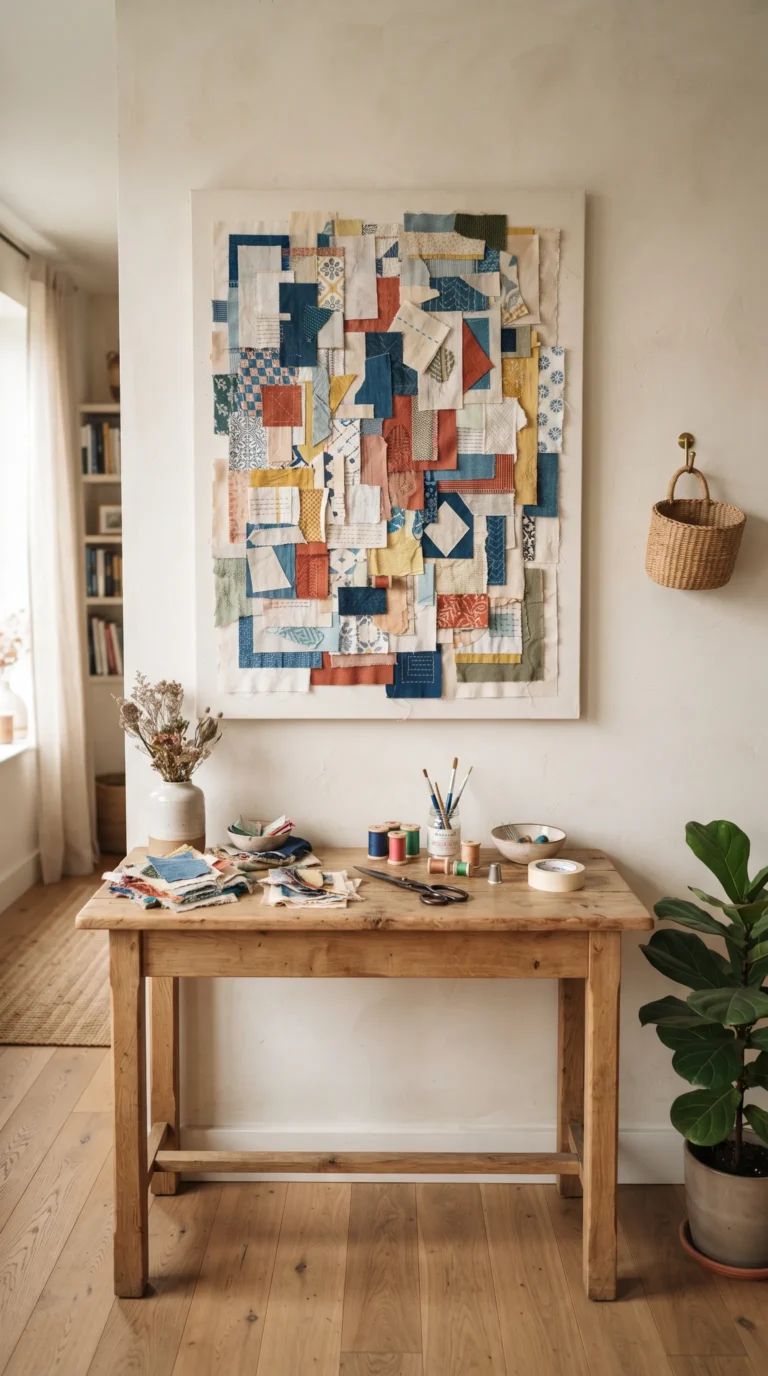
Abstract wall art is not limited to flat printed artwork. Texture and three-dimensional details can make a room feel more layered.
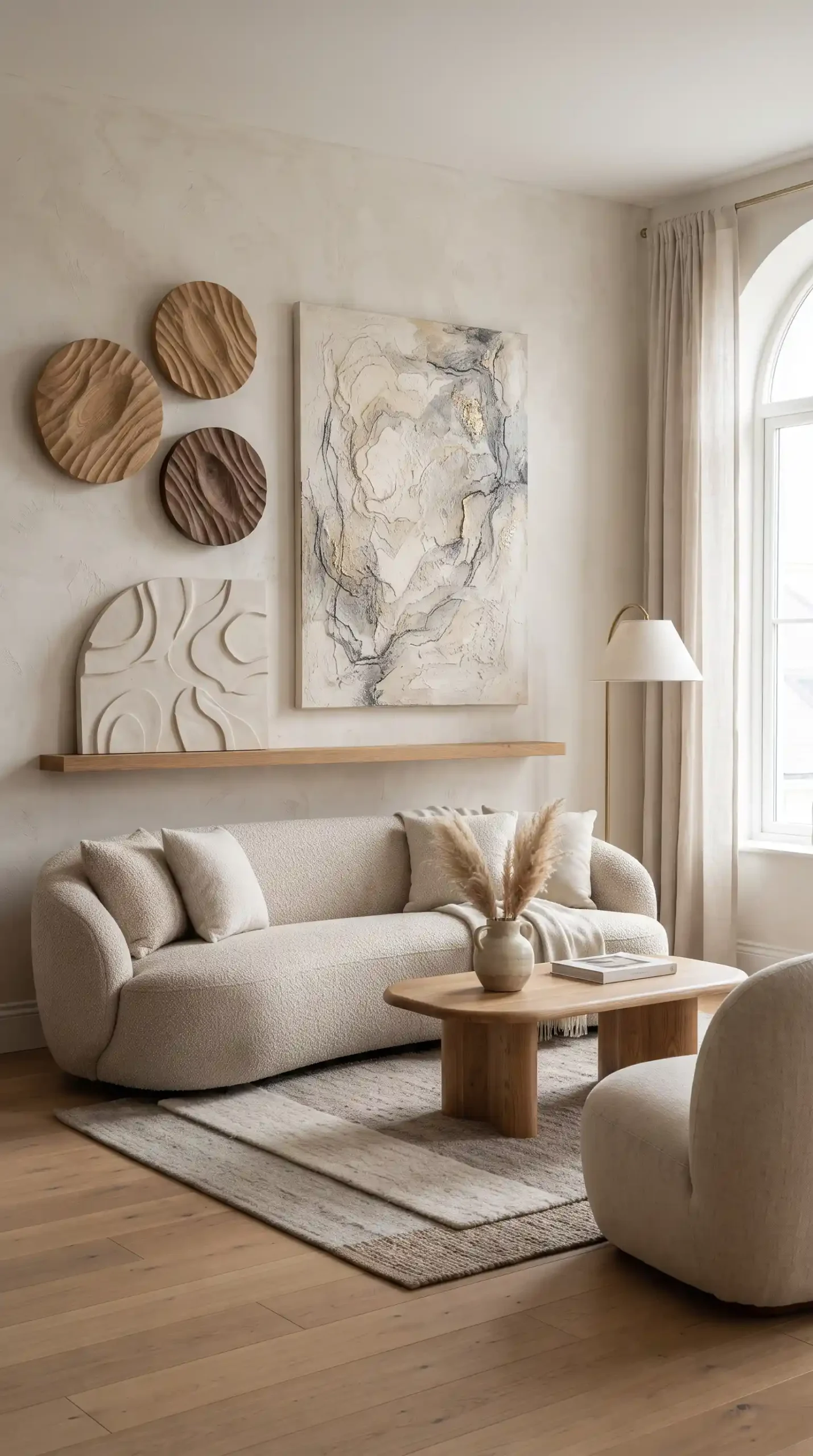
Display Textured Abstract Artwork
Canvas, plaster-style finishes, raised designs, and other textured artwork can add depth to a plain wall. Neutral textured art is particularly useful when you want visual interest without strong colors.
Pair it with soft fabrics and natural materials for a relaxed interior.
Add an Abstract Wall Sculpture
A simple metal, ceramic, or wooden wall sculpture can create a more three-dimensional display. Choose a piece with an interesting shape but keep the surrounding décor simple.
This approach works well when you want the wall itself to become part of the room’s design.
Try Organic Abstract Shapes
Artwork inspired by natural curves, arches, waves, and irregular forms can soften a room with many straight lines.
Organic abstract shapes work beautifully with curved furniture, natural wood, plants, and soft textiles.
5. Match Abstract Art to Different Room Styles
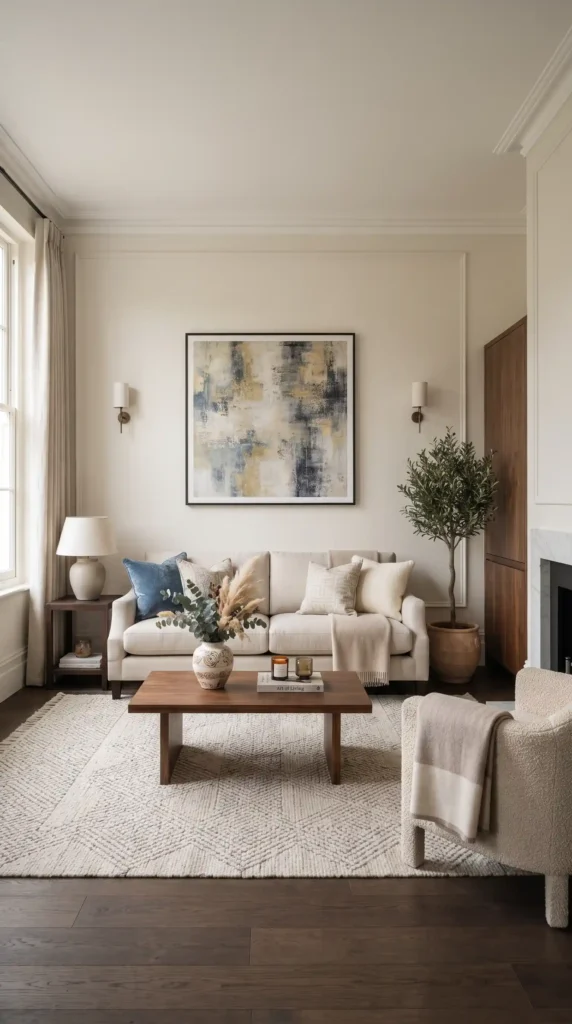
The right abstract artwork can work in almost any room. Instead of choosing art first, consider the existing style and colors of the space.
Style a Modern Room With Abstract Art
Choose clean shapes, simple compositions, and limited colors for a modern room. Black, white, beige, gray, and muted earthy tones can create a polished appearance.
Use simple frames and avoid overcrowding the walls.
Create a Cozy Bedroom With Abstract Artwork
Soft abstract artwork can make a bedroom feel more personal and relaxing. Choose muted colors, gentle shapes, and textured finishes.
Hang a larger piece above a dresser or on an empty wall where it can add interest without competing with the bed.
Add Abstract Art to a Dining Room
A bold abstract painting can give a dining room more personality. Place it above a sideboard, buffet, or dining table to create a strong visual feature.
Choose colors that complement the dining chairs, lighting, and table.
Use Abstract Art in an Entryway
The entryway is a great place for a small statement piece. A colorful abstract print above a console table can make the first part of your home feel more welcoming.
Add a small lamp, vase, or decorative object below the artwork to complete the arrangement.
6. Finish Your Abstract Wall Art With Balanced Details
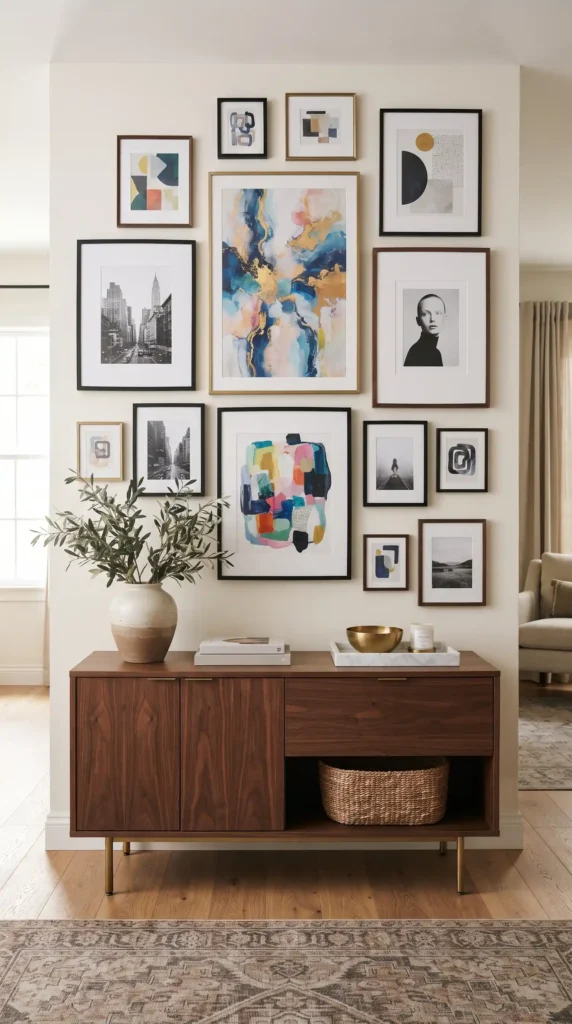
The best abstract wall art ideas should feel connected to the rest of your room. Before adding more artwork, step back and look at the overall balance of color, scale, and empty wall space.
Choose the Right Artwork Size
Large artwork can anchor a large wall, while smaller pieces are better suited to narrow spaces or compact arrangements. Consider the furniture below the artwork before choosing the size.
Artwork that is too small can look disconnected, while an oversized piece may overwhelm a small room.
Keep the Color Palette Connected
Your abstract art does not need to match the room exactly. However, repeating one or two colors elsewhere can make the space feel more cohesive.
Use cushions, rugs, curtains, flowers, or decorative objects to subtly repeat colors from the artwork.
Leave Enough Empty Wall Space
Do not feel the need to decorate every empty section of the wall. Some open space helps the artwork stand out and keeps the room from feeling crowded.
A single carefully chosen piece can often have more impact than several unrelated decorations.
Choose Art You Enjoy Looking At
Abstract artwork is highly personal. Choose colors, shapes, and compositions that fit your taste and the atmosphere you want in the room.
A thoughtful piece that you enjoy is more likely to remain useful as your decorating style changes.
Frequently Asked Questions
What is the best abstract wall art for a living room?
Large abstract paintings, geometric prints, textured artwork, and colorful canvas pieces can work well in living rooms. Choose a size and color palette that complements the sofa, rug, and other major furniture.
How do I choose abstract wall art for my room?
Start with the room’s existing colors, furniture style, and available wall space. Then choose artwork that adds contrast or repeats a few colors already present in the room.
Can abstract wall art work in a small room?
Yes. Small abstract prints or one appropriately sized statement piece can add personality without taking up much visual space. Avoid filling every wall with artwork.
Should abstract wall art match my furniture?
It does not need to match exactly. Coordinating colors, materials, or shapes can create a connection between the artwork and furniture.
How many abstract artworks should I hang together?
There is no fixed number. One large piece can work as a focal point, while three to seven coordinated pieces can create a gallery wall.
What colors are popular for abstract wall art?
Popular choices include earthy neutrals, beige, black and white, muted green, soft blue, terracotta, and warm brown. The best choice depends on your room’s existing color palette.
Final Thoughts
Abstract wall art is a simple way to bring personality, color, texture, and visual movement into your home. You can make a strong statement with one large painting or create a more collected appearance with several coordinated pieces.
Start by considering your room’s size, furniture, colors, and decorating style. Then choose artwork that adds something meaningful to the space without creating unnecessary clutter. With the right balance, abstract artwork can make an ordinary wall feel much more interesting and intentional.