Minimalist Wall Art Ideas for a More Interesting Room
Stacy and Home shares these minimalist wall art ideas to help you make your room more interesting without adding visual clutter. Minimalist art uses simple shapes, calm colors, clean lines, and thoughtful designs to create a polished look.
The best minimalist wall art does not need to be large or complicated. A carefully chosen print, framed sketch, abstract piece, or simple photograph can add more character to an empty wall while keeping the room calm and balanced.
Choose Simple Artwork With a Clean Look
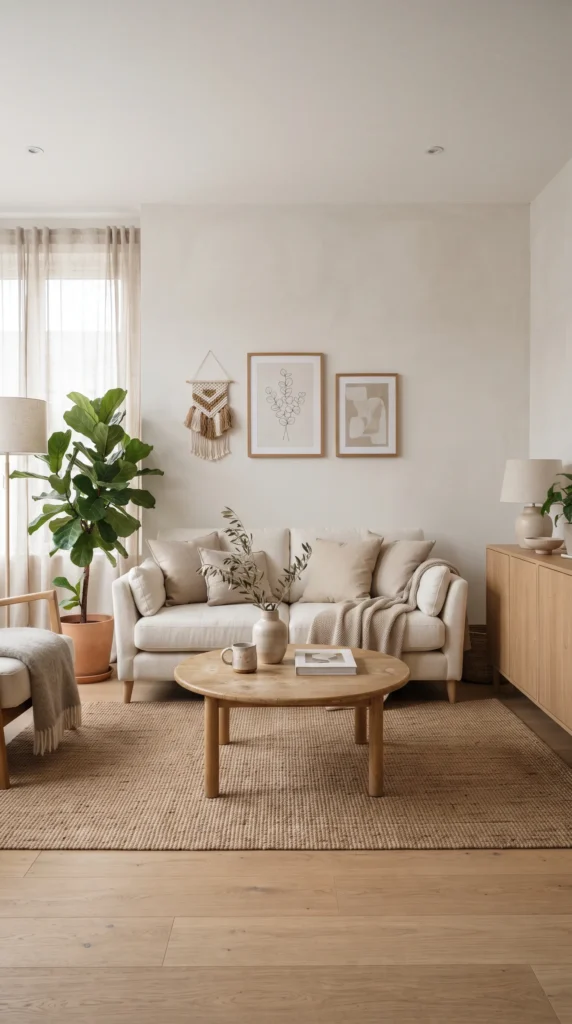
Minimalist wall art is all about simplicity. Instead of filling a wall with busy patterns, choose artwork that has a clear design and plenty of empty space.
This approach works in bedrooms, living rooms, home offices, dining areas, and even hallways.
Try Minimal Line Art
Line art is one of the easiest ways to introduce minimalist style. Simple faces, figures, plants, or abstract shapes can add personality without overwhelming the room.
Choose black, beige, brown, or muted tones for a softer appearance.
Display Simple Abstract Art
Abstract artwork can bring movement and interest to a minimalist room. Look for pieces with simple shapes, soft brushstrokes, or limited colors.
A single abstract print can work especially well above a sofa, bed, console table, or desk.
Use Black-and-White Photography
Black-and-white photography creates a timeless look. Architecture, landscapes, plants, and everyday objects can all work as minimalist wall art.
Use a simple frame to keep attention on the photograph rather than the decoration around it.
Use Neutral Colors for a Calm Atmosphere
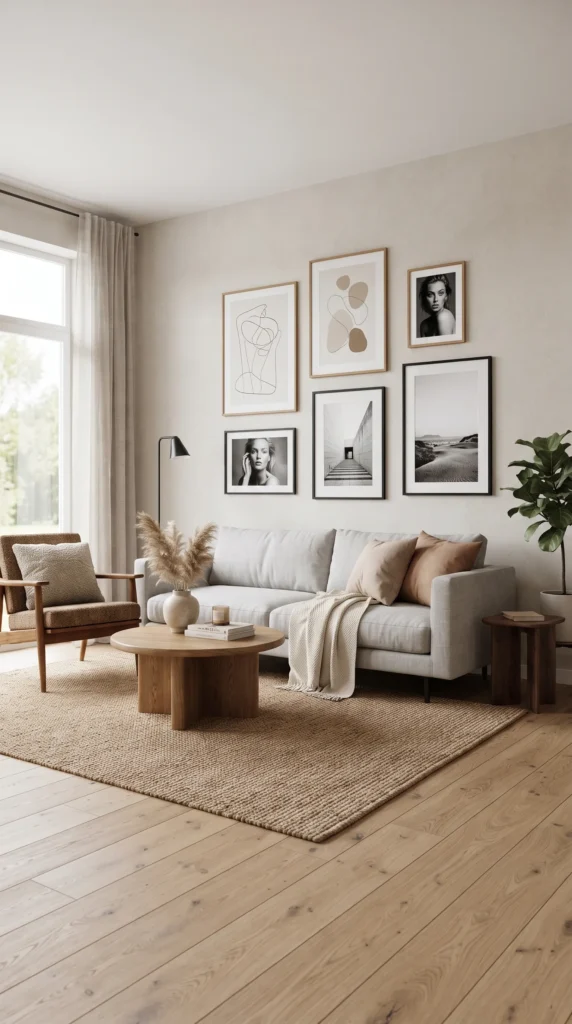
Color has a major impact on minimalist decorating. Soft and neutral shades can make wall art feel connected to the rest of the room.
You do not have to avoid color completely. The goal is simply to use it intentionally.
Choose Beige and Cream Artwork
Beige and cream artwork works beautifully in warm neutral rooms. These shades create subtle contrast while keeping the overall space relaxed.
Pair them with light wood, linen, stone, and other natural materials.
Add Muted Earth Tones
Muted green, terracotta, warm brown, and dusty blue can add personality without becoming too bold.
Choose one or two earthy colors and repeat them elsewhere in the room for a cohesive look.
Try a Soft Monochromatic Display
A monochromatic gallery can use different shades of the same color. For example, combine white, cream, beige, and light brown artwork.
This creates depth while maintaining the clean appearance associated with minimalist design.
Create Interest With Minimalist Gallery Walls
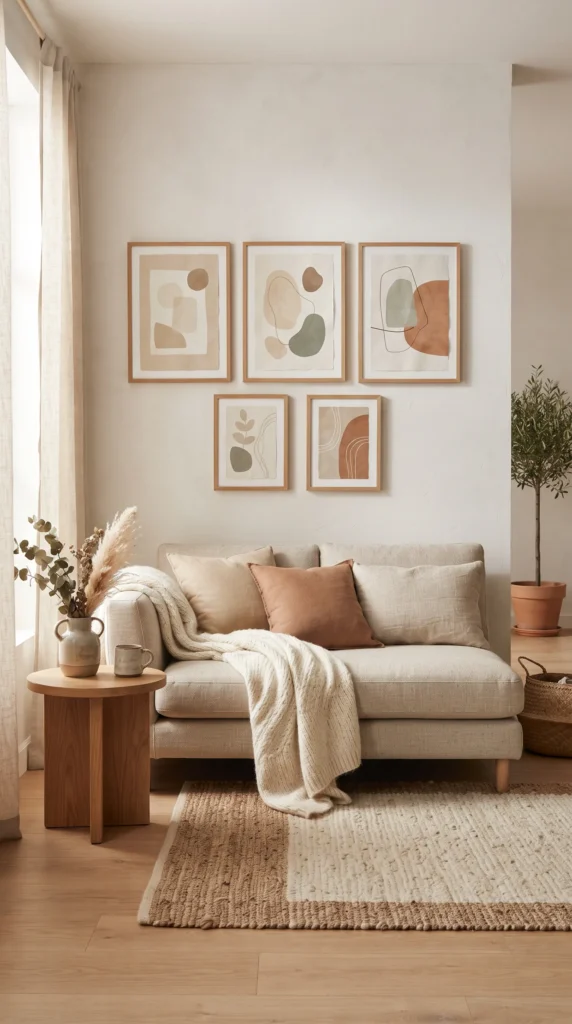
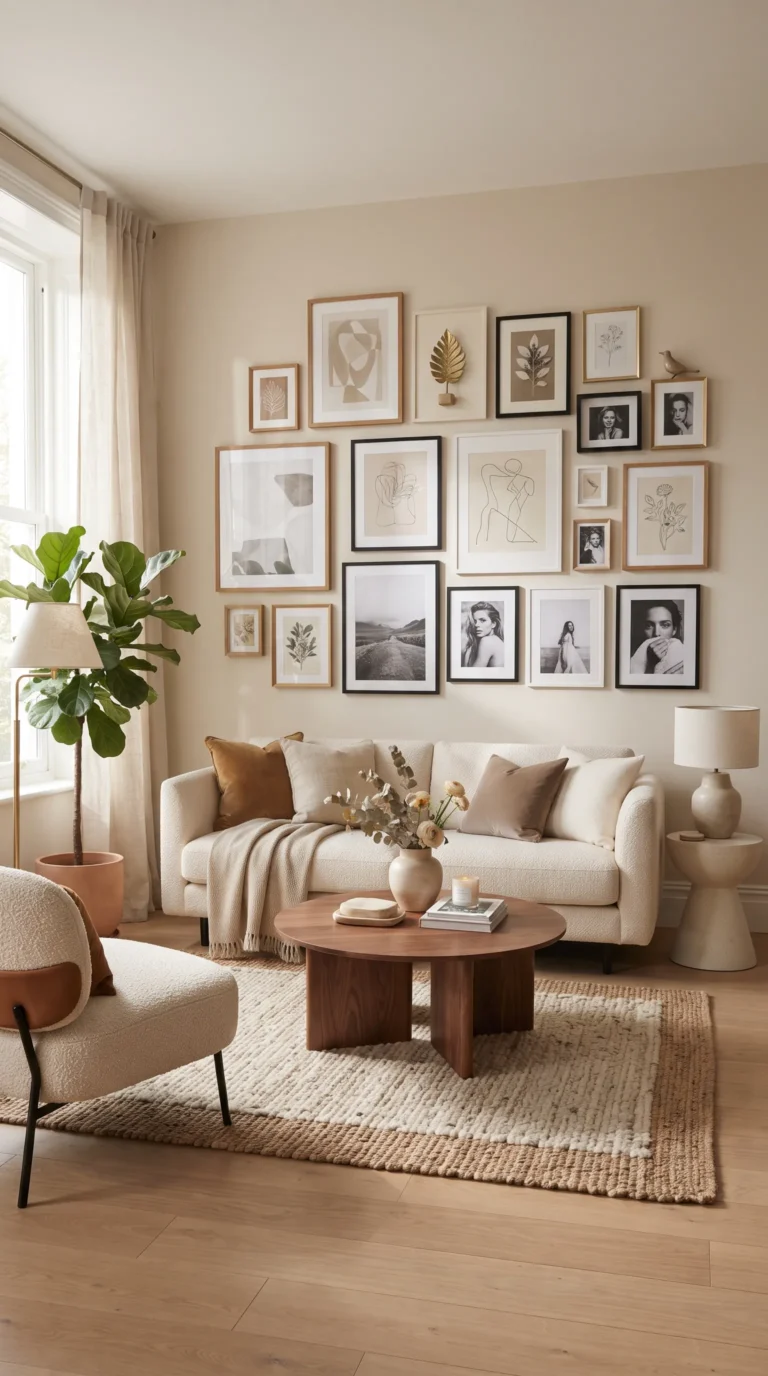
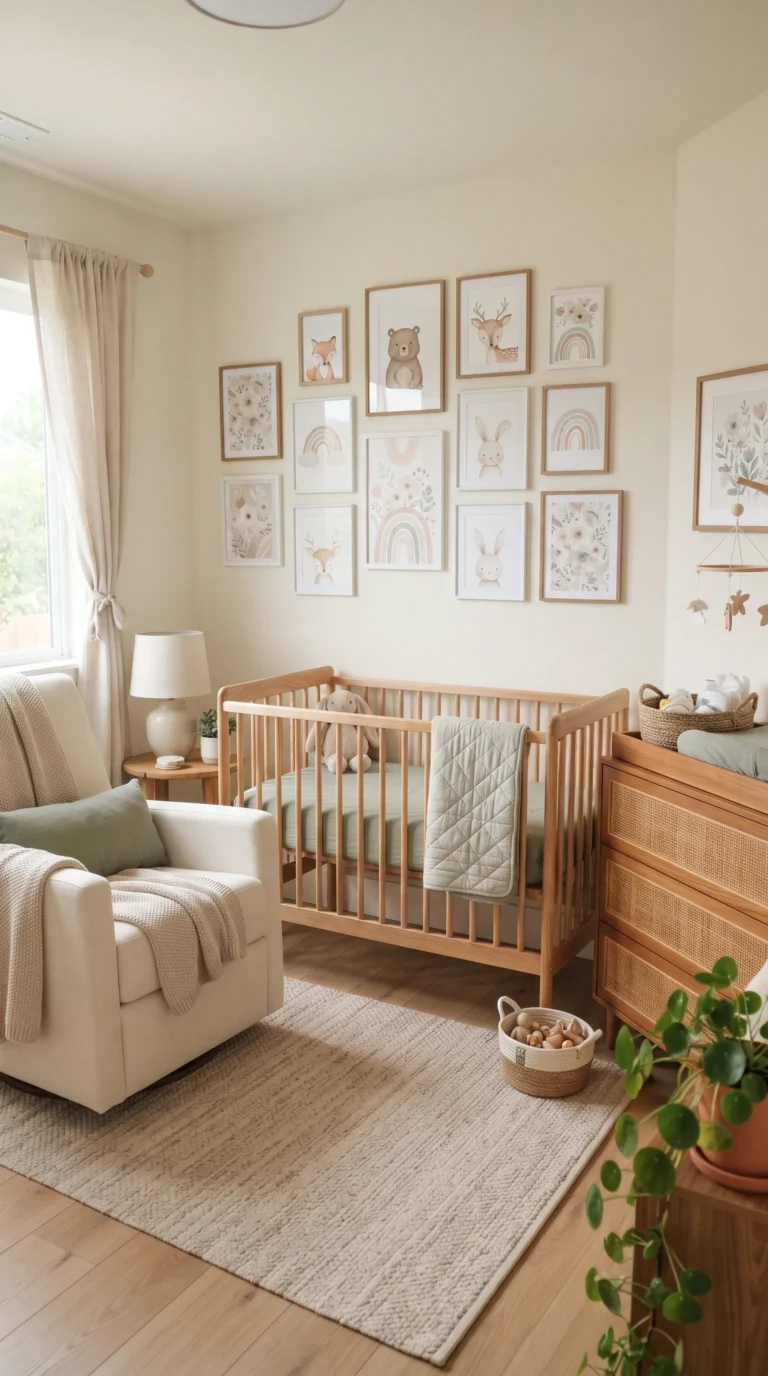
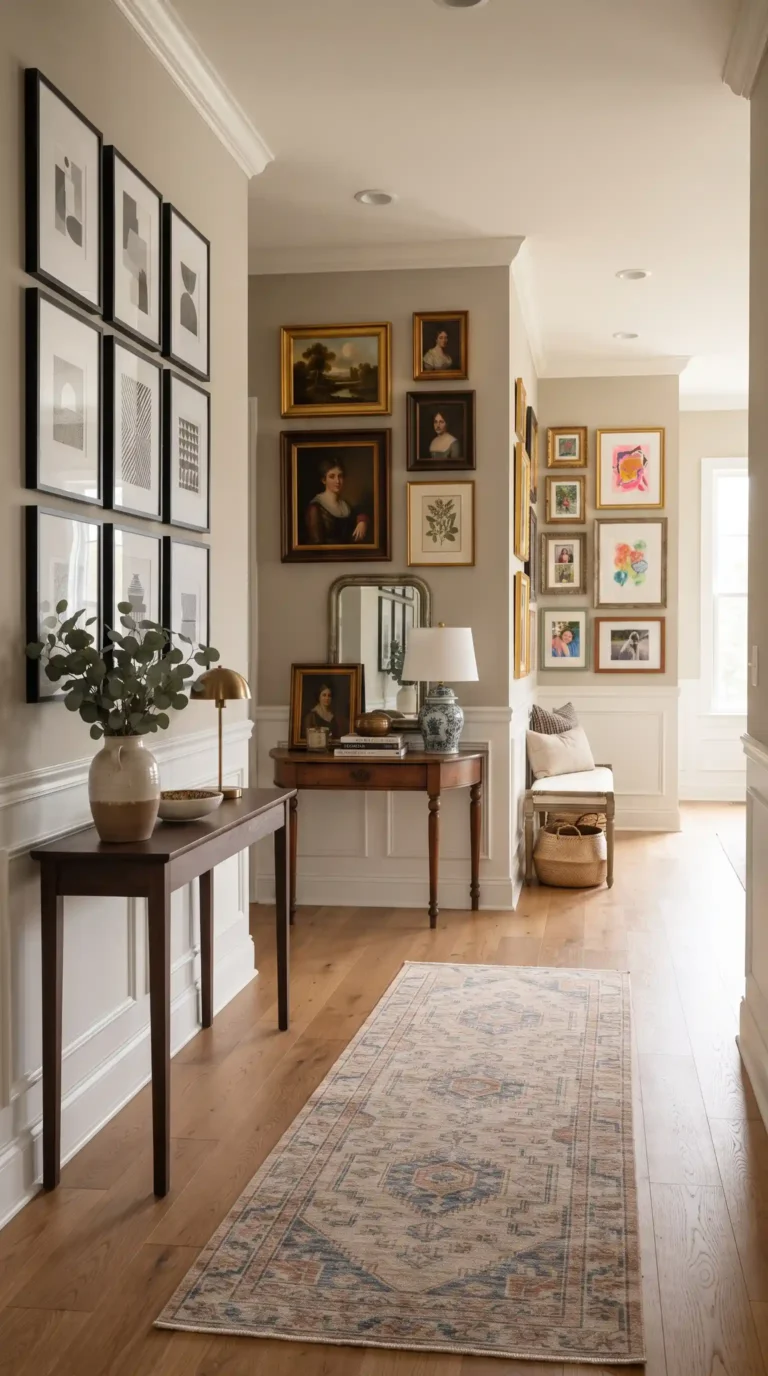
A minimalist gallery wall can still contain several pieces. The difference is that the arrangement remains organized and the artwork shares a visual connection.
Focus on spacing, frame style, and color rather than simply adding more pieces.
Use Matching Frames
Matching frames create an instant sense of order. Black, white, natural wood, or thin metal frames can all work well.
Choose one frame style and repeat it throughout the arrangement.
Leave Plenty of Empty Space
Do not place every artwork piece close together. Extra space between frames helps each piece stand out.
It also prevents a gallery wall from feeling too busy.
Create a Simple Grid
A grid arrangement is perfect for minimalist decorating. Use artwork with similar dimensions and align each piece carefully.
The result feels clean, structured, and easy to maintain.
Add Texture and Natural Elements
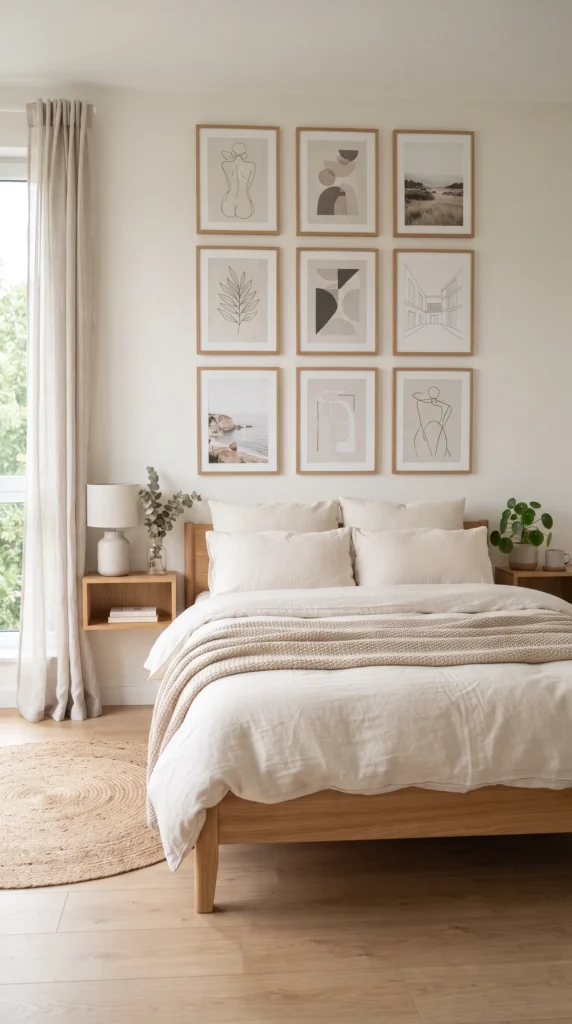
Minimalist rooms can sometimes feel too plain if everything is smooth and flat. Adding subtle texture can make the space feel warmer.
Natural materials are especially useful because they add interest without creating visual noise.
Add a Woven Wall Hanging
A simple woven wall hanging can soften a minimalist space. Choose a neutral design with a simple shape or pattern.
Place it above a bed, sofa, reading chair, or console to create a gentle focal point.
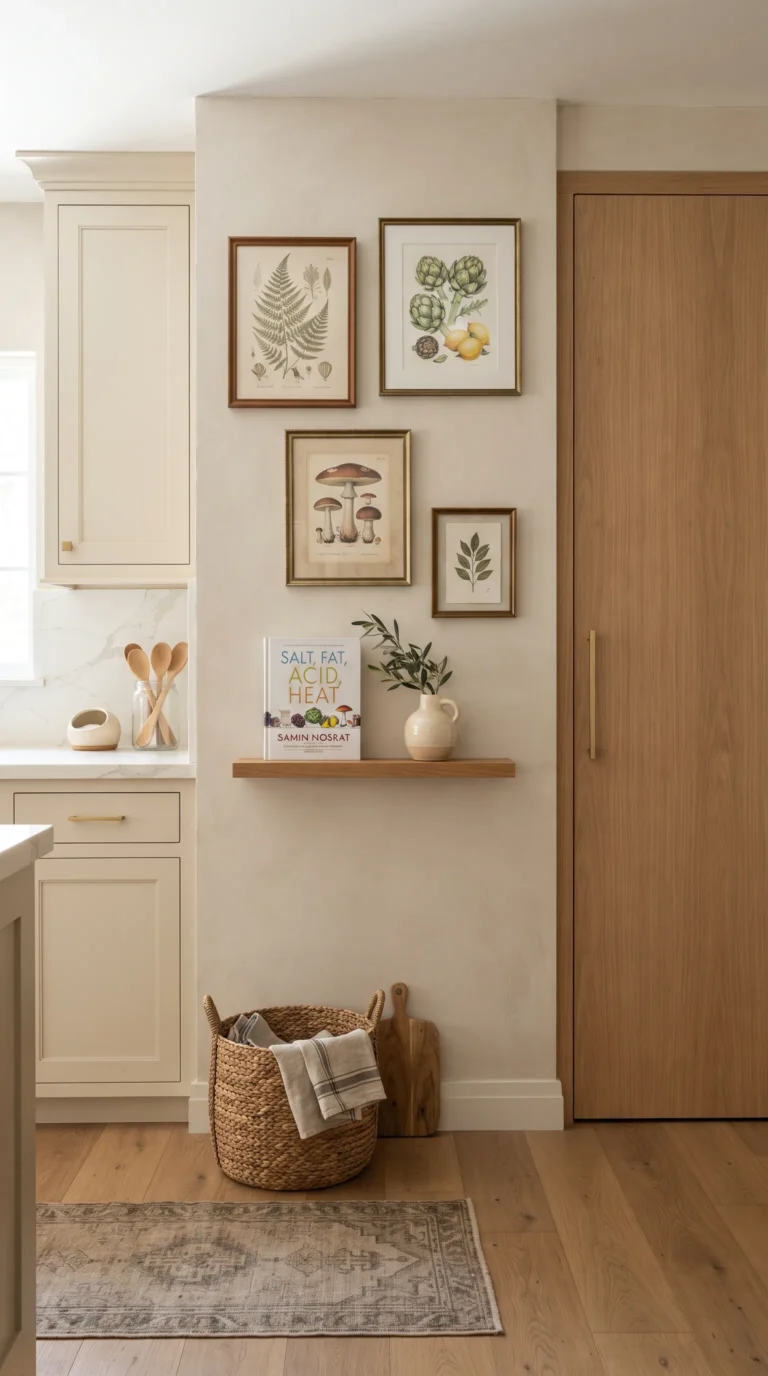
Display Botanical Artwork
Botanical prints bring a natural feeling indoors. Simple leaf drawings, pressed-flower artwork, and delicate plant illustrations can work well.
Use neutral backgrounds and understated frames to maintain the minimalist look.
Choose Natural Wood Frames
Wooden frames can add warmth to simple wall art. Light oak and other natural finishes work especially well with cream, beige, and earthy interiors.
They also connect the artwork with other wooden furniture in the room.
Style Minimalist Wall Art in Different Rooms
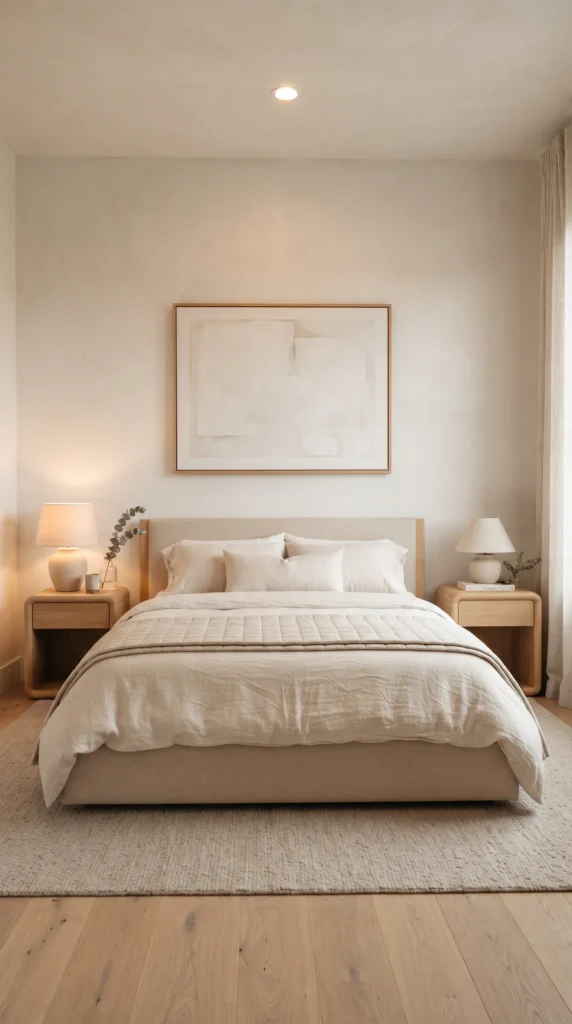
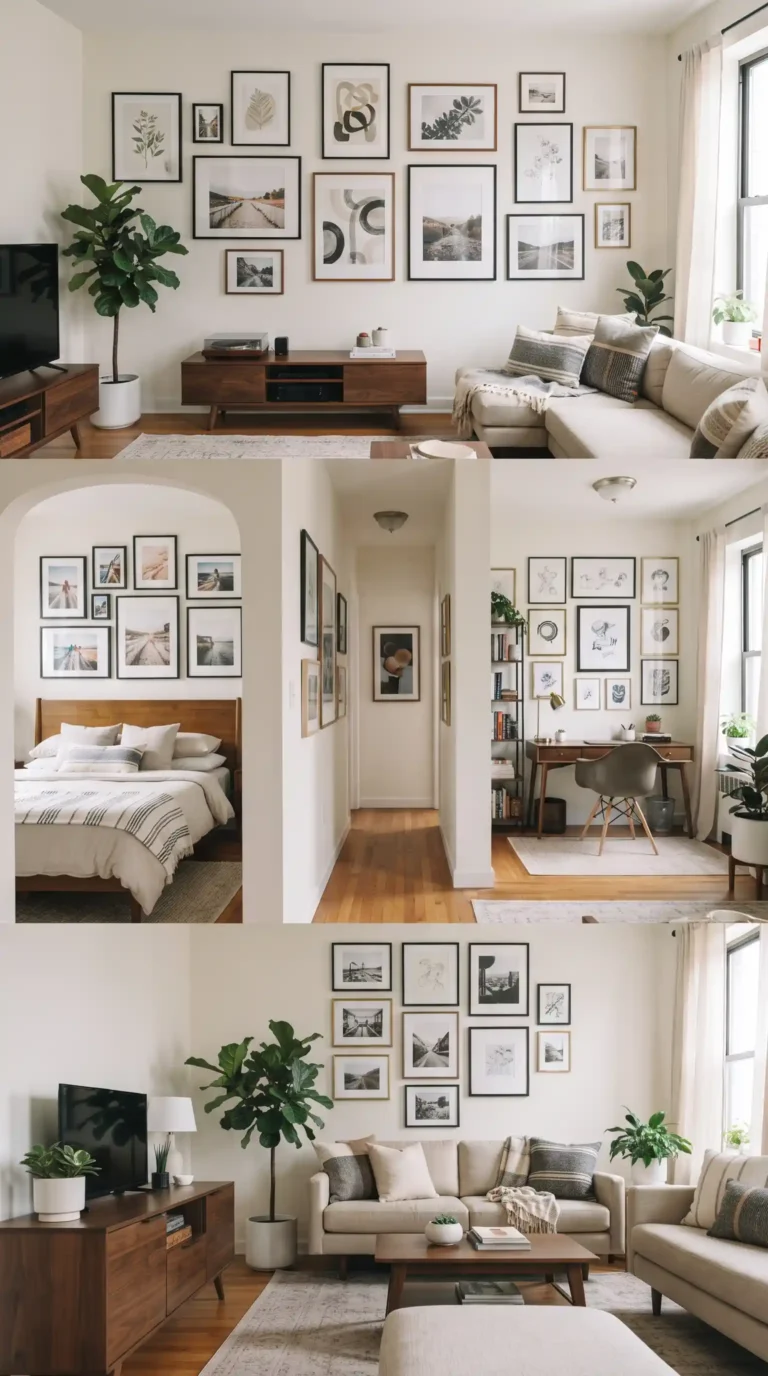
One advantage of minimalist artwork is its flexibility. The same design principles can work throughout the home, but the artwork should still match the purpose and mood of each room.
Choose pieces that make the space feel finished without taking away from its function.
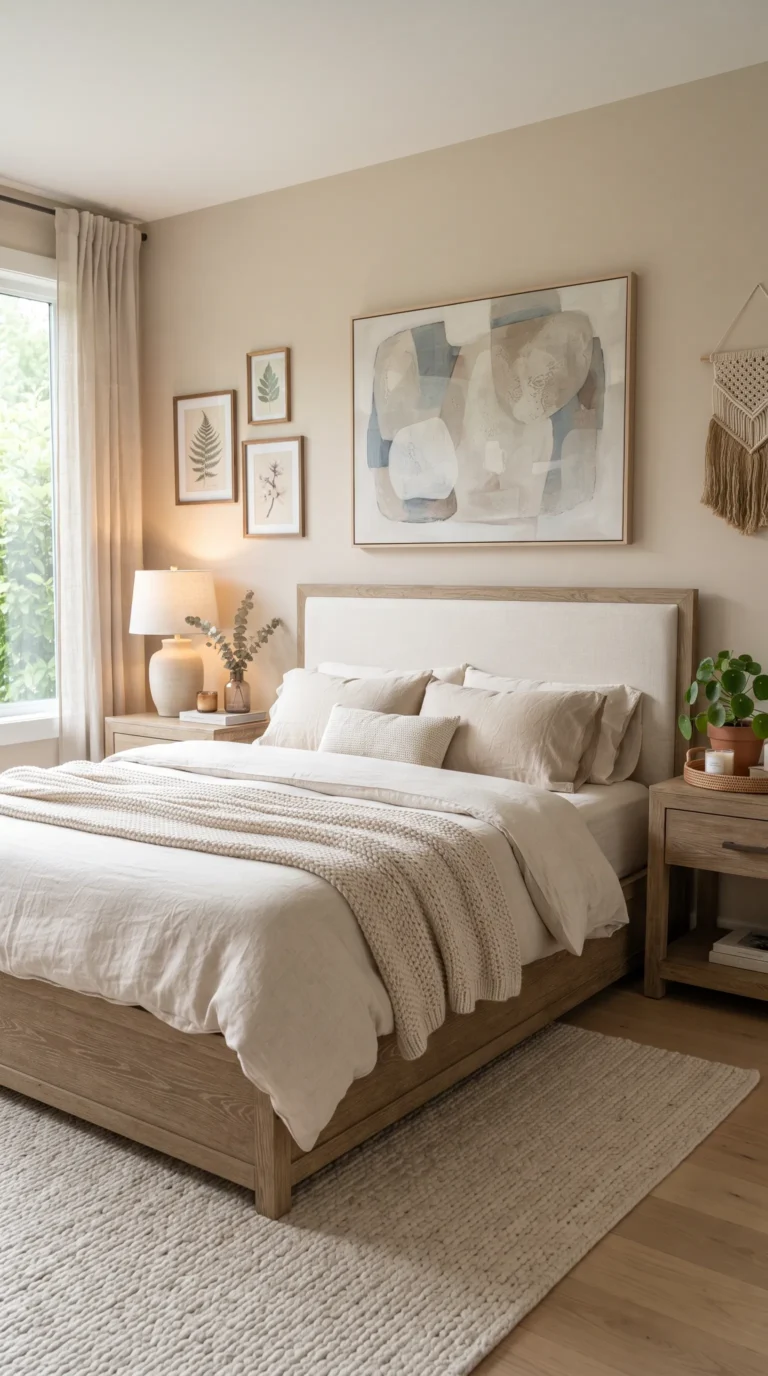
Create a Calm Bedroom
For a bedroom, choose peaceful artwork such as abstract shapes, soft landscapes, botanical prints, or simple line drawings.
Place one large piece above the bed or create a small, balanced collection.
Add Art Above a Living Room Sofa
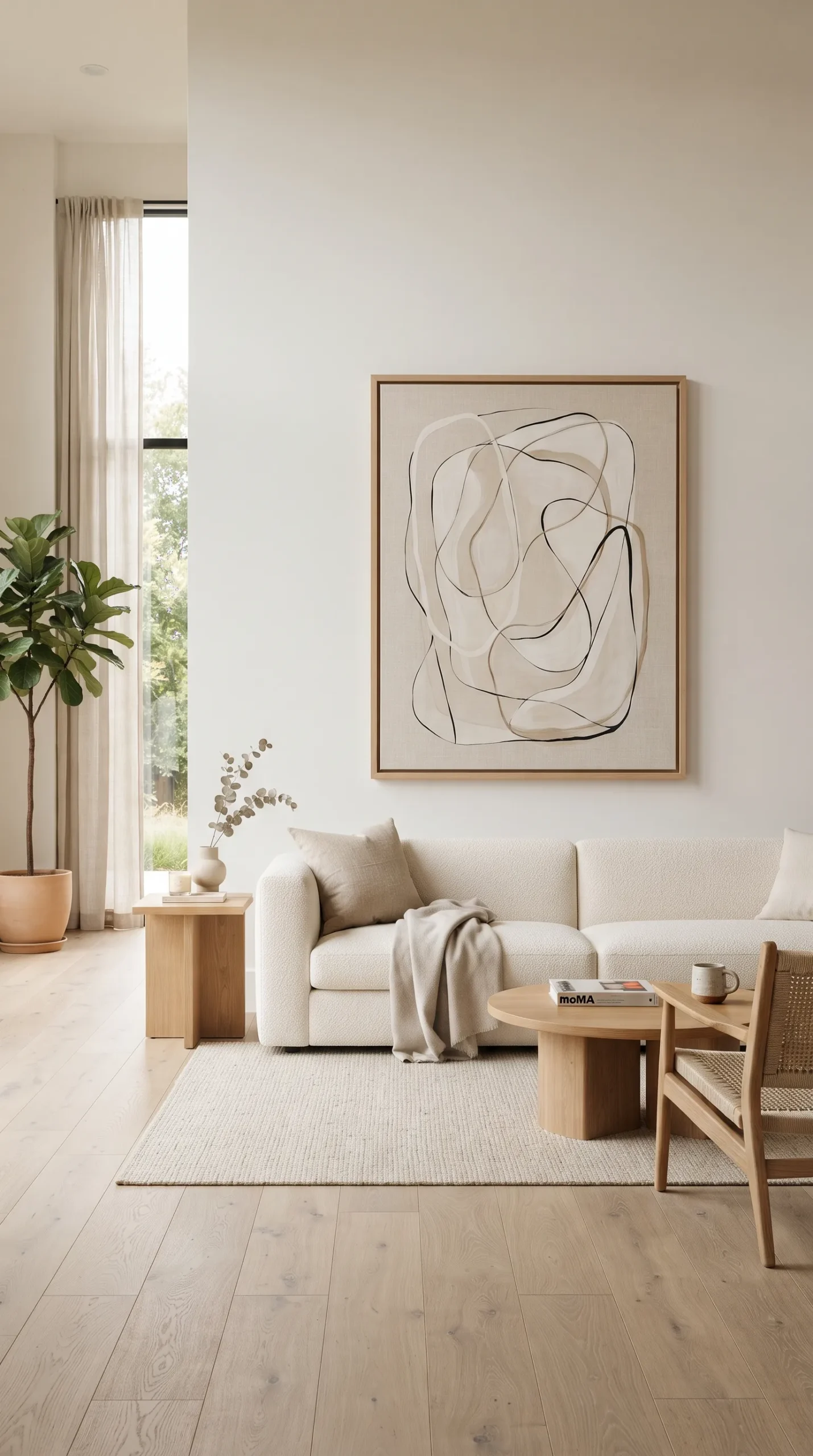
The wall above a sofa is a natural location for minimalist art. One oversized print can create a strong focal point without requiring several decorative pieces.
Choose artwork that complements your sofa, rug, curtains, and other large furniture.
Make a Home Office More Interesting
A simple piece of artwork can make a home office feel more personal. Abstract prints, architectural photography, and inspirational visual designs can add character.
Keep the artwork subtle enough that it does not become a distraction while working.
Decorate a Dining Area
Minimalist art can make a dining area feel more finished. Try a pair of coordinated prints or one large artwork piece on an empty wall.
Natural colors and simple designs can create a relaxed dining atmosphere.
FAQs
What is minimalist wall art?
Minimalist wall art uses simple designs, clean lines, limited colors, and uncluttered compositions. It focuses on a few carefully selected visual elements rather than complicated details.
What colors work best for minimalist wall art?
Neutral shades such as white, cream, beige, black, gray, and soft brown work well. Muted greens, blues, and terracotta can also add subtle color.
How can I make minimalist wall art interesting?
Use different textures, frame materials, artwork sizes, or subtle colors. The key is to create interest while keeping the overall arrangement simple.
Is a gallery wall minimalist?
Yes. A gallery wall can have a minimalist look when it uses consistent frames, coordinated artwork, simple colors, and generous spacing.
Should minimalist wall art match my furniture?
It does not need to match exactly. Instead, choose artwork that shares one or two colors, materials, or design elements with the furniture and décor.
Final Thoughts
Minimalist wall art can make an empty room feel more complete without adding unnecessary decoration. Simple artwork, neutral colors, natural textures, and thoughtful spacing can create a stylish and comfortable atmosphere.
Start with one piece that you genuinely like, then build around it only if the room needs more visual interest. Whether you choose line art, abstract prints, photography, botanical designs, or a simple gallery wall, keep the arrangement intentional.
With these minimalist wall art ideas, you can create a more interesting room while maintaining the clean, peaceful feeling that makes minimalist decorating so appealing.