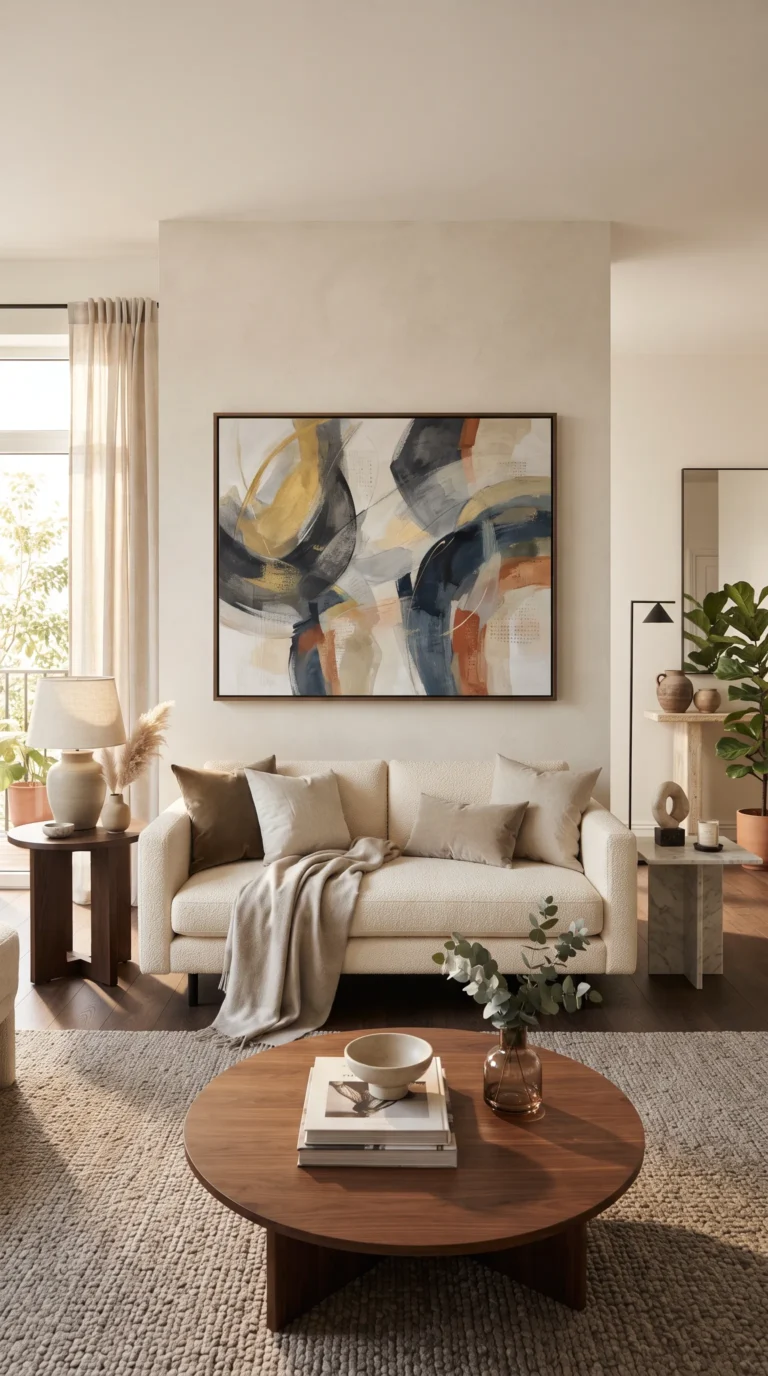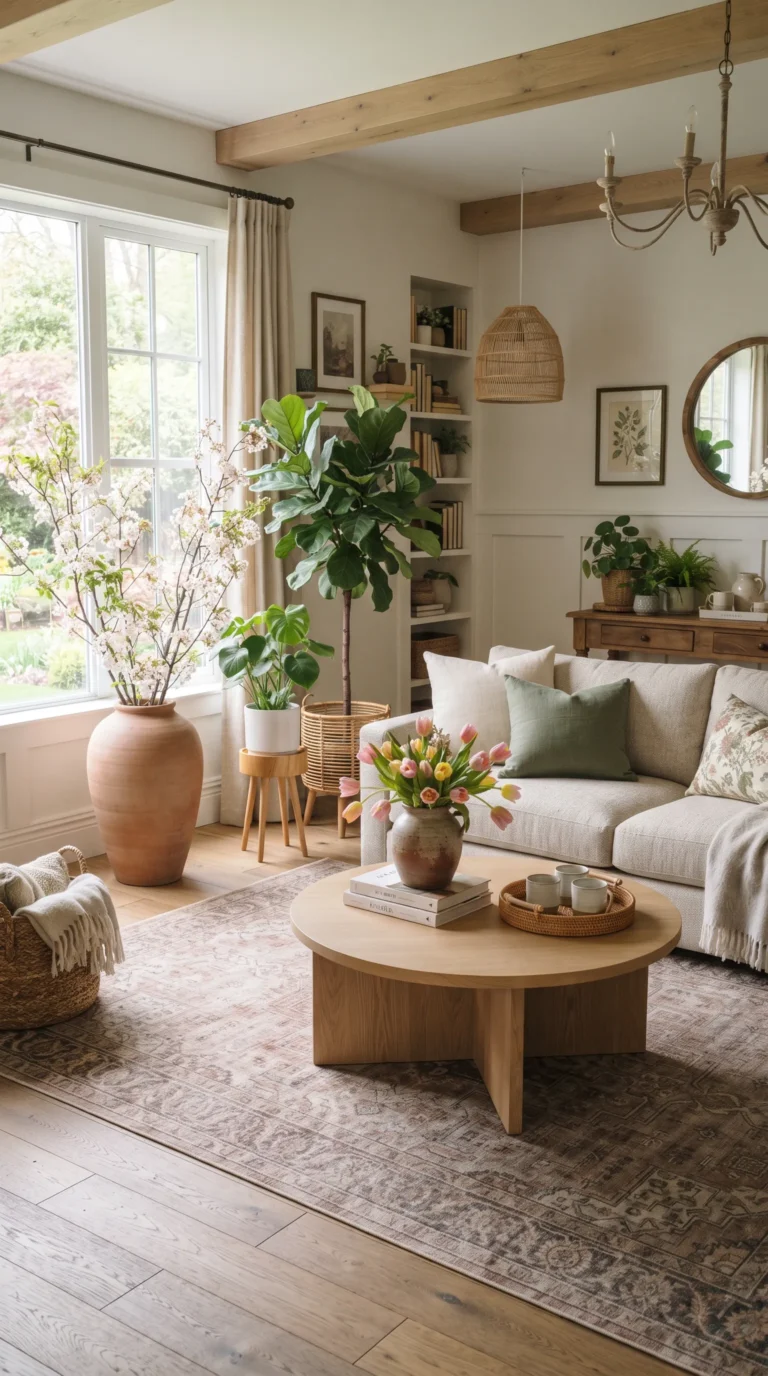
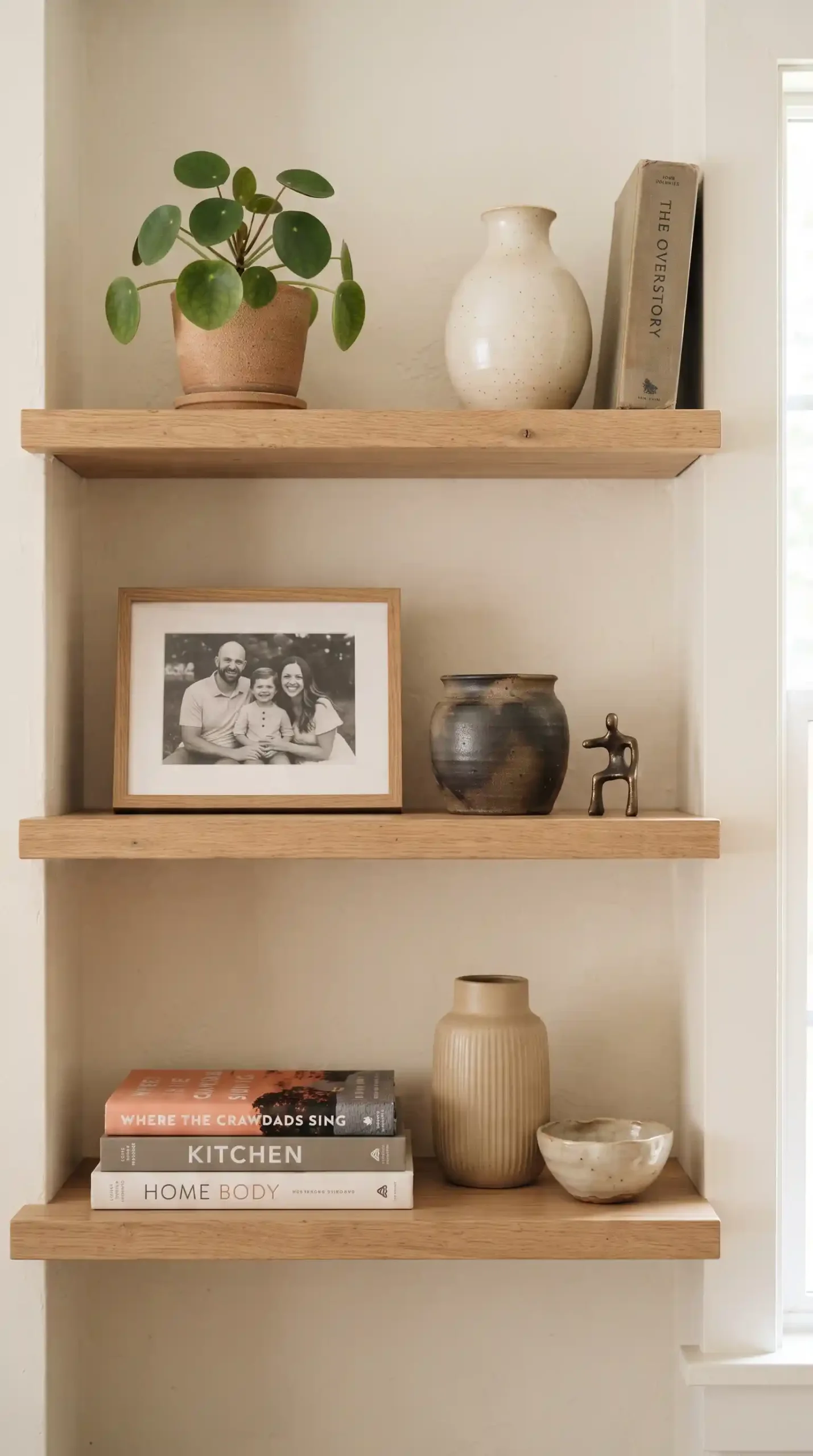
How to Style a Bookshelf in a More Intentional Living Room
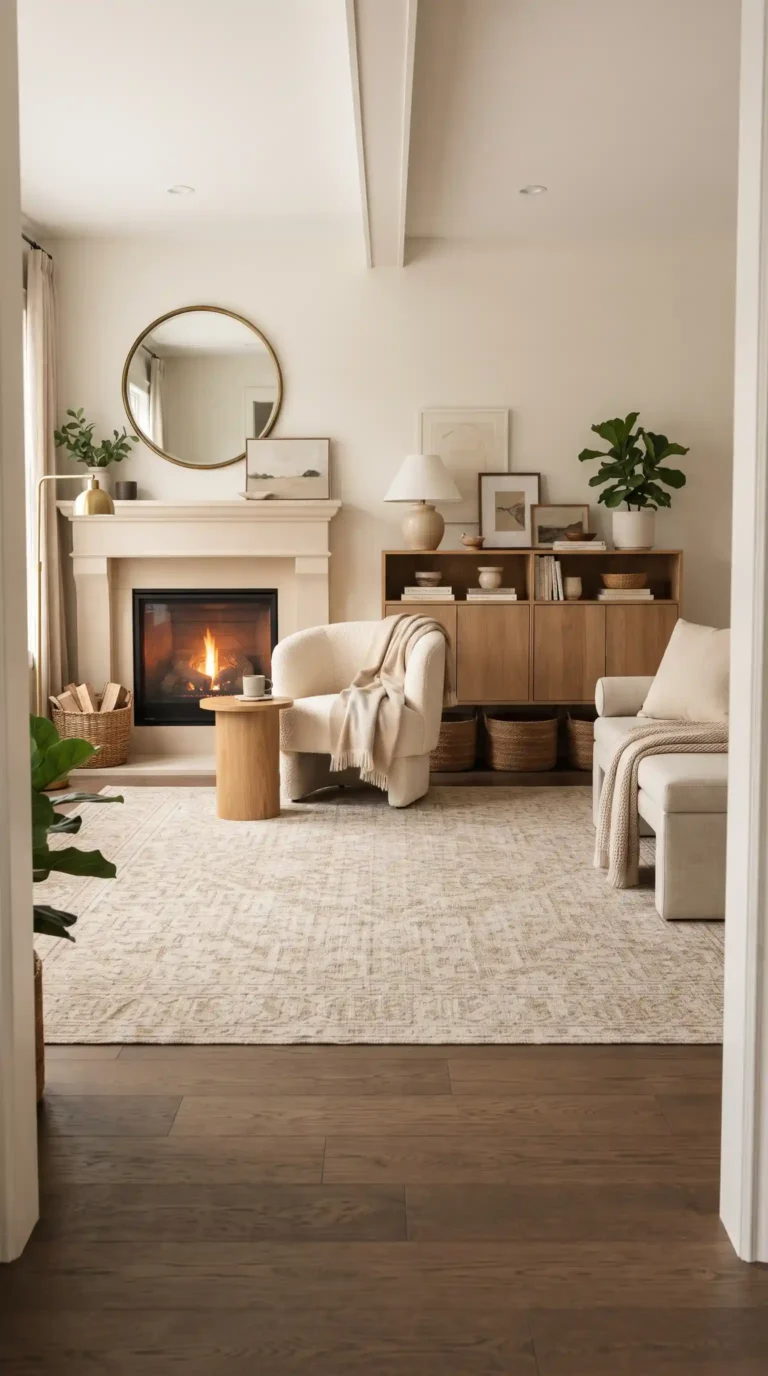
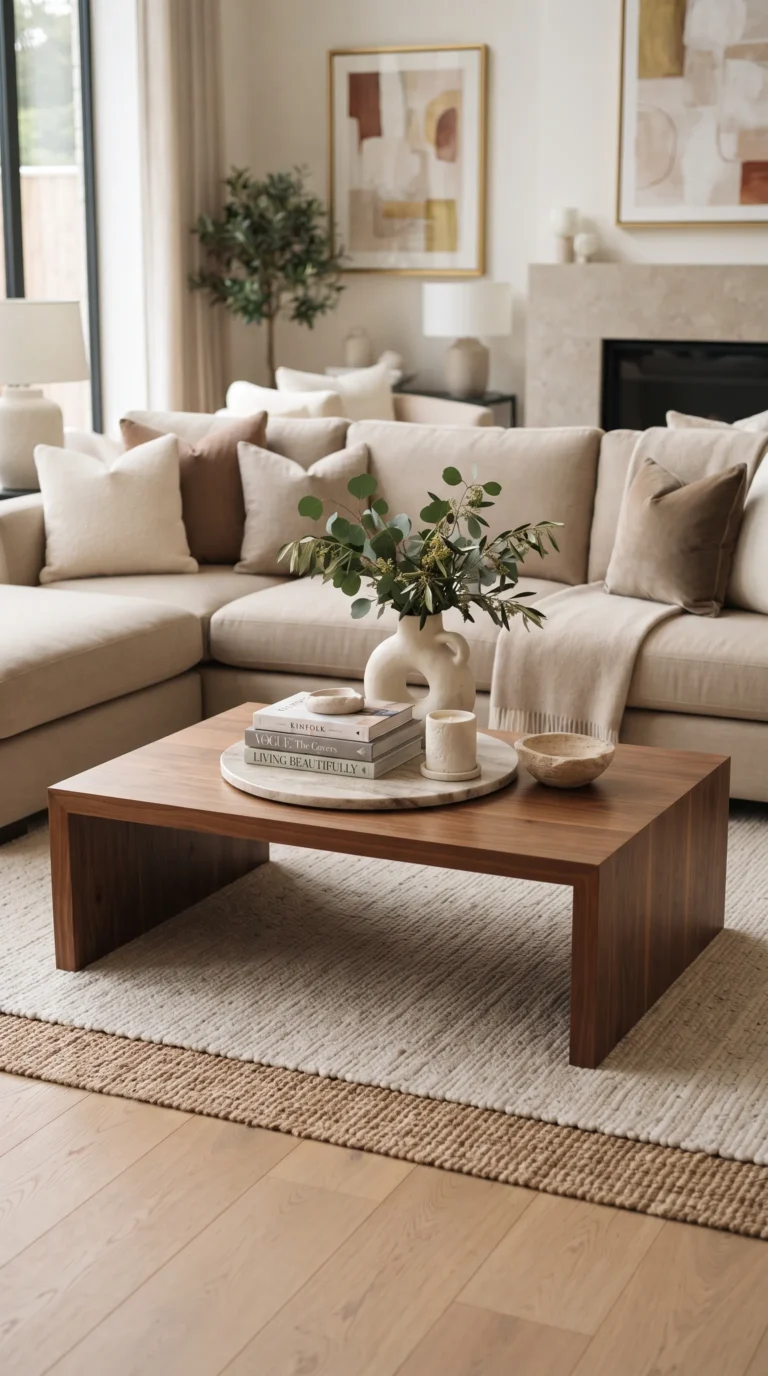
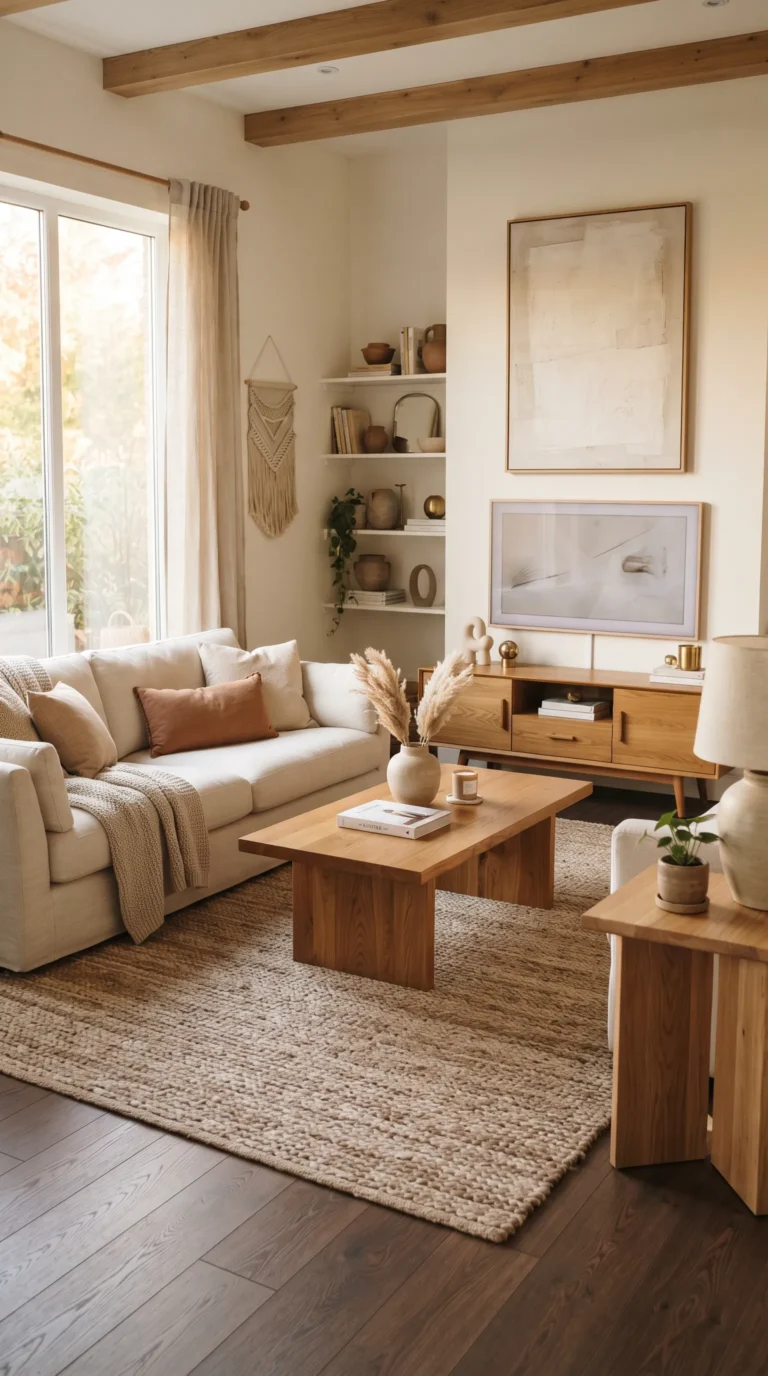
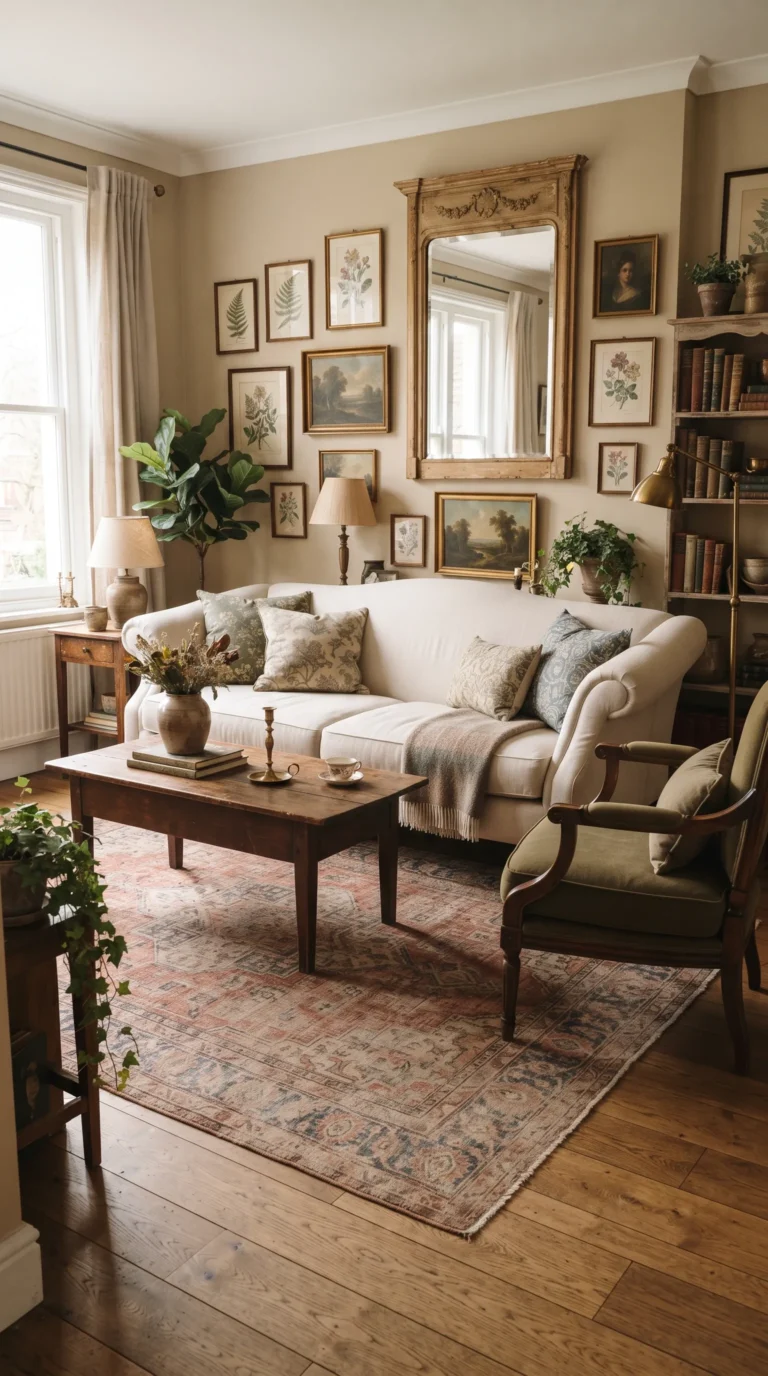
Stacy and Home shares these bookshelf styling living room decor ideas to help you turn an ordinary bookshelf into a beautiful and organized feature. A bookshelf does more than hold books. With the right mix of books, decorative objects, greenery, artwork, and personal pieces, it can add character and make your living room feel thoughtfully designed.
The secret is to create a balanced display without filling every shelf. Whether you have a tall bookcase, built-in shelves, or a small living room bookshelf, simple styling choices can help you create a display that feels natural, practical, and connected to your home’s overall design.
1. Start With a Simple Bookshelf Styling Foundation
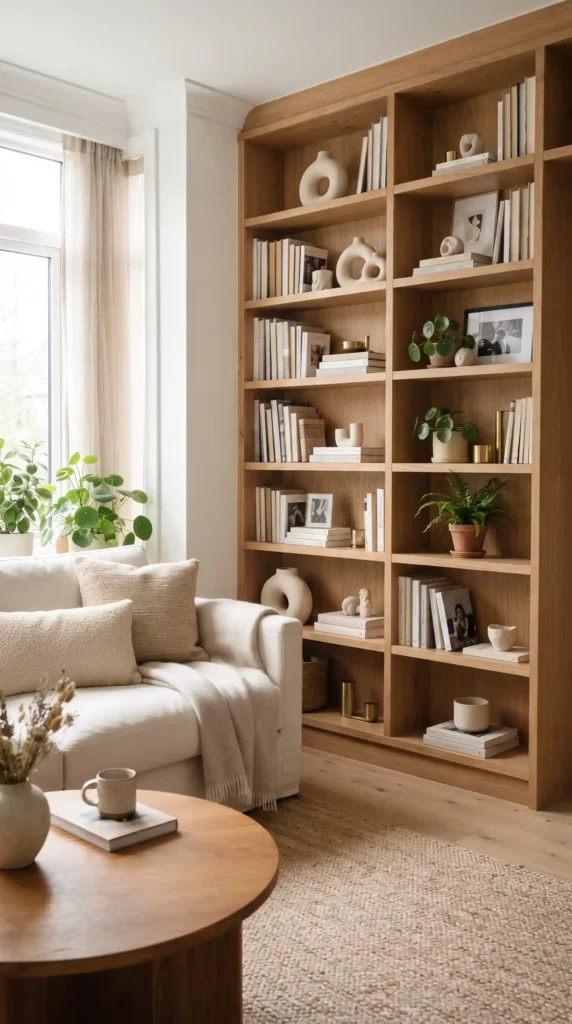
Clear the Shelves Before Decorating
Before styling your bookshelf, remove everything and decide which items you want to display. This gives you a fresh starting point and helps you identify objects that work well together.
Group books, decorative pieces, plants, framed photos, and collectibles separately. Keeping only the items you enjoy or regularly use makes it easier to create an intentional arrangement.
Choose a Consistent Color Palette
A coordinated color palette can make a bookshelf look more polished. Consider colors already present in your living room, such as cream, beige, black, warm brown, sage green, or muted blue.
Repeat these shades through book covers, vases, frames, and decorative objects. The pieces do not need to match exactly, but a few repeated colors can help the shelves feel connected.
Leave Some Empty Space
One of the most useful bookshelf styling living room decor techniques is knowing when to stop decorating. Filling every shelf with books and accessories can make the entire wall feel crowded.
Leave a few open areas between objects. This negative space allows your favorite pieces to stand out and gives the arrangement a calmer appearance.
2. Arrange Books for a Balanced and Collected Look
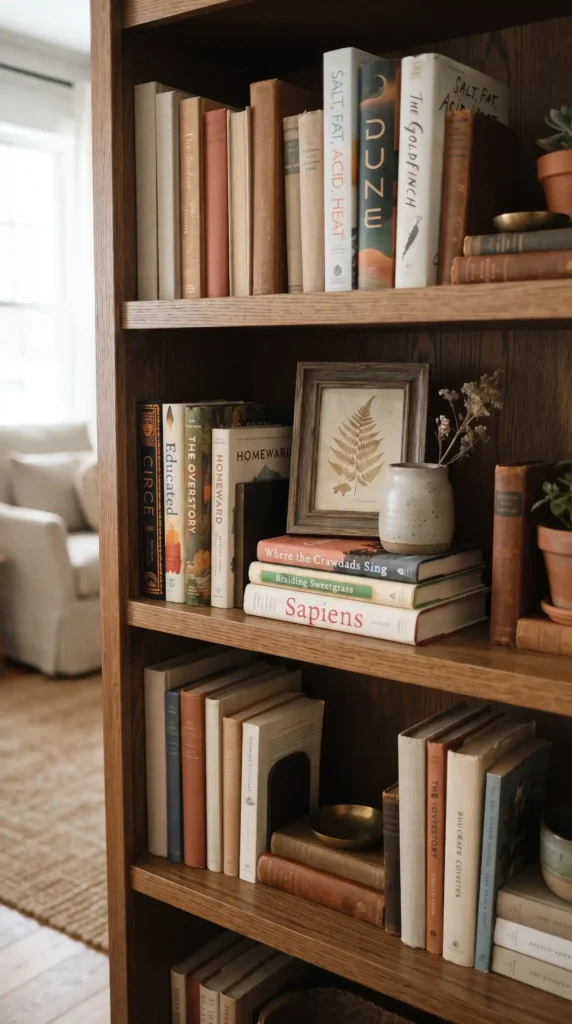
Mix Vertical and Horizontal Book Stacks
Books are the foundation of most bookshelf displays, but arranging them in only one direction can look repetitive. Stand some books vertically and stack others horizontally to create variety.
Use horizontal stacks to support small decorative objects, such as a ceramic bowl or a small framed photo. Keep the stacks stable and avoid placing heavy objects on top of delicate books.
Organize Books by Color
Color-coordinated books can create a strong visual effect. Group similar shades together if you want a clean, modern display, or arrange a gradual color transition for a softer look.
This approach works especially well when your book collection includes many different covers. You can also use neutral book covers to create a quieter display.
Combine Books of Different Sizes
Books with different heights and thicknesses can make a shelf look more natural. Place larger books vertically beside smaller horizontal stacks to create variation.
Avoid forcing every book into a perfectly uniform arrangement. A little variety can give the bookshelf a collected appearance while keeping the books easy to access.
Display Favorite Books With Their Covers Facing Forward
Some books have attractive covers that deserve more attention. Place a few of these books facing outward, particularly when their colors or illustrations complement the room.
Use this technique selectively so the display does not become overcrowded. Rotating the featured books occasionally also gives your bookshelf a fresh look without buying new décor.
3. Add Decorative Objects, Greenery, and Personal Details
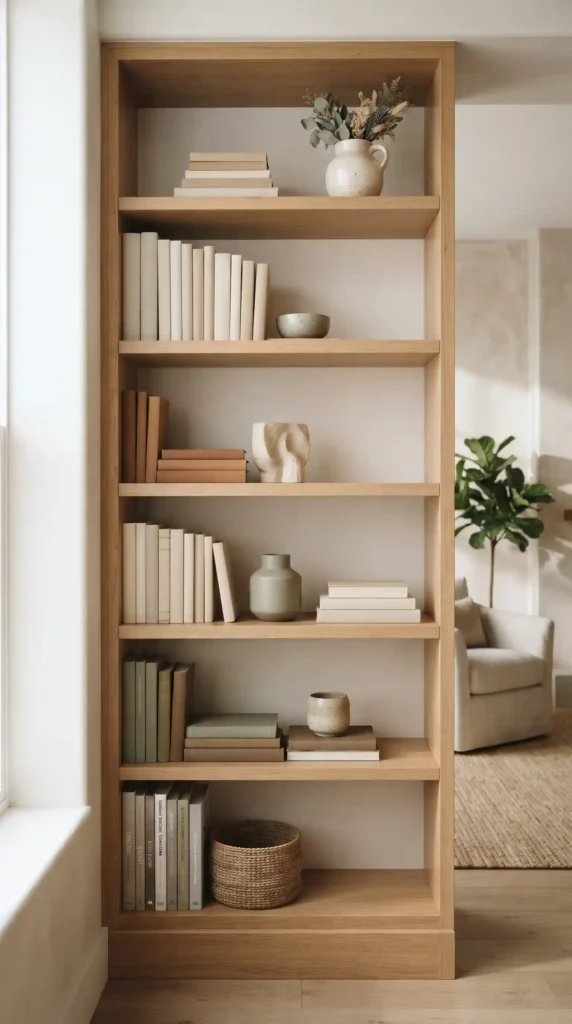
Style Shelves With Vases and Sculptural Objects
Vases, ceramic bowls, small sculptures, and decorative objects can break up rows of books. Choose pieces with different heights and shapes to create a more interesting arrangement.
For a modern living room, try simple ceramic pieces, glass objects, or sculptural forms. For a warmer interior, natural wood, stone, and handmade pottery can add texture and character.
Add Greenery for a Natural Touch
A small plant can soften the straight lines of a bookcase and bring life to the display. Trailing plants work well on suitable open shelves, while compact plants can fit into smaller spaces.
Choose plants based on the light available near the bookshelf. If natural light is limited, consider a realistic artificial plant instead.
Display Framed Photos and Small Artwork
Personal photographs and framed artwork can make your bookshelf feel unique. Lean a small frame against the back of a shelf or place it beside a short stack of books.
Use frames that complement your living room furniture and other decorative finishes. A combination of family photographs, small illustrations, and abstract prints can create a relaxed, personal display.
Include Meaningful Objects and Collectibles
Your bookshelf is an opportunity to show some personality. Display souvenirs, handmade objects, small collections, or items connected to your hobbies and memories.
Group related objects together rather than spreading every collectible across the shelves. This makes the display easier to understand and gives meaningful pieces more attention.
4. Explore Creative Bookshelf Styling: Living Room Inspiration
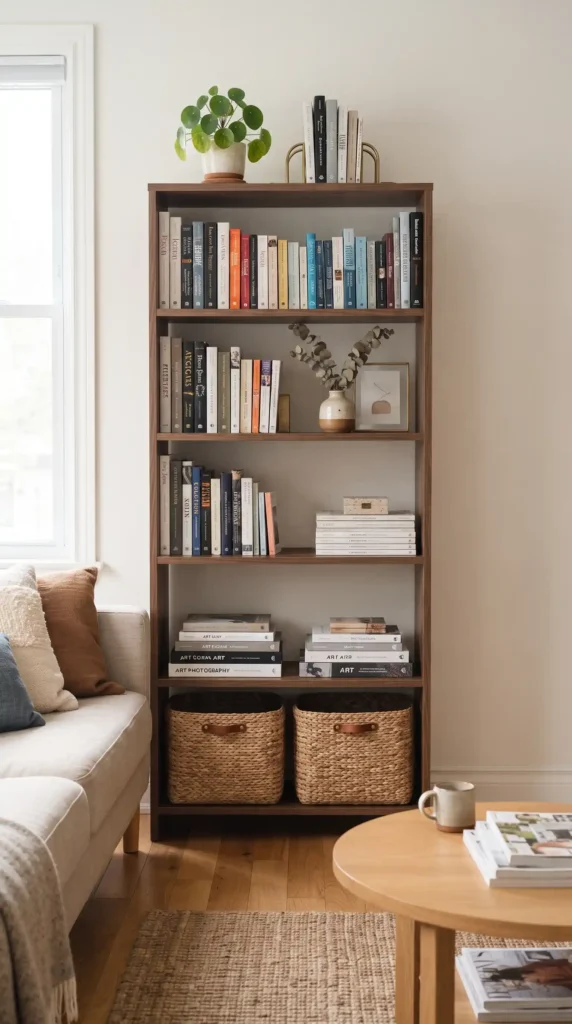
Create a Minimalist Bookshelf Display
A minimalist bookshelf focuses on a few carefully selected items. Arrange a small collection of books alongside one or two decorative objects, leaving plenty of open space around them.
Use neutral colors, simple shapes, and clean lines to keep the arrangement calm. This style works particularly well in modern living rooms where the goal is to avoid visual clutter.
Try a Cozy, Layered Bookshelf Style
For a cozy living room, combine books, woven baskets, wooden objects, framed photographs, and soft natural textures. Vary the placement of books and decorations to create a relaxed, lived-in appearance.
Warm wood, cream ceramics, and muted greenery can help the shelves feel inviting. Keep the arrangement organized enough that you can still reach your books and everyday items.
Style Built-In Bookshelves Around the Room
Built-in bookshelves can become a major feature of a living room. Use the full arrangement to create balance by repeating colors and materials across different sections.
Place larger objects on selected shelves and use smaller accessories to fill gaps where needed. Avoid making every shelf identical; a little variation creates a more natural display.
Decorate a Small Living Room Bookshelf
A small bookshelf can look stylish without holding many objects. Use compact accessories, a few favorite books, and one small plant or framed print.
If floor space is limited, a tall and narrow bookcase can provide storage without taking up much room. Keep the surrounding area simple so the bookshelf remains easy to see and use.
Create a Dark and Dramatic Bookshelf Display
Dark bookshelves can look especially striking when styled with warm materials and carefully chosen accessories. Combine black or deep wood finishes with cream ceramics, brass details, muted greenery, and books in coordinated colors.
Use a few lighter objects to create contrast. This helps the shelves remain visually interesting rather than appearing like one solid dark area.
5. Match Your Bookshelf Styling to the Living Room
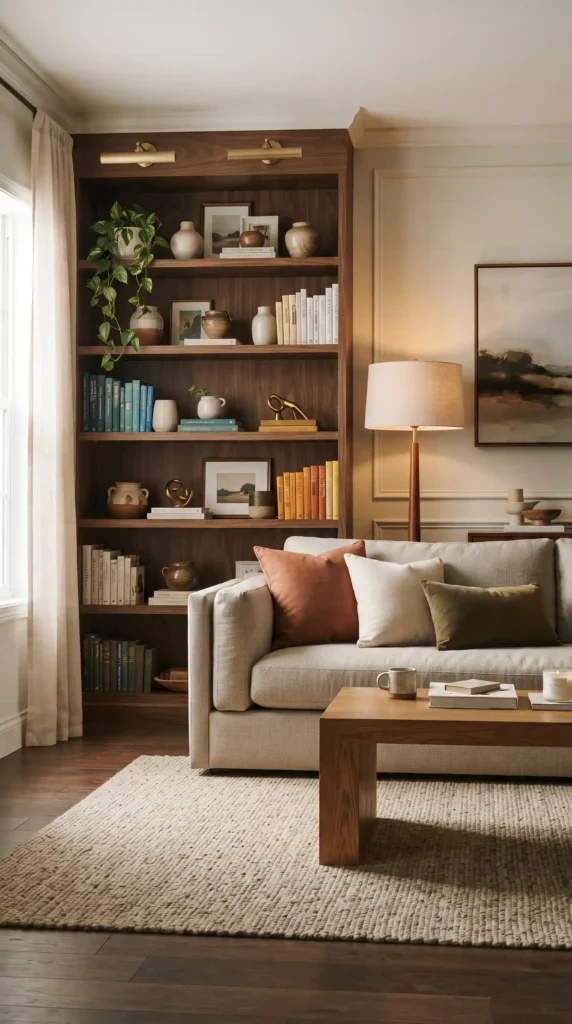
Coordinate the Bookshelf With Your Sofa and Furniture
Your bookshelf should feel connected to the rest of the living room. Repeat colors or materials from your sofa, coffee table, side tables, rug, or curtains.
For example, a room with a wooden coffee table might benefit from wooden frames or natural decorative objects on the shelves. Repeating a few materials creates a more cohesive appearance.
Balance Large and Small Decorative Objects
Objects of different sizes help create a balanced bookshelf. Place a larger vase or sculpture on one shelf and use smaller books or accessories elsewhere to distribute visual weight.
Avoid grouping every large object on one side of the bookcase. Step back and look at the whole arrangement to see whether one area feels noticeably heavier than the others.
Mix Textures Without Adding Too Many Colors
Texture can make a neutral bookshelf feel interesting without requiring bright colors. Combine smooth ceramics, glass, natural wood, woven baskets, and textured book covers.
A limited color palette allows these materials to stand out. This is a useful approach when you want your bookshelf to feel layered but not busy.
Use Lighting to Highlight the Bookshelf
Lighting can make a bookshelf more noticeable, especially in the evening. A nearby floor lamp, table lamp, or suitable integrated shelf lighting can highlight books and decorative objects.
Choose lighting that complements the room and does not create uncomfortable glare. Keep electrical cords organized and follow the product instructions when installing lighting inside a bookcase.
6. Finish Your Living Room Bookshelf With Practical Styling Details
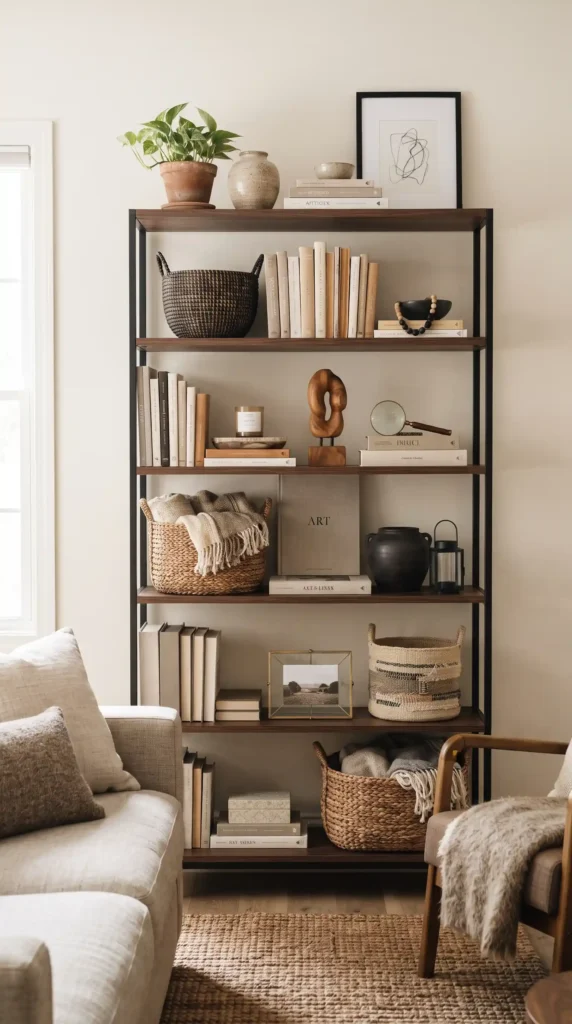
Keep Frequently Used Books Easy to Reach
A bookshelf should remain useful, not just decorative. Place books you read regularly on shelves that are easy to access and reserve higher or harder-to-reach areas for occasional reading material or lightweight decorations.
Avoid stacking objects in ways that make it difficult to remove a book. A practical arrangement helps the bookshelf remain attractive during everyday use.
Style Shelves in Small Groups
Instead of placing one object on every shelf, arrange items in small groups. For example, combine a short book stack, a small vase, and a framed photograph in one area.
Use a different combination on the next shelf to create variety. Repeat a few colors or materials throughout the bookcase so the arrangement feels connected.
Secure Heavy Objects and Keep Shelves Stable
Make sure the bookcase is stable and installed according to the manufacturer’s instructions. Secure tall bookcases to the wall where recommended, particularly in homes with children or pets.
Place heavy books and objects on lower shelves when practical. Avoid overcrowding shelves or placing fragile items where they could easily fall.
Refresh the Display Without Buying New Décor
You do not need to purchase new accessories every time you want a different look. Move objects between shelves, rotate displayed books, or replace a seasonal arrangement with items you already own.
Small changes can make a familiar bookshelf feel fresh. Keeping some decorative pieces in storage also gives you more options when you want to update the display.
FAQs
How do you style a bookshelf in a living room?
Start with books arranged vertically and horizontally, then add a few decorative objects, framed photos, and plants. Repeat colors and materials from the living room, and leave some space so the shelves do not look overcrowded.
How many decorative items should I put on a bookshelf?
There is no fixed number because the ideal amount depends on the size of the bookcase and the objects you own. Begin with a few grouped accessories, then add or remove pieces until the shelves look balanced and the books remain accessible.
How do I make a living room bookshelf look expensive?
Use a consistent color palette, combine different book arrangements, and add a few quality-looking materials such as ceramic, wood, glass, or metal. Balanced spacing and a clean display often make a bigger difference than buying expensive decorations.
Should books be arranged by color or size?
Both approaches work. Arranging books by color creates a coordinated display, while grouping them by size can make shelves easier to organize. You can also combine the two methods by grouping similar colors and varying the heights within each group.
How do I style a bookshelf in a small living room?
Choose a slim bookcase, use compact decorative objects, and keep the shelves from becoming too crowded. Vertical arrangements, a few light-colored accessories, and some open space can help the bookshelf feel less bulky.
Can I mix books and decorations on the same shelf?
Yes. Mixing books with vases, framed photos, plants, and small sculptures creates a more personal display. Keep the objects stable and avoid placing decorations where they block access to frequently used books.
Final Thoughts
The best bookshelf styling living room decor ideas combine useful storage with a display that reflects your personal style. Start with the books, choose a consistent color palette, and add a few decorative objects, plants, artwork, or meaningful keepsakes.
Focus on balance rather than filling every shelf. Mix vertical and horizontal book stacks, vary object heights, repeat a few materials, and leave enough open space for the arrangement to breathe. When your bookshelf connects naturally with the sofa, lighting, and other living room furniture, it can become a stylish focal point that feels intentional, practical, and welcoming.