Large Wall Decor Ideas for Staircases That Fill Empty Space
Stacy and Home shares these large wall decor ideas for staircases to help you turn an empty staircase wall into a stylish and intentional feature. Staircase walls often have unusual angles, tall spaces, and long stretches of unused wall, which can make decorating them feel challenging.
The right mix of oversized artwork, gallery arrangements, mirrors, shelves, and decorative details can tie the staircase into the rest of your home. Whether your style is modern, traditional, farmhouse, or eclectic, you can use the wall’s shape and height to your advantage.
1. Choose Large Artwork for Staircase Walls
Hang One Oversized Statement Artwork
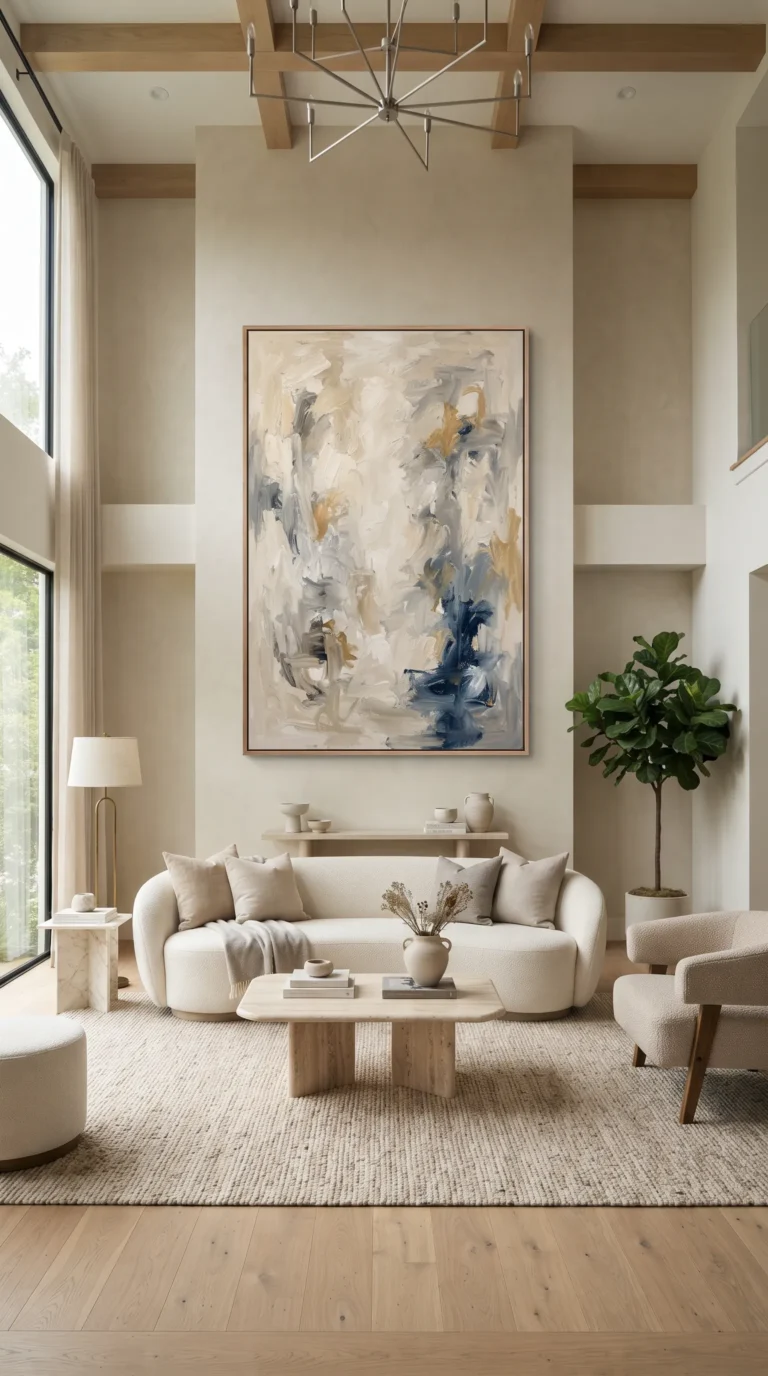
A large statement artwork can give an empty staircase wall an immediate focal point. Choose an abstract painting, landscape, botanical design, or large photographic print that has enough visual weight for the wall.
Position the artwork where it can be viewed comfortably from the stairs or nearby hallway. A large piece often looks more intentional than several tiny decorations scattered across the wall.
Use Tall Vertical Artwork
Tall artwork works naturally on staircase walls because it follows the vertical movement of the space. A large vertical canvas can draw attention upward while filling an otherwise empty section of wall.
Choose colors that connect with the flooring, stair railing, furniture, or nearby rooms. This helps the artwork feel like part of the home’s overall design.
Create a Large Diptych or Triptych
Two or three related artworks can fill a wide staircase wall without requiring one enormous piece. Choose artwork with a shared color palette, subject, or artistic style.
Hang the pieces with consistent spacing and align them carefully. A diptych or triptych can create a sophisticated focal point while working with the long shape of the staircase.
2. Create Staircase Gallery Walls With Scale
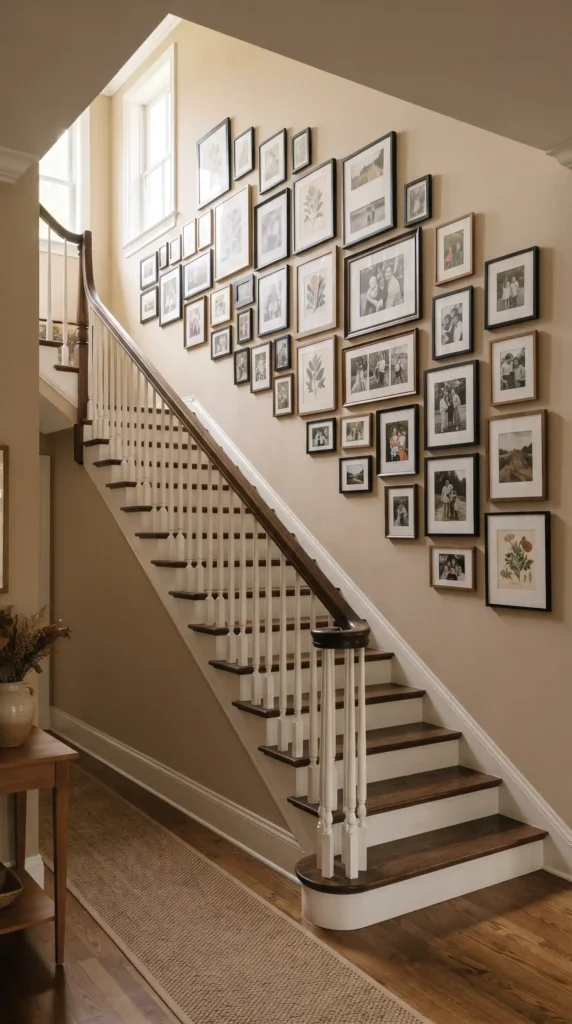
Build a Staircase Gallery Wall
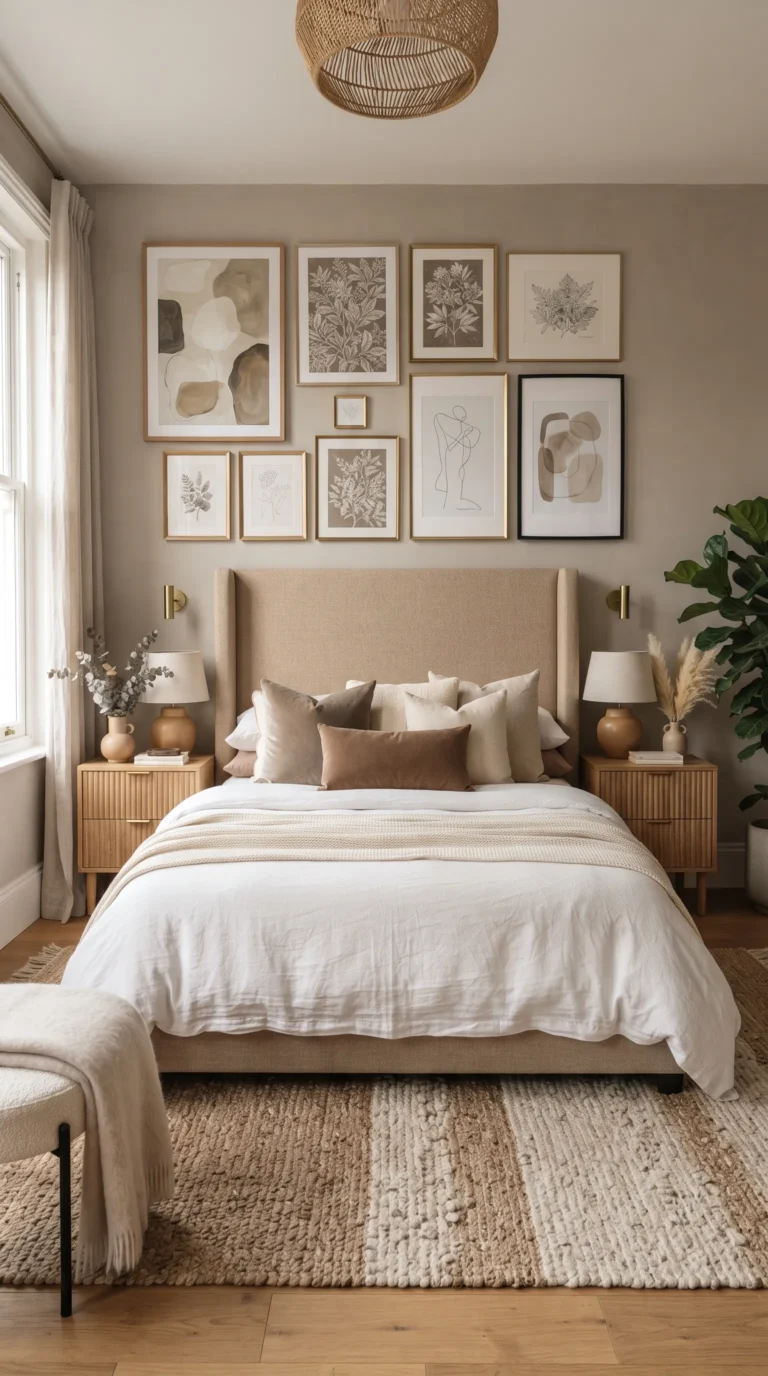
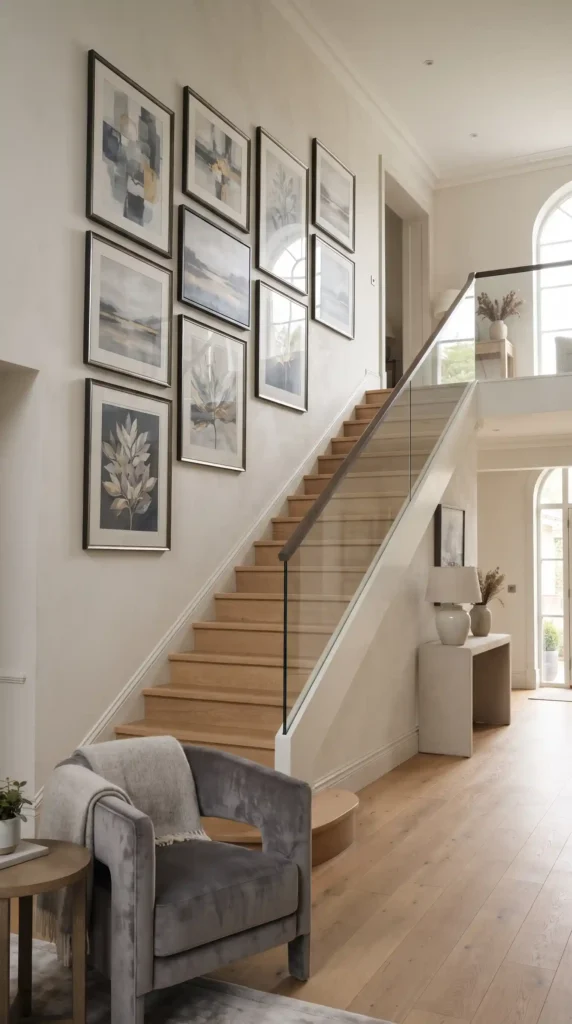
A gallery wall is one of the most flexible options for staircase wall art. Combine photographs, illustrations, artwork, and decorative prints to create a collection that follows the staircase.
Start by planning the arrangement on the floor or with paper templates. Keep the display visually connected while allowing the layout to follow the direction of the stairs.
Follow the Staircase Angle
Instead of creating a standard horizontal gallery wall, arrange artwork so the collection gradually rises with the staircase. This creates a natural relationship between the wall décor and the architecture.
Use different frame sizes while maintaining consistent spacing. The result can feel dynamic without looking disorganized.
Mix Large and Small Frames
Large frames provide visual weight, while smaller pieces add variety and detail. Start with one or two larger artworks and build smaller pieces around them.
Keep at least one element consistent, such as frame color, artwork style, or color palette. This helps the collection feel intentional.
Try a Symmetrical Staircase Gallery
A symmetrical arrangement can give a staircase a clean and organized appearance. Use matching frames or similar artwork sizes to create a structured display.
This style works especially well in traditional, transitional, and modern homes where a neat visual rhythm is important.
3. Add Mirrors and Decorative Wall Elements
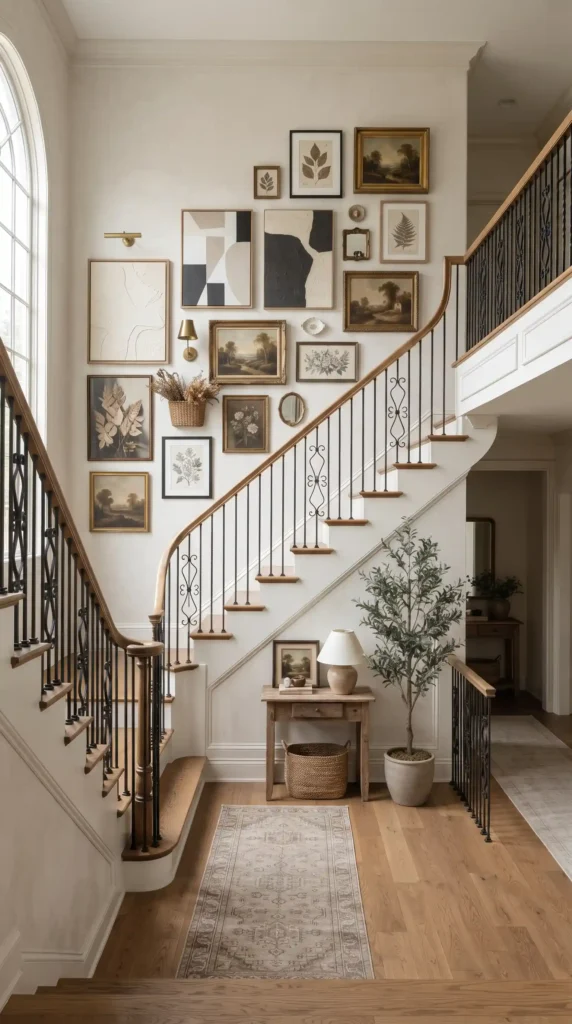
Use a Large Staircase Wall Mirror
A large mirror can fill an empty staircase wall while reflecting light and making the area feel more open. Choose a round, arched, rectangular, or oversized framed mirror depending on your home’s style.
Place it where it can reflect an attractive view or natural light. Avoid positioning it where the reflection makes the staircase feel visually confusing.
Create a Mirror and Artwork Arrangement
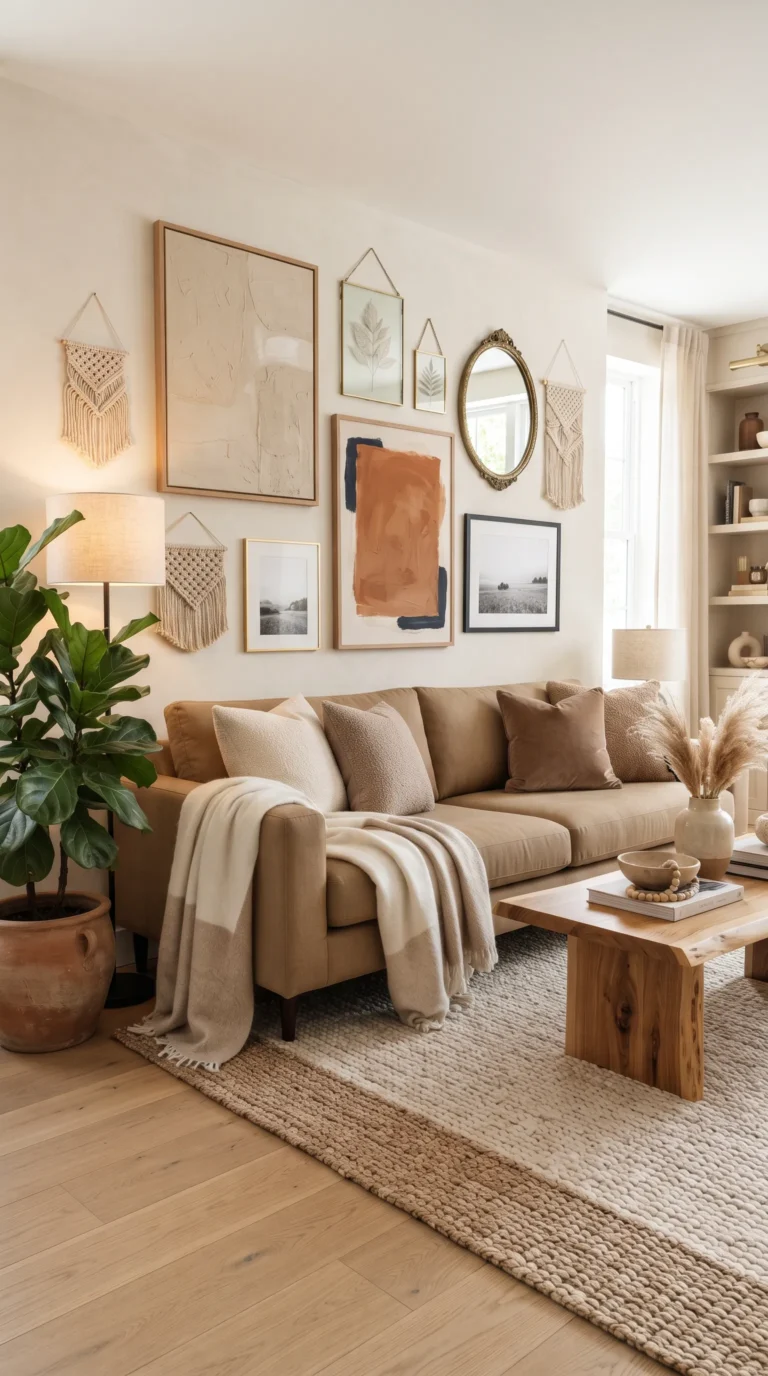
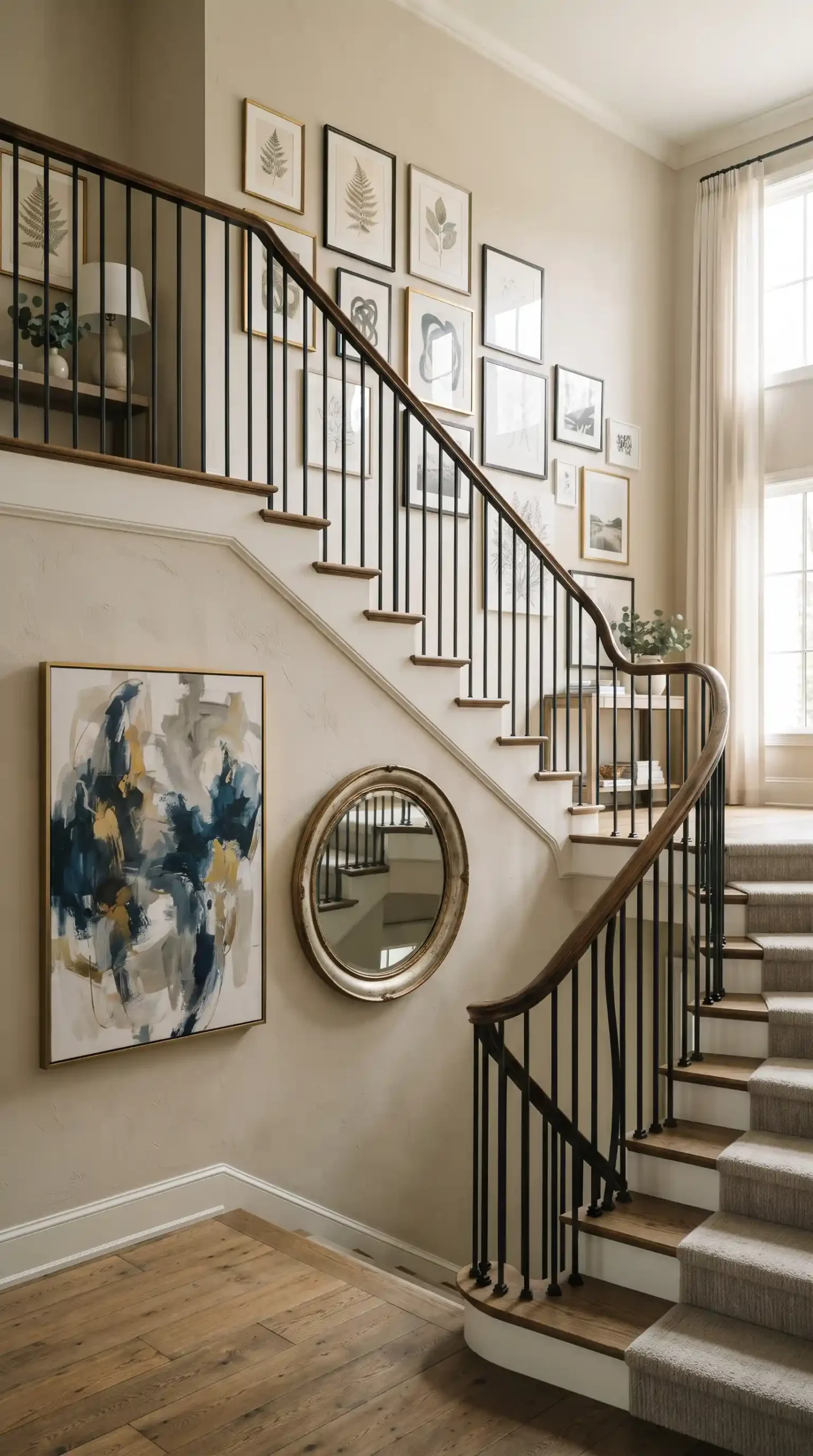
You do not have to choose between mirrors and artwork. Combine one larger mirror with smaller framed prints or photographs to create a layered display.
Repeat the mirror’s frame finish in nearby artwork frames or staircase furniture. This gives the different pieces a stronger visual connection.
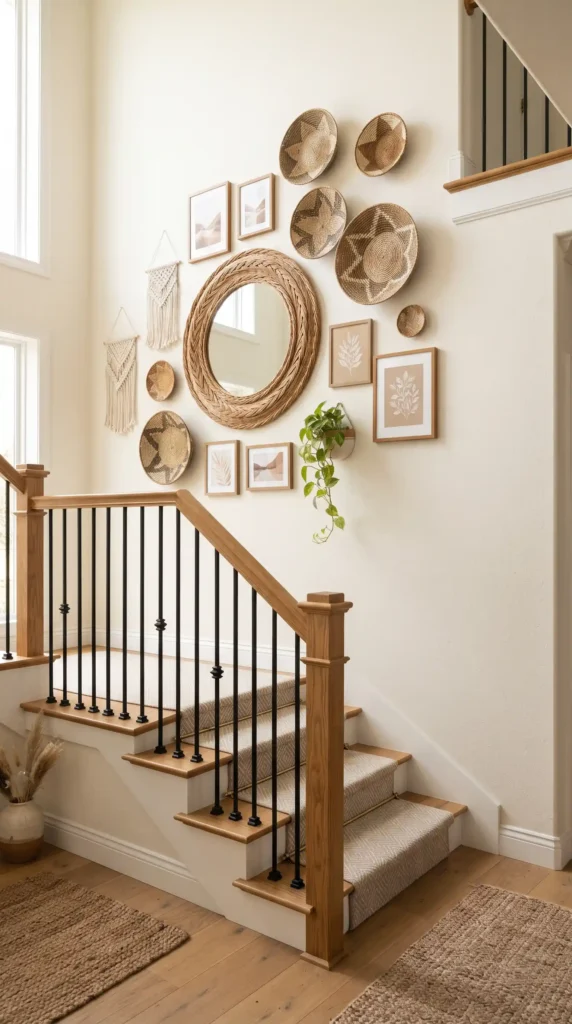
Add Decorative Wall Baskets
Woven baskets can add texture to a large staircase wall. Arrange several baskets in different sizes to create an organic composition.
Natural fibers work particularly well with farmhouse, boho, coastal, and relaxed interiors. Keep the arrangement balanced rather than filling every part of the wall.
4. Try Creative Large Wall Solutions for Staircases
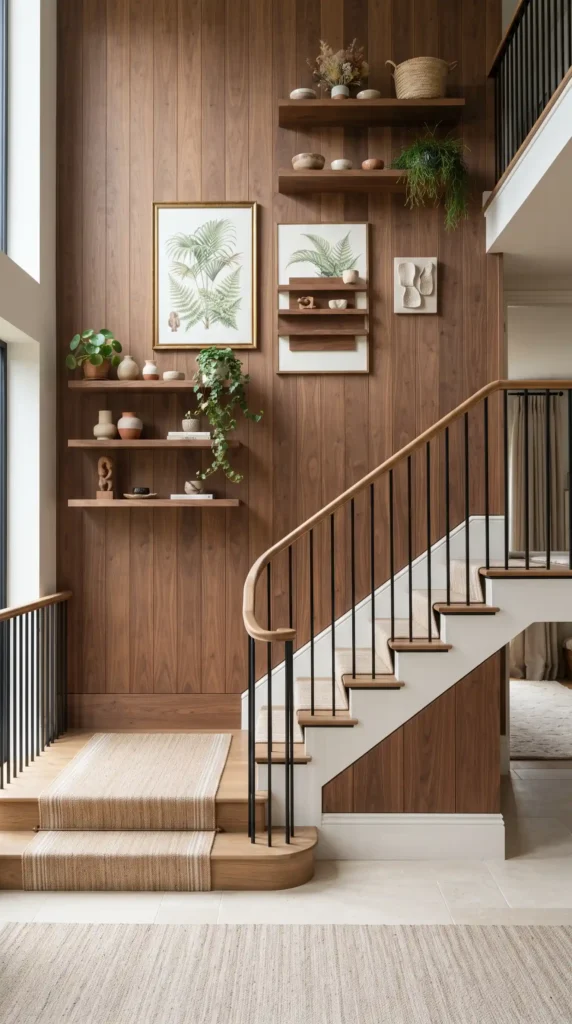
Install Floating Shelves
Floating shelves can turn an empty staircase wall into a useful display area. Use them for framed artwork, small plants, books, ceramics, or other lightweight decorative pieces.
Keep the shelves shallow enough to avoid interfering with the staircase or walking area. A few carefully styled shelves usually look better than a crowded wall of objects.
Create a Vertical Wood Feature Wall
Wood slats, vertical panels, or decorative wood molding can give a staircase wall architectural character. This approach works particularly well when the wall feels too large for traditional artwork.
Choose a wood tone that complements the flooring, railing, or nearby furniture. Keeping the rest of the décor simple allows the wall treatment to remain the focal point.
Add Sculptural Wall Art
Three-dimensional wall décor can bring depth and texture to a staircase. Consider oversized woven pieces, metal sculptures, textured panels, or ceramic wall arrangements.
Use one strong material or repeat a small number of related textures. Too many competing shapes can make a tall staircase wall feel cluttered.
Create a Large Botanical Display
Botanical artwork can soften the strong architectural lines of a staircase. Use large leaf prints, floral artwork, nature photography, or a coordinated botanical collection.
Choose natural greens, cream, beige, brown, or muted tones for a calm appearance. Wooden frames can strengthen the connection with the staircase and flooring.
5. Match Staircase Wall Art to Your Home’s Style
Create a Modern Staircase Wall
For a modern staircase, use oversized abstract artwork, simple black frames, large mirrors, or clean-lined wall panels. Keep the color palette restrained so the display feels sophisticated.
A few large pieces usually work better than many small decorations in a modern space.
Style a Traditional Staircase Wall
Traditional homes can benefit from classic artwork, framed family portraits, landscape paintings, ornate mirrors, or symmetrical gallery arrangements.
Use wood or decorative frames that relate to the home’s existing furniture and architectural details. A balanced arrangement can make the staircase feel elegant and timeless.
Try a Farmhouse Staircase Display
Farmhouse-style staircase walls work well with botanical prints, family photographs, wooden signs, woven baskets, and rustic frames.
Combine natural wood, cream, beige, black, and soft green tones. Keep the display warm and relaxed rather than overly coordinated.
Create an Eclectic Staircase Gallery
An eclectic staircase gives you more freedom to combine different artwork, frame finishes, colors, and decorative objects. The key is to create one connecting element.
Repeat a color, material, subject, or frame style throughout the collection. This makes a varied display feel collected instead of random.
6. Finish Your Staircase Wall Decor With Practical Details
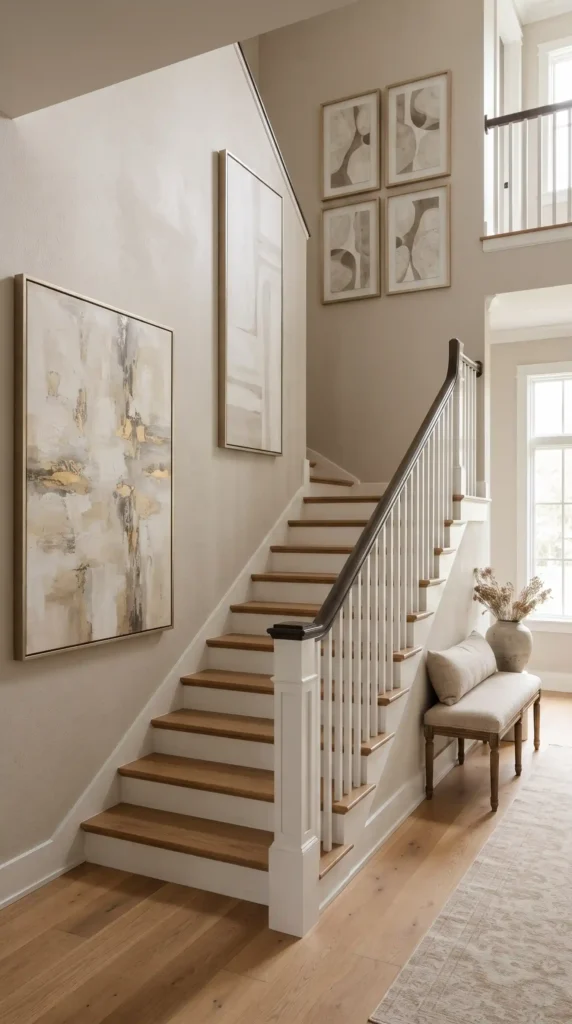
Consider the Wall and Staircase Dimensions
Measure the available wall before purchasing large artwork or planning a gallery wall. Pay attention to the staircase angle, ceiling height, railings, doors, and nearby furniture.
The artwork should fill enough space to feel intentional without interfering with movement or making the staircase feel crowded.
Keep Artwork at a Comfortable Viewing Height
Large wall décor should remain easy to see while walking up or down the stairs. Avoid placing the main artwork so high that it becomes disconnected from the people using the staircase.
For gallery walls, allow the arrangement to rise with the staircase while keeping the main visual center at a comfortable viewing level.
Choose Secure Hanging Methods
Staircase walls require secure installation because people regularly move underneath and beside the artwork. Use appropriate wall hardware for the weight and type of each piece.
Heavy mirrors, large frames, and shelves should be securely anchored according to the manufacturer’s recommendations. If you are unsure about the wall construction or weight, consider professional installation.
Connect the Staircase With Nearby Rooms
The staircase should feel like part of the home’s overall design rather than an isolated display. Repeat colors, frame finishes, wood tones, or materials from nearby rooms.
This simple connection can make even a dramatic staircase wall feel cohesive.
FAQs
What kind of wall art looks best on a staircase wall?
Large paintings, vertical artwork, gallery walls, mirrors, botanical prints, textured pieces, and sculptural décor can all work well. Choose artwork with enough scale to relate to the height and shape of the staircase wall.
How do I decorate a large empty wall next to stairs?
Start by measuring the wall and considering its relationship with the stairs. Then choose an oversized artwork, gallery arrangement, mirror, shelves, wood treatment, or combination of pieces that fills the space without blocking movement.
Should a staircase gallery wall follow the stairs?
It does not have to, but following the staircase angle can create a stronger connection between the artwork and architecture. Keep spacing consistent so the arrangement still feels organized.
How many pictures should I put on a staircase wall?
There is no fixed number. The right amount depends on the wall size and frame dimensions. A few large pieces may work better than many small frames on a very large wall.
How can I make a staircase wall look expensive?
Choose artwork with appropriate scale, use coordinated frames, keep spacing consistent, and connect the display with nearby furniture and finishes. A simple oversized piece can often look more refined than a crowded arrangement.
Final Thoughts
The best for staircases wall art ideas use the unusual shape and height of the staircase wall as an advantage. Oversized artwork, vertical pieces, gallery walls, mirrors, shelves, wood treatments, and textured décor can all help fill empty space while creating a strong visual feature.
Start with the scale of the wall and the direction of the stairs, then choose a display that supports your home’s style. Keep the installation secure, leave enough breathing room, and repeat colors or materials from nearby rooms.
With thoughtful planning, an empty staircase wall can become one of the most interesting and welcoming decorative features in your home.