Warm Minimalist Kitchen: A Complete Home Decor Guide
A kitchen is more than just a place for cooking. It is often the heart of a home where families gather, meals are prepared, and everyday memories are created. For more inspiration, explore Stacy and Home for practical home décor ideas and stylish ways to create a welcoming living space.
The result is a kitchen that feels organized, spacious, elegant, and cozy at the same time. If you want to refresh your kitchen without making it look crowded, warm minimalism can be an excellent design approach.
What Is a Warm Minimalist Kitchen?
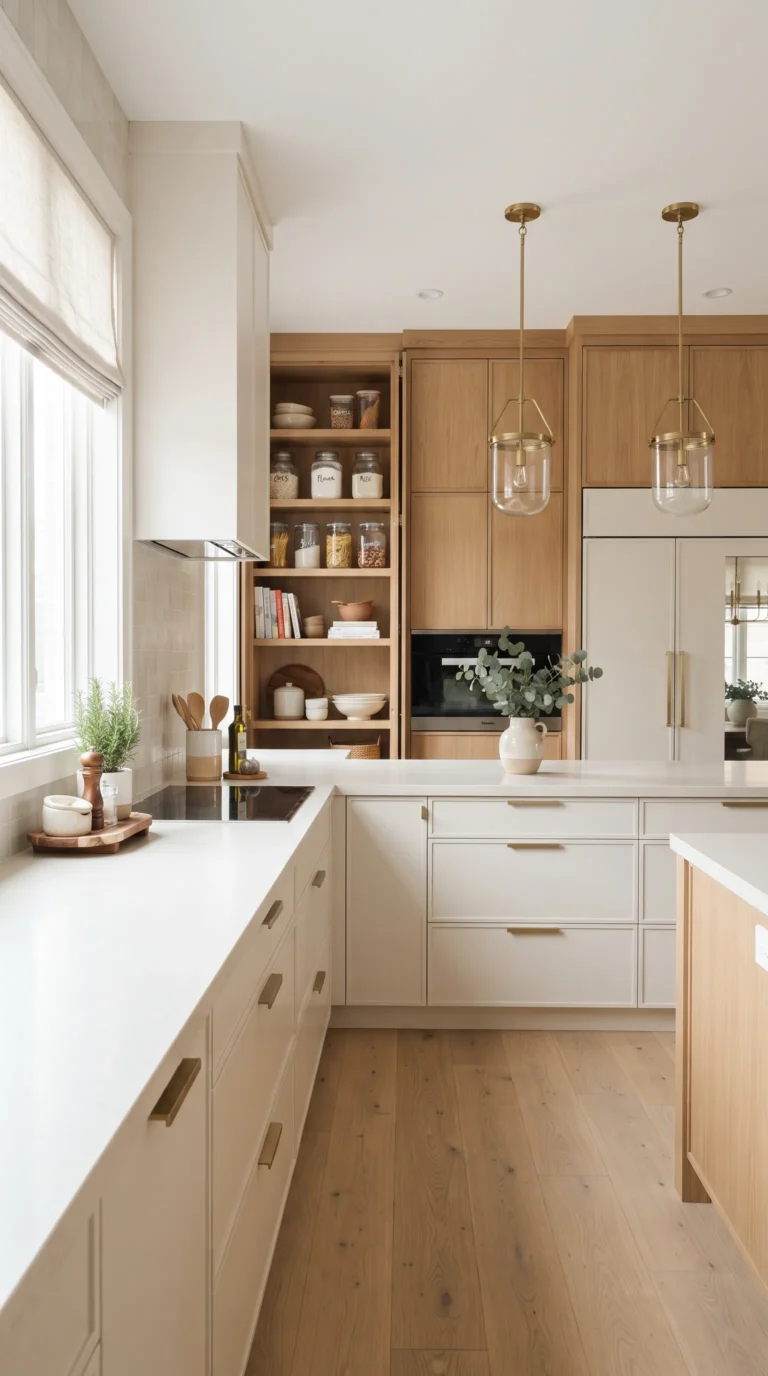
Warm minimalism is a decorating style that combines the principles of minimalist design with natural and comfortable elements. Traditional minimalism can sometimes feel cold because it often relies heavily on white, gray, metal, and highly structured surfaces. Warm minimalism softens that appearance by introducing wood, cream tones, natural textures, plants, and warm lighting.
The main idea is “less, but better.” Every item in the kitchen should have a purpose or add visual warmth to the space.
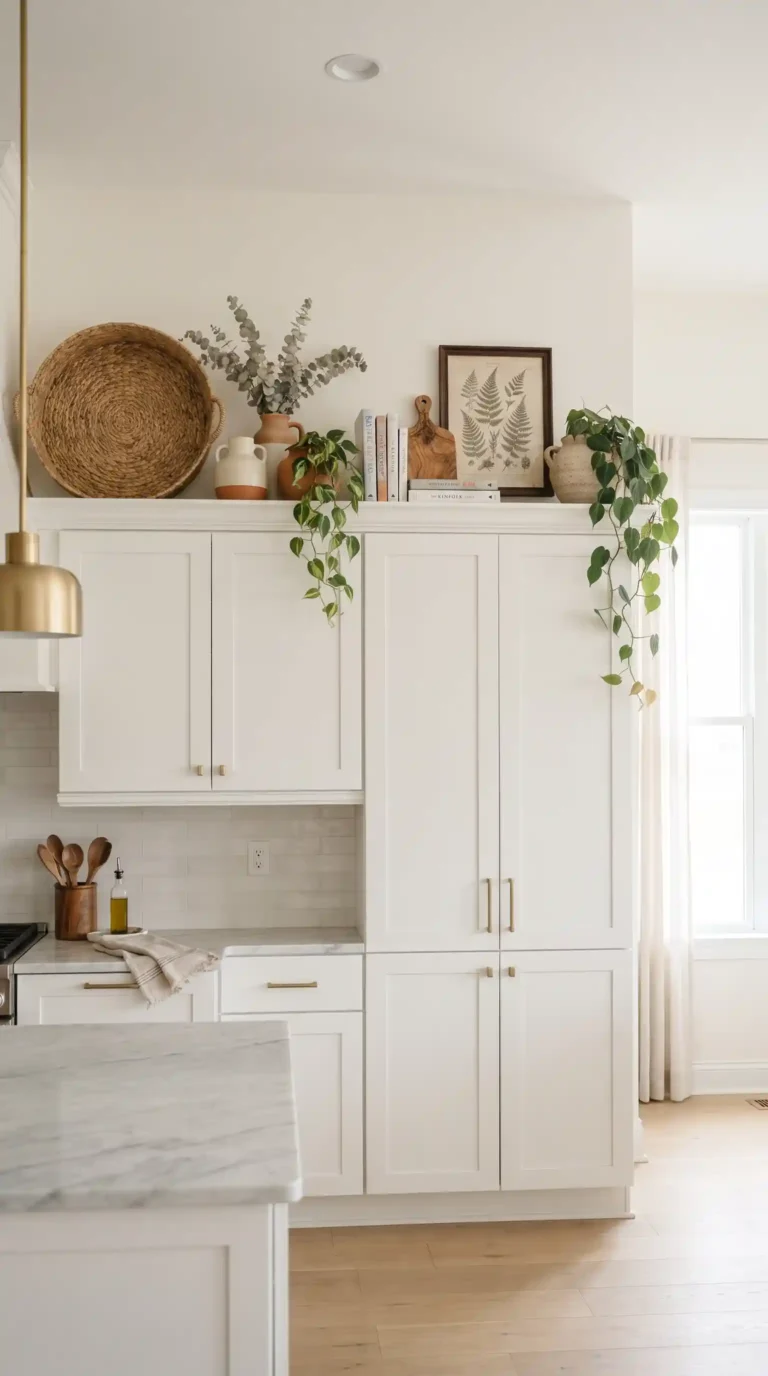
Instead of displaying dozens of decorative objects, you might have a wooden cutting board, a ceramic vase, a few herbs, and attractive kitchenware. These simple details can create character without making the countertops look messy.
Choose a Warm and Neutral Color Palette
Color is one of the easiest ways to create a warm minimalist atmosphere. Rather than using strong or overly bright colors, choose soft and natural shades.
Popular choices include:
- Warm white
- Cream
- Beige
- Light taupe
- Soft gray
- Natural wood tones
- Light brown
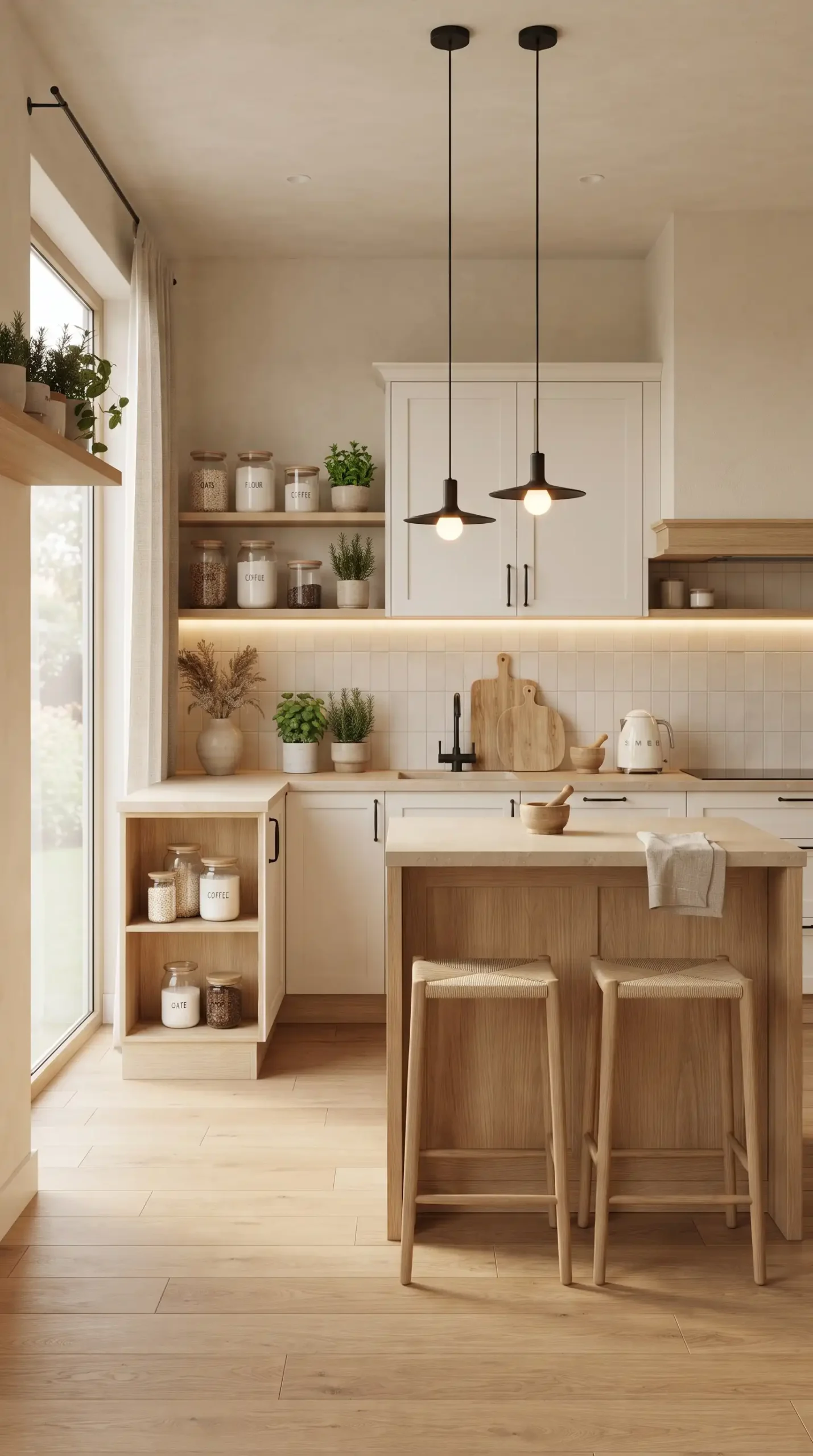
You can use warm white or cream for the walls and cabinets, while wooden elements introduce contrast. If you prefer a slightly more dramatic appearance, consider adding small amounts of black through cabinet handles, faucets, lighting fixtures, or decorative accessories.
The goal is to create a balanced color palette where no single element feels overwhelming.
Add Natural Wood Elements
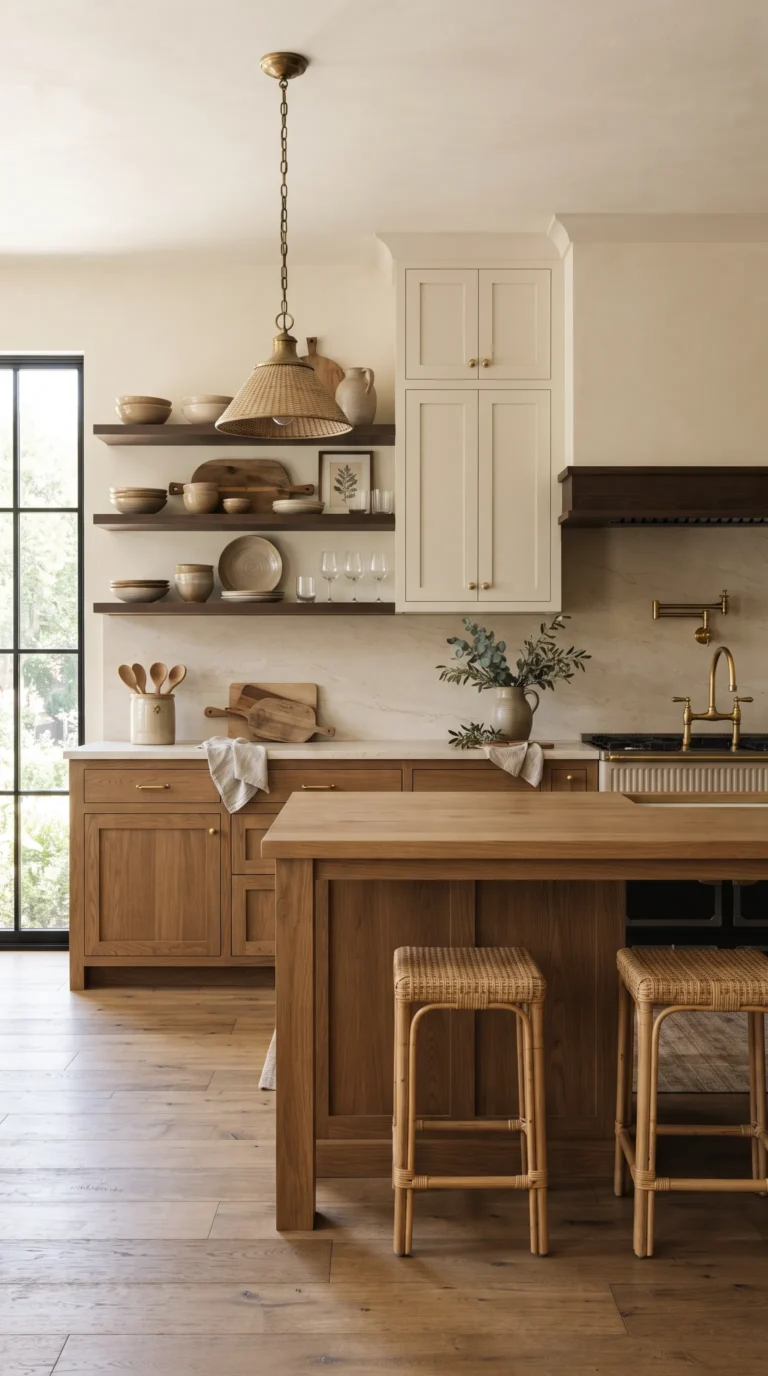
Wood is an important feature of warm minimalist design because it immediately makes a room feel more comfortable and natural.
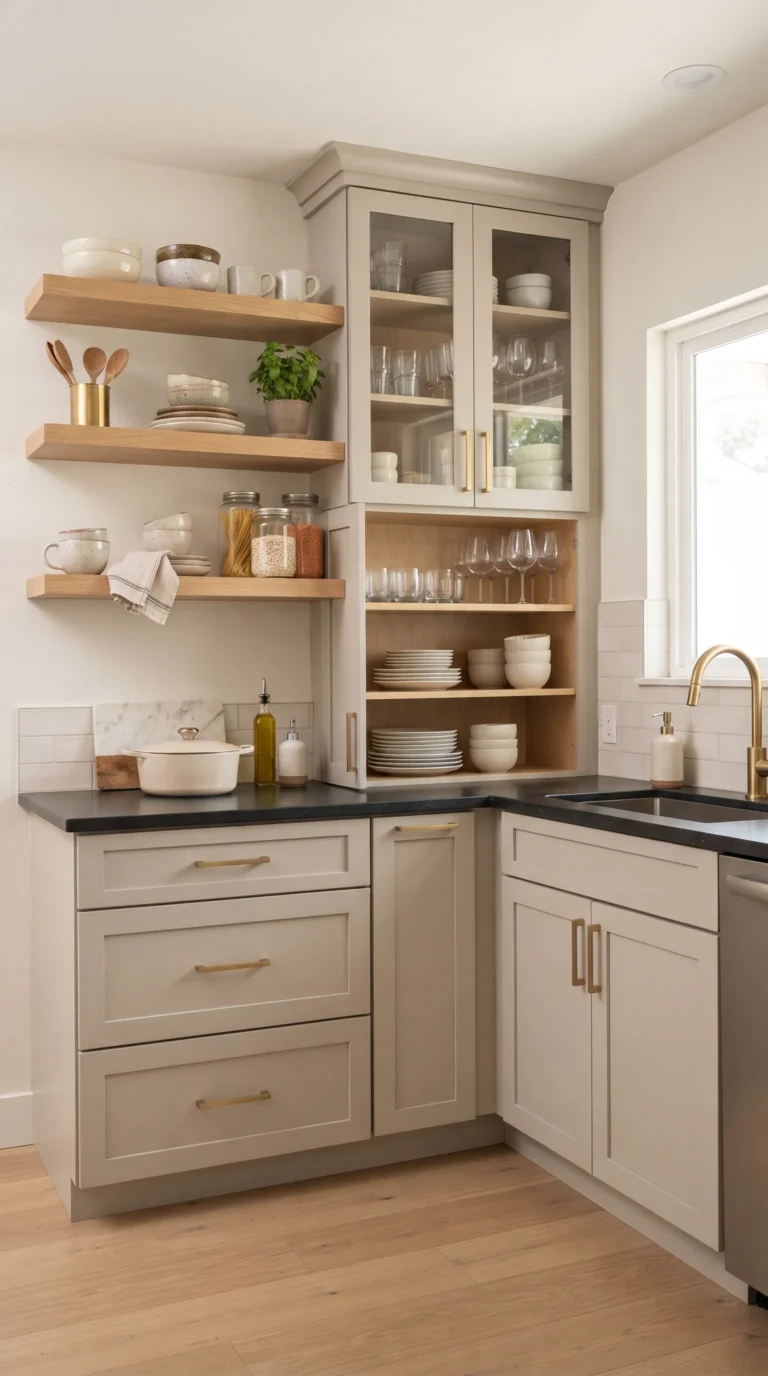
You do not necessarily need to replace all your cabinets with wooden ones. If your existing kitchen already has white or cream cabinets, you can introduce wood through smaller elements such as:
- Wooden shelves
- Cutting boards
- Bar stools
- Dining tables
- Cabinet accents
- Storage boxes
- Serving trays
Light oak, natural walnut, and other soft wood finishes can work particularly well. Choose one or two wood tones and repeat them throughout the room for a coordinated appearance.
Keep Countertops Clean and Organized
One of the most important principles of minimalism is maintaining an uncluttered space. Kitchen countertops can quickly become crowded with appliances, containers, utensils, and decorative objects.
Try to keep only the items you use regularly on display. For example, you might keep a coffee machine, a wooden cutting board, and a small plant on the countertop while storing less frequently used appliances inside cabinets.
This creates a cleaner visual appearance and makes the kitchen easier to maintain.
Storage also plays an important role. Use drawers, cabinets, baskets, and organizers to give everything a dedicated place. When the kitchen is organized, the minimalist design becomes much easier to achieve.
Use Warm Lighting
Lighting can completely change the atmosphere of a kitchen. A warm minimalist kitchen should not rely only on bright ceiling lights.
Consider combining different types of lighting, including:
Under-Cabinet Lighting
LED strips underneath cabinets can provide practical task lighting while creating a soft evening glow.
Pendant Lights
Simple pendant lights above a kitchen island or dining area can become an attractive focal point. Choose designs with simple shapes and warm finishes.
Ceiling Lighting
Use clean, modern ceiling fixtures that provide enough general illumination without becoming visually distracting.
Warm-white bulbs can make cream, beige, and wooden surfaces look especially inviting.
Bring in Greenery and Natural Decor
Plants are an easy way to add life to a minimalist kitchen. You do not need a large collection of plants. A few carefully selected options are usually enough.
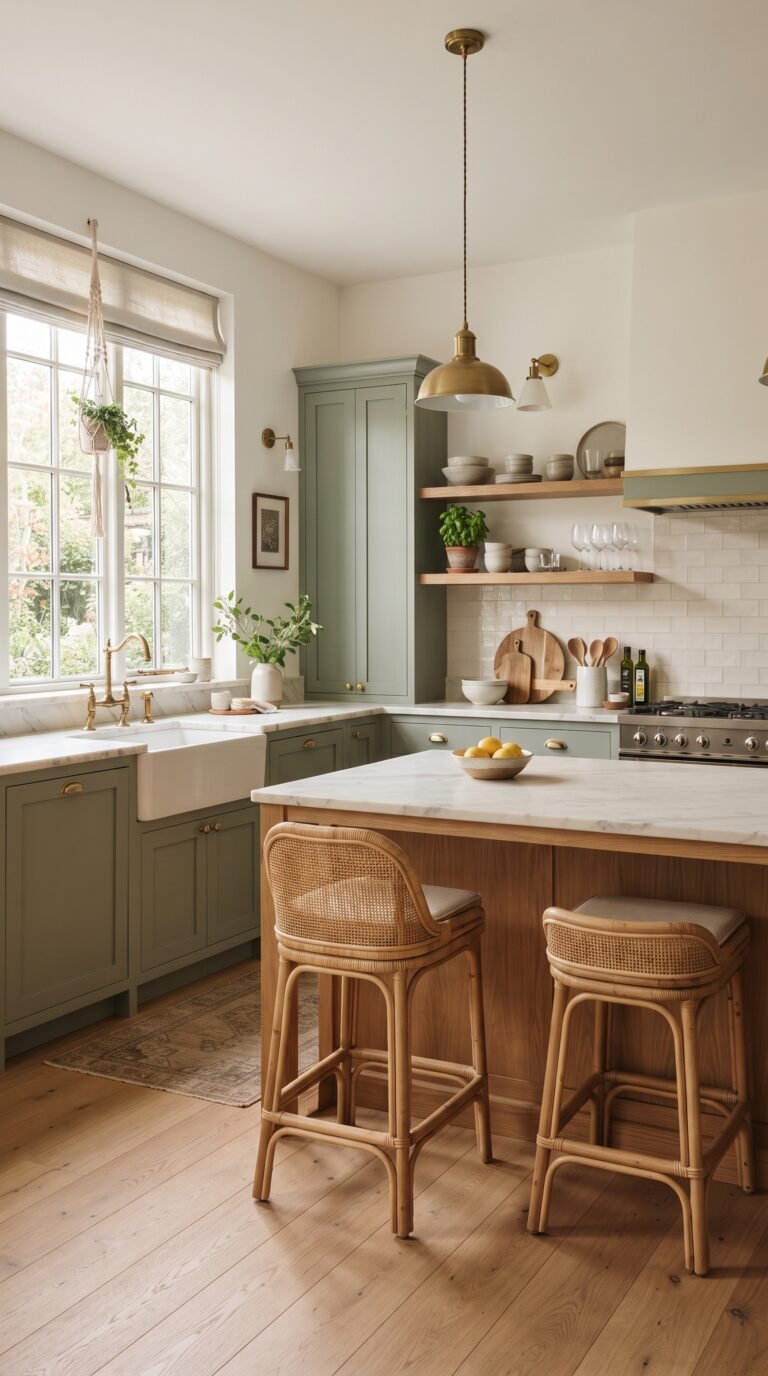
Small herbs such as basil, mint, rosemary, or thyme can look attractive while also being useful for cooking. Place them near a window where they can receive suitable natural light.
If maintaining plants is difficult, you can also use a small artificial plant or a simple vase containing dried branches.
Natural materials such as ceramic, stone, cotton, linen, and wood can also add texture without making the room feel cluttered.
Choose Simple Kitchen Accessories
Accessories should support the overall design rather than dominate it. Look for items with simple shapes and neutral colors.
For example, ceramic bowls, matte containers, wooden trays, and simple glass jars can provide decoration while remaining functional.
Instead of placing many decorative pieces around the kitchen, choose a few high-quality items that you genuinely like. This approach makes the kitchen feel intentional and sophisticated.
Create an Attractive Kitchen Island
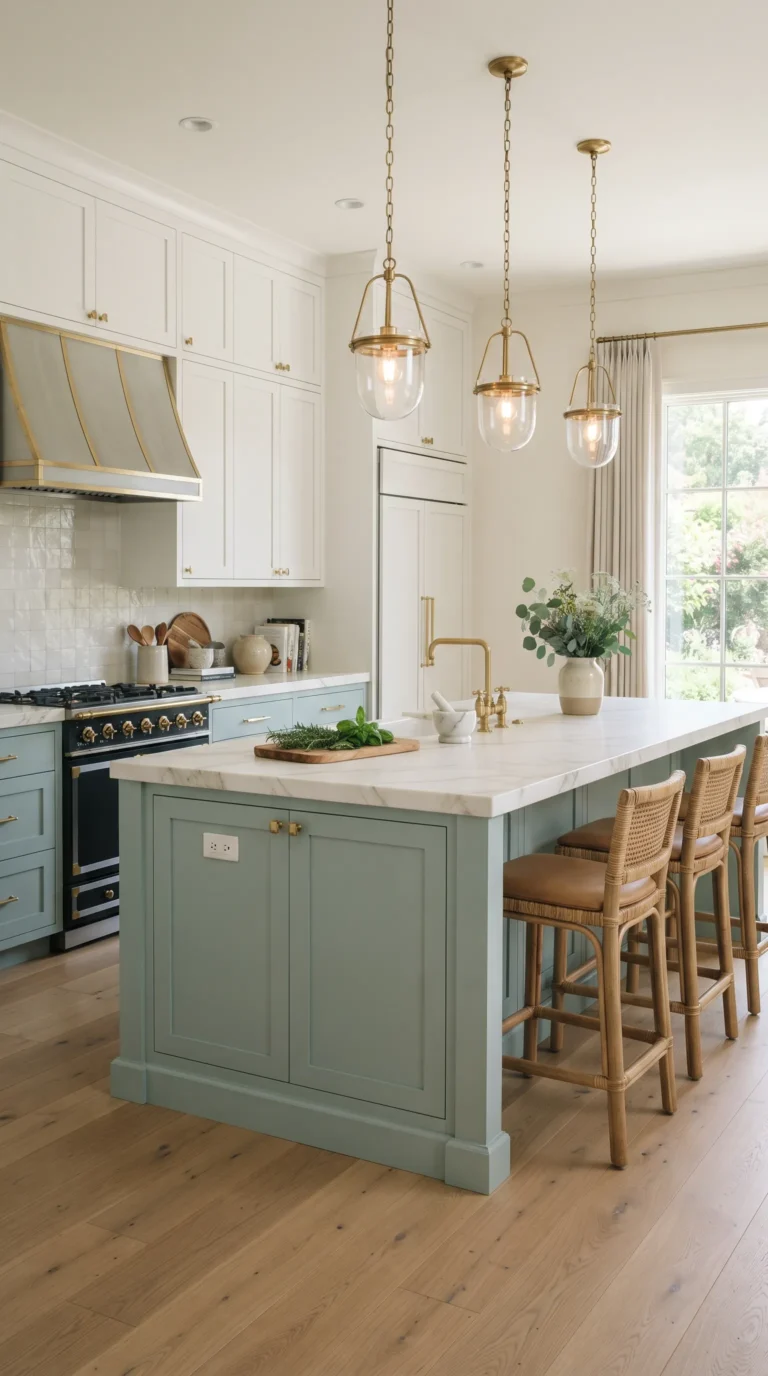
If your kitchen has enough space, a kitchen island can become the central feature of the room. A simple island with a natural wood or stone surface can provide additional workspace while also creating a social area.
You can place two or three simple stools on one side. Choose stools that match the kitchen’s overall color palette.
Avoid filling the island with unnecessary decorations. A small vase, fruit bowl, or wooden serving board may be enough.
Make the Most of Natural Light
Natural light is particularly valuable in minimalist interiors. Large windows can make the kitchen feel brighter and more spacious.
Avoid heavy curtains that block sunlight. Instead, consider light-colored curtains or simple blinds that allow natural light to enter.
If your kitchen has limited natural light, use reflective surfaces and a lighter color palette to help make the space appear brighter.
Common Mistakes to Avoid
Creating a warm minimalist kitchen does not mean simply painting everything white and removing all decorations. There are several mistakes that can make the space feel unfinished or uncomfortable.
Using Too Many Colors
A large variety of colors can reduce the calm appearance of the design. Stick to a small palette of complementary shades.
Adding Too Much Decoration
Minimalism depends on restraint. Too many decorative items can quickly make the kitchen feel crowded.
Choosing Only Cold Materials
Too much stainless steel, gray, or glossy material can make a kitchen feel cold. Balance these materials with wood, fabric, plants, or ceramic pieces.
Ignoring Storage
Even a beautiful kitchen can look messy if there is not enough storage. Plan storage carefully so everyday items can be organized efficiently.
Poor Lighting
A stylish kitchen can still feel uncomfortable if it is poorly illuminated. Combine general, task, and accent lighting whenever possible.
FAQs About Warm Minimalist Kitchens
What colors work best for a warm minimalist kitchen?
Warm neutrals such as cream, beige, soft white, taupe, and light brown work particularly well. Natural wood tones can add additional warmth.
Can a small kitchen have a warm minimalist design?
Yes. Minimalist design can be especially useful in small kitchens because reducing visual clutter can make the room appear larger. Use light colors, smart storage, and simple furniture to maximize the available space.
Is wood necessary for a warm minimalist kitchen?
Wood is not required, but it is one of the easiest ways to introduce warmth. You can also use ceramic, stone, woven materials, plants, and warm lighting to create a similar effect.
How can I make my kitchen look minimalist without remodeling?
Start by removing unnecessary countertop items and organizing cabinets. Replace mismatched accessories with a few coordinated pieces, add warm lighting, and introduce natural elements such as wood or greenery.
What type of lighting is best for a warm minimalist kitchen?
A combination of warm-white general lighting, under-cabinet lighting, and simple pendant lights works well. The exact lighting should also depend on the kitchen’s size and how much natural light it receives.
How do I decorate without making the kitchen look cluttered?
Choose functional decorations. A wooden cutting board, ceramic vase, herb pots, or attractive storage jars can provide visual interest while still serving a practical purpose.
Final Thoughts
A warm minimalist kitchen is about creating a space that feels simple without feeling empty. The combination of neutral colors, natural wood, clean countertops, soft lighting, and carefully selected accessories can create an inviting environment that works for both everyday cooking and entertaining guests.
You do not need a complete renovation to achieve this look. Start with small changes such as decluttering your countertops, introducing warm lighting, adding wooden accessories, and bringing a little greenery into the room. Once these elements come together, your kitchen can feel more organized, comfortable, and timeless.
The most important principle is to choose quality and purpose over quantity. When every element has a reason to be there, the kitchen naturally becomes calmer, more functional, and more beautiful.