Wood Islands Kitchen Island Ideas for Style and Function
Stacy and Home shares these wood island kitchen ideas to help you create a warm, stylish, practical kitchen. A wood kitchen island adds natural texture and character while providing valuable space for food preparation, storage, dining, and everyday activities. Whether you prefer light oak, rich walnut, rustic reclaimed wood, or a modern two-tone design, the right island can become your kitchen’s centerpiece.
1. Choose the Right Wood Finish for Your Kitchen Island
Try a Light Oak Kitchen Island
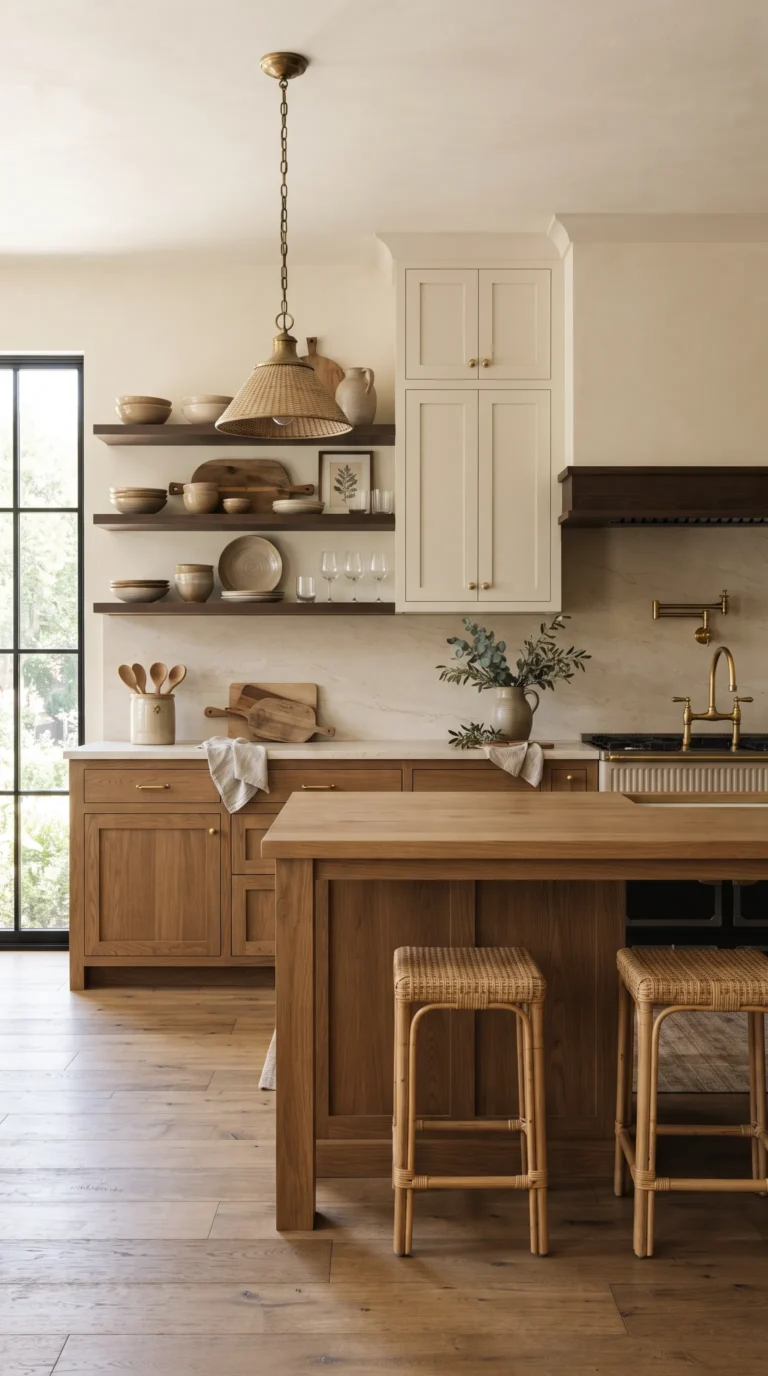
A light oak island creates a bright and natural appearance. Its subtle grain and warm undertones work beautifully with white cabinets, cream walls, and light stone countertops.
Pair the island with simple bar stools and understated hardware for a modern, relaxed look. Light oak is especially useful when you want to introduce wood without making a small kitchen feel visually heavy.
Add Rich Walnut Wood
Walnut brings depth and sophistication to a kitchen island. Its darker brown tones create a striking focal point against white cabinets, pale countertops, and light flooring.
Use brass hardware, warm pendant lights, or neutral upholstered stools to complement the rich wood grain. This combination works particularly well in contemporary, transitional, and upscale kitchens.
Choose a Rustic Reclaimed Wood Island
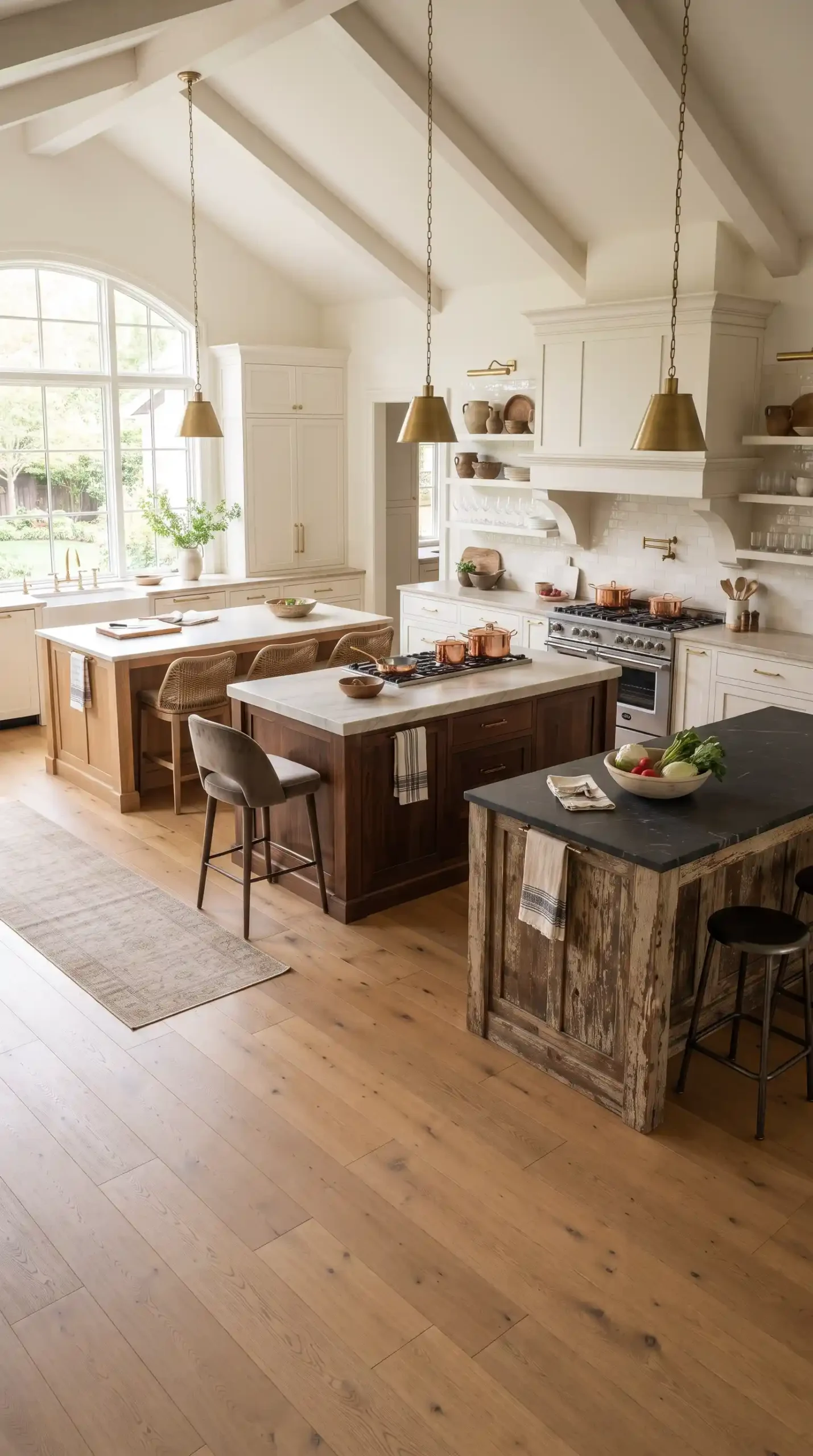
Reclaimed wood gives a kitchen island a distinctive character through its natural imperfections, varied grain, and weathered finish. It works well in farmhouse, rustic, and industrial-inspired kitchens.
Pair the wood with simple cabinets, metal hardware, and durable countertops. Keep the surrounding décor relatively restrained so the island’s natural character remains the main feature.
2. Create Contrast With Wood Kitchen Island Designs
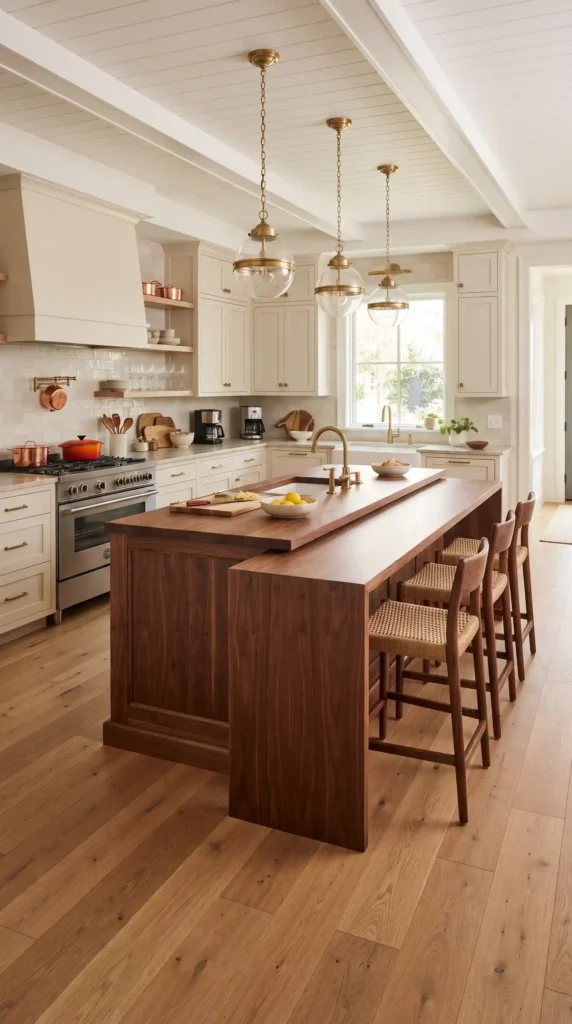
Combine White Cabinets With a Wood Island
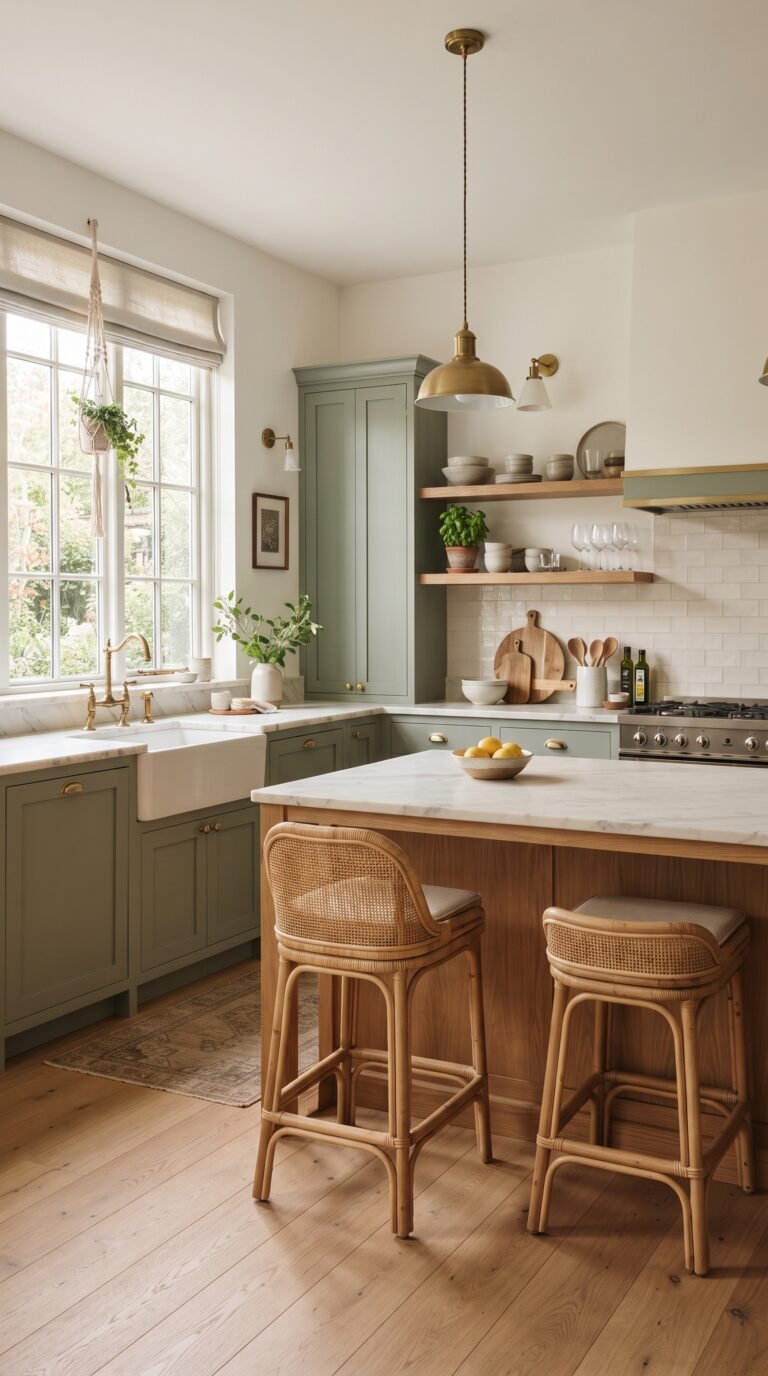
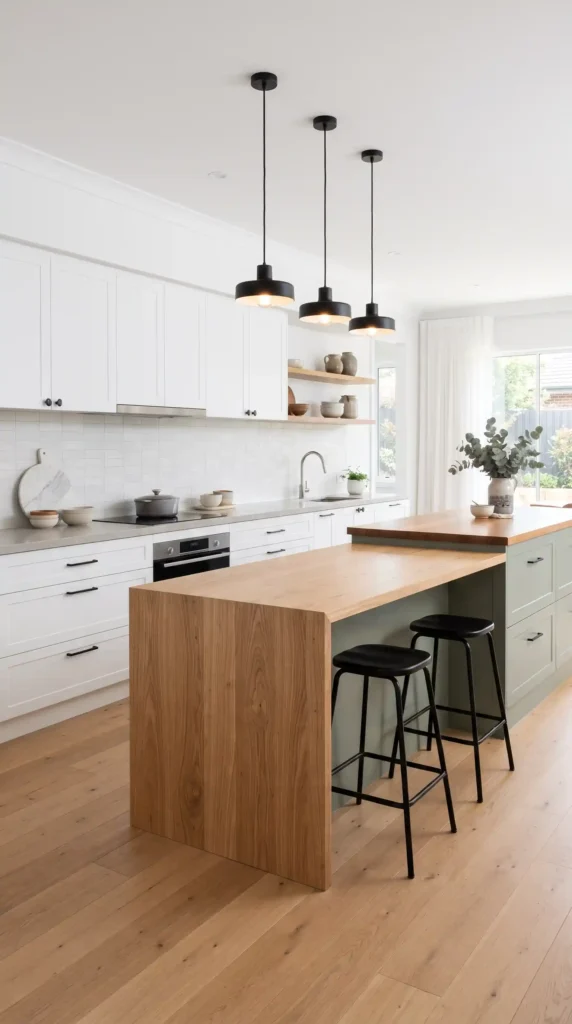
A wood island against white kitchen cabinets creates an attractive balance between warmth and brightness. The natural wood becomes a focal point without requiring bold paint colors.
Choose a wood finish that complements your flooring or dining furniture. Add simple pendant lights and neutral stools to connect the different elements.
Try a Two-Tone Wood and Painted Island
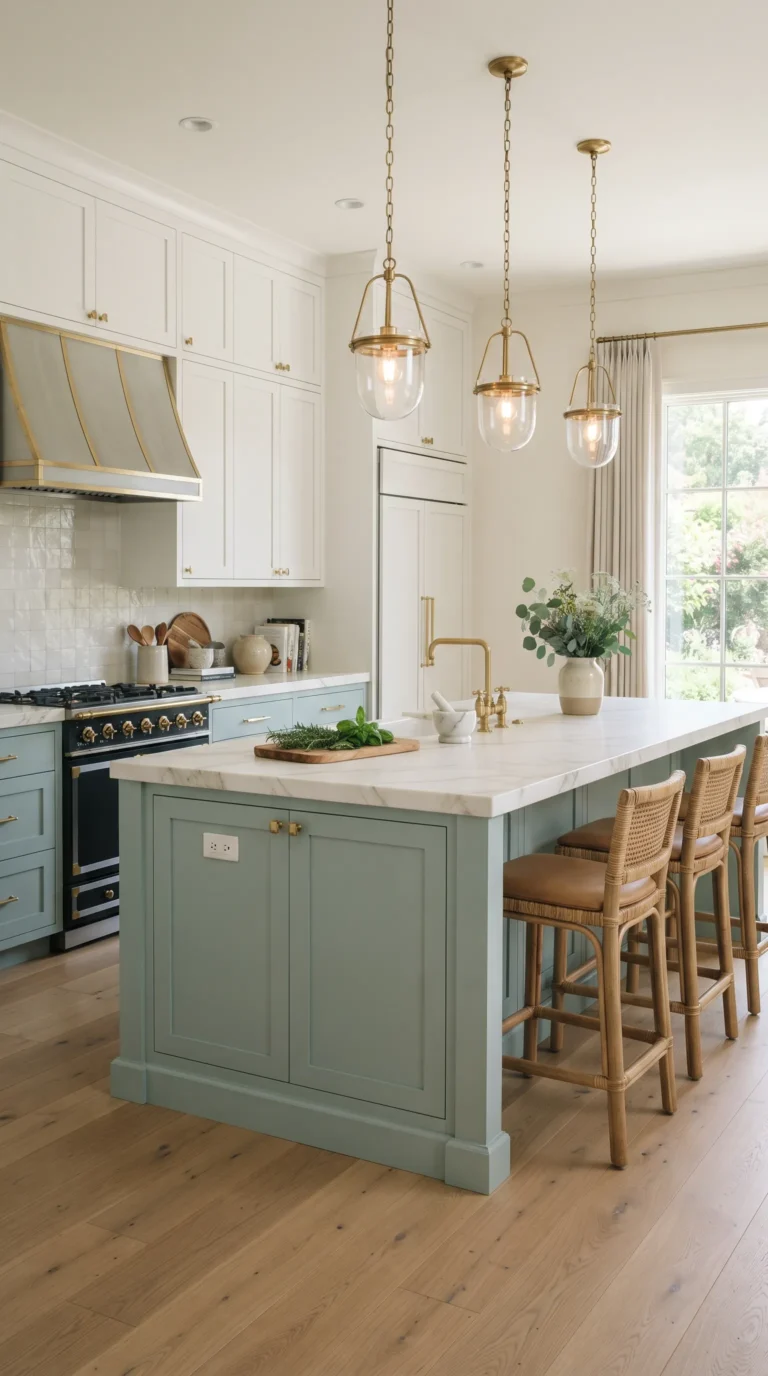
A two-tone island combines wood with a painted base or contrasting cabinetry. For example, a natural wood countertop can sit above a sage green, navy, or cream island base.
This design offers more visual interest while allowing the wood to remain part of the kitchen’s main style. Keep the colors coordinated with nearby cabinets and wall finishes.
Mix Wood With Black Accents
Black accents can make a wood kitchen island feel more modern and defined. Try black bar stools, cabinet pulls, pendant lights, or a dark faucet near the island.
Light oak and black create a crisp contemporary look, while walnut and black produce a richer, more dramatic effect. Repeat the black finish in small details elsewhere to keep the design cohesive.
3. Design a Wood Island for Seating and Everyday Function
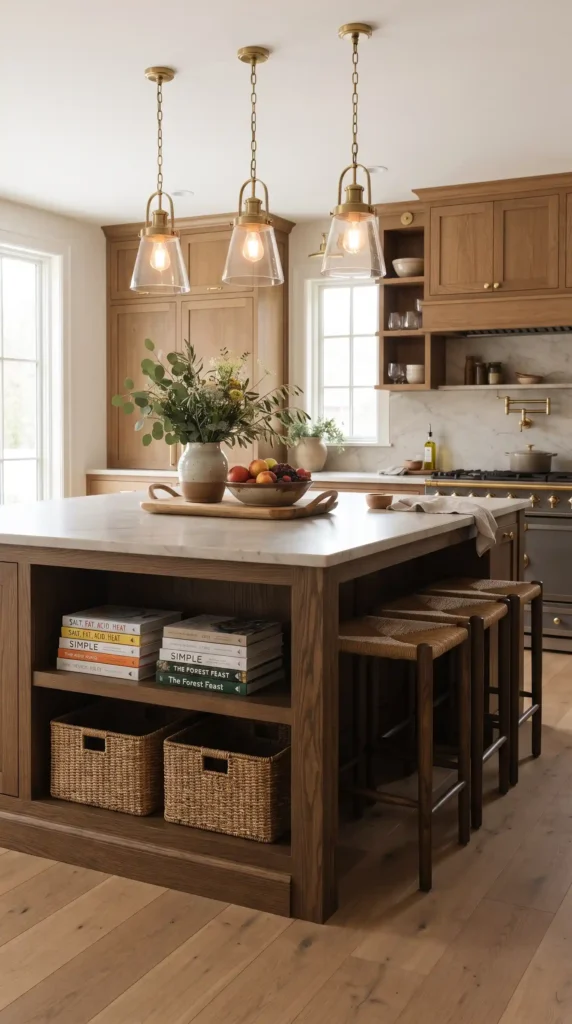
Add Comfortable Wooden Bar Stools
Wooden bar stools can complement the natural grain of the island and create a coordinated appearance. Choose stools in a similar wood tone for a unified look or use a contrasting finish for more depth.
Make sure the seating height suits the countertop and leaves enough knee space. Allow adequate room behind the stools so people can sit comfortably without blocking kitchen walkways.
Create a Waterfall Wood Island
A waterfall island extends the countertop material down one or both sides to create a continuous surface. While this look is commonly associated with stone, a carefully designed wood surface can also create a striking natural effect.
Choose a durable finish suitable for kitchen use and protect the wood from moisture. This design works best when the island has enough space to showcase its shape without crowding the room.
Add a Breakfast Bar
A wood island with a breakfast bar creates a convenient place for quick meals, coffee, homework, and casual conversation. Extend the countertop where the layout allows and position stools along the seating side.
Keep the main food preparation area separate from the seating space when possible. This makes the island more comfortable for both cooking and dining.
4. Add Stylish Materials and Details to a Wood Island
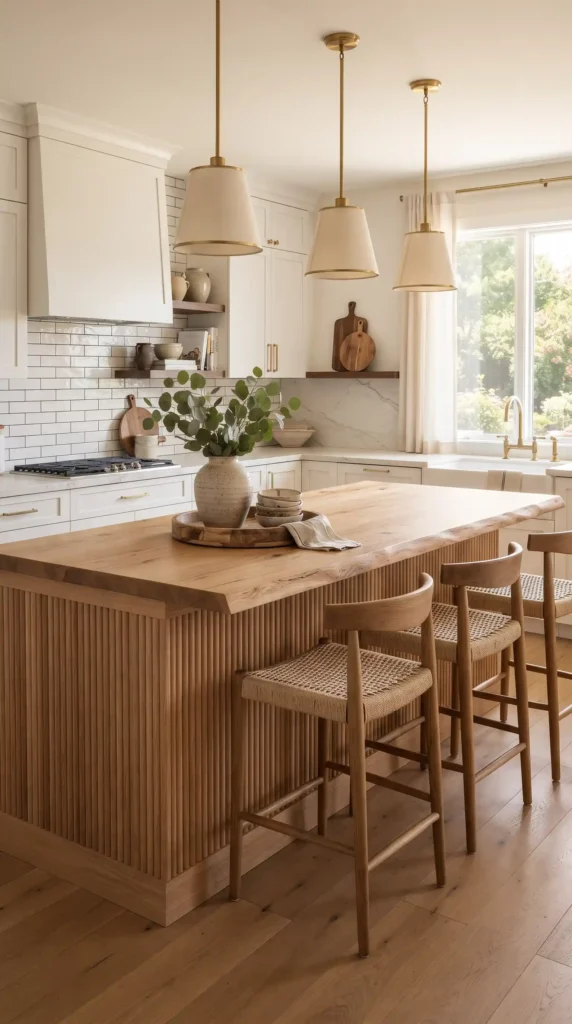
Pair Wood With a Stone Countertop
A stone countertop can create a beautiful contrast with a wooden island base. White quartz, marble-look surfaces, and other light stone finishes can brighten darker wood, while warmer stone tones complement oak and walnut.
Choose a countertop that suits your cooking habits and maintenance preferences. The combination of natural wood and stone creates a balanced mix of texture and durability.
Use Brass or Bronze Hardware
Brass and bronze hardware can enhance the warmth of a wooden kitchen island. Cabinet pulls, drawer handles, and nearby lighting fixtures in these finishes create subtle decorative details.
Brushed or aged finishes often work well with natural wood because they add character without looking overly shiny. Repeat the finish in a few other areas of the kitchen for a connected appearance.
Add Fluted Wood Panels
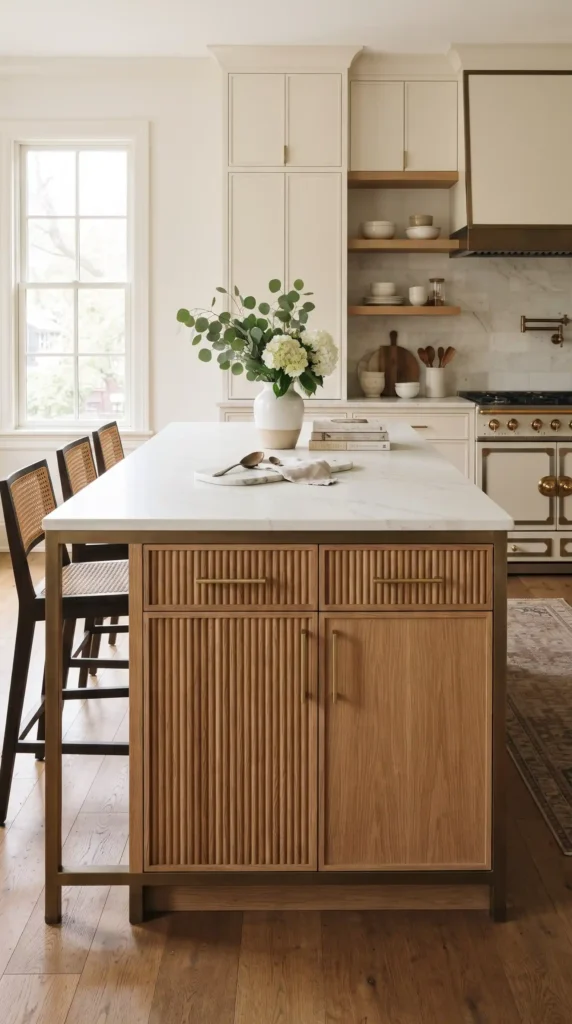
Fluted wood panels introduce vertical lines and texture to an island base. They can make a simple island look more detailed without requiring a strong color contrast.
Use natural oak for a soft contemporary look or darker wood for a more dramatic design. Keep the countertop and nearby cabinets relatively simple so the paneling remains visible.
5. Style Your Wood Kitchen Island With Lighting and Décor
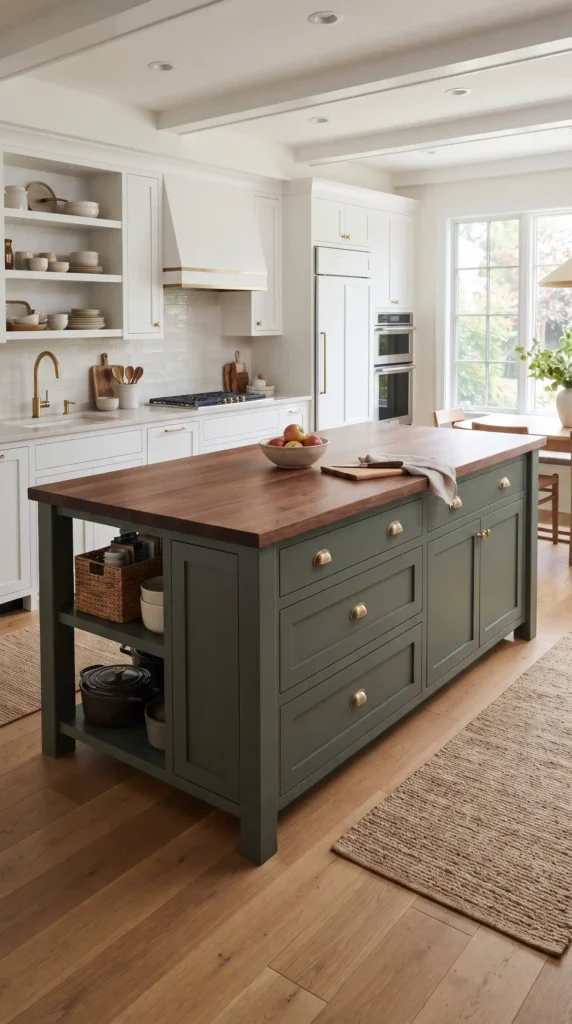
Hang Pendant Lights Above the Island
Pendant lights help define the island as a central feature of the kitchen. Choose glass, black metal, brass, or natural-material fixtures that complement the wood finish.
The number and size of pendants should suit the island’s length and the ceiling height. Position the lights to provide useful illumination without obstructing views or creating glare.
Decorate With a Wooden Serving Tray
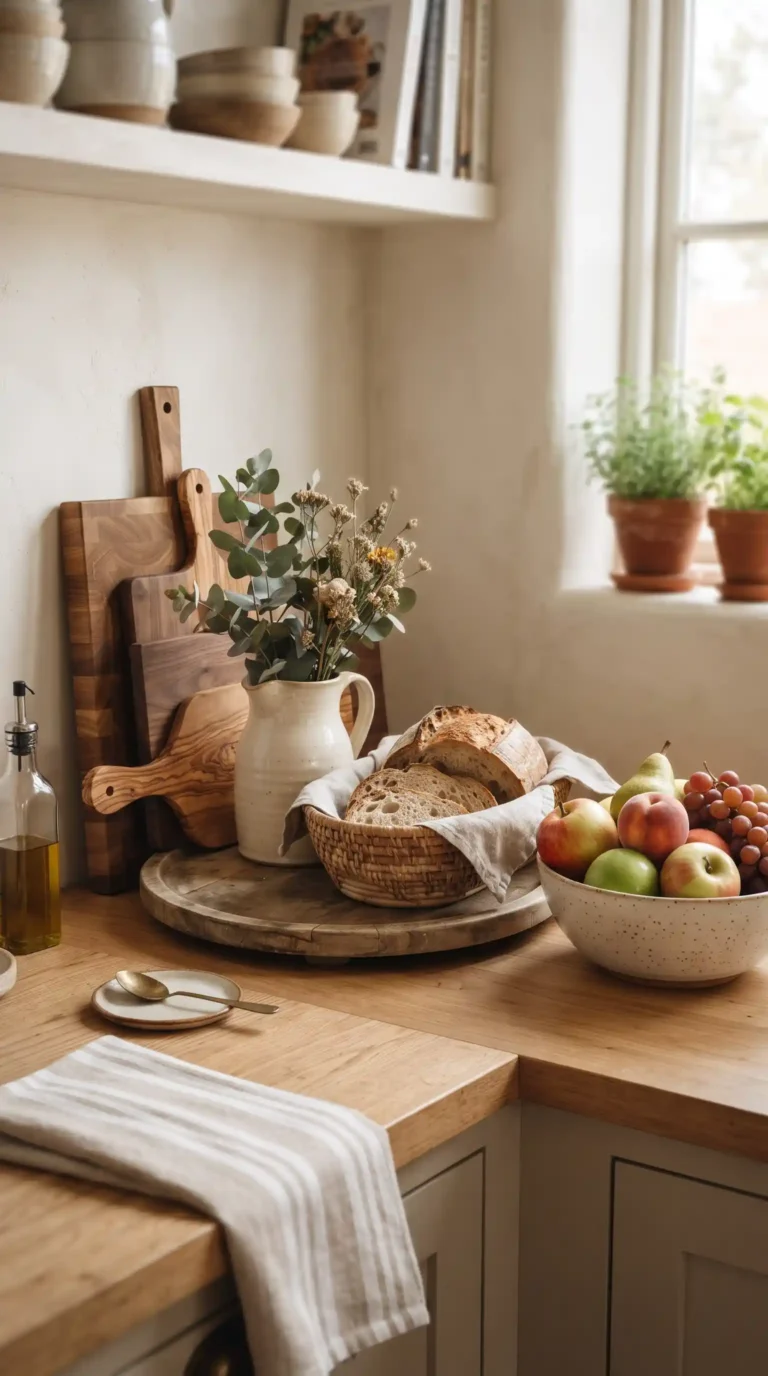
A wooden tray can organize a small group of island accessories. Add a fruit bowl, a ceramic vase, or a simple container for everyday essentials.
Choose a tray finish that complements the island without matching it too precisely. Keep the arrangement compact so the countertop remains available for cooking and serving.
Add Greenery and Natural Details
A small plant, fresh flowers, or a bowl of seasonal fruit can make a wood island feel lively. Greenery works especially well with oak, walnut, and other natural wood finishes.
Choose a stable container and keep decorative items away from the main preparation area. A simple arrangement adds color without making the island difficult to use.
Use Open Shelving for Cookbooks and Baskets
Open shelves on the side of a wood island can provide storage while showing off the material. Use them for cookbooks, woven baskets, serving bowls, or attractive everyday kitchen items.
Avoid filling every shelf. A mix of practical storage and open space keeps the island looking organized and prevents it from feeling bulky.
6. Finish Your Wood Kitchen Island With Practical Details
Choose a Durable Wood Finish
Kitchen islands experience spills, frequent cleaning, and daily contact with cookware and utensils. Choose a wood finish designed for the intended surface and follow the manufacturer’s maintenance recommendations.
Wipe up spills promptly and use appropriate cleaning products. If the countertop is made from wood, use cutting boards and heat-resistant trivets to help protect it.
Match the Island to Your Kitchen Layout
A wood island should fit comfortably within the available space. Measure the kitchen carefully and allow enough room for cabinet doors, appliances, drawers, and people to move around.
A compact island may be more practical than a large one in a smaller kitchen. Choose the size based on your actual preparation, storage, and seating needs rather than appearance alone.
Balance Wood With Other Kitchen Materials
Too much of the same wood tone can make a kitchen feel visually heavy. Balance the island with painted cabinets, light countertops, glass pendants, metal hardware, or neutral flooring.
You do not need every material to match exactly. Repeating a few related colors and finishes is usually enough to create a cohesive kitchen.
FAQs
What wood is best for a kitchen island?
Oak, walnut, maple, and other suitable hardwoods are popular choices for kitchen islands. The best option depends on the desired color, grain, durability, budget, and whether the wood is used for the island base or countertop.
What countertop looks best with a wood kitchen island?
White quartz, marble-look surfaces, natural stone, and warm neutral countertops can all complement wood. Choose a surface that works with the wood tone, cabinet colors, and your everyday cooking needs.
Are wood kitchen islands suitable for modern kitchens?
Yes. Clean-lined oak or walnut islands, simple hardware, fluted panels, and contrasting stone countertops can create a modern appearance. Keeping the surrounding cabinets and décor simple helps highlight the natural wood.
How do I decorate a wood kitchen island?
Use a small tray, fruit bowl, vase, plant, or a few attractive kitchen accessories. Keep the arrangement compact and leave enough clear space for food preparation, serving, and everyday use.
How do I maintain a wooden kitchen island?
Clean spills promptly, use suitable cleaning products, and follow the care instructions for the finish. Use cutting boards and trivets on wood countertops, and address scratches or worn finishes according to the manufacturer’s recommendations.
Final Thoughts
The best wood islands kitchen ideas combine natural beauty with everyday function. Light oak, rich walnut, reclaimed wood, fluted panels, contrasting cabinetry, and stone countertops can each create a distinctive kitchen centerpiece.
Start by choosing a wood finish that complements your cabinets and flooring, then consider seating, lighting, storage, and simple décor. With the right proportions and practical finishes, a wood kitchen island can bring warmth, character, and lasting usefulness to your kitchen.