Kids’ Room Ideas: Reading Corners for Learning and Creativity
Stacy and Home shares these reading corner kids’ room ideas to help you create a cozy space where children can read, learn, relax, and explore their creativity. A reading corner does not need to take up a large part of the room, because a small area with comfortable seating, good lighting, books, and creative décor can become a special learning zone. With the right layout and storage, you can make reading more enjoyable while keeping the kids’ room organized and inviting.
1. Create a Cozy Reading Corner in an Empty Space
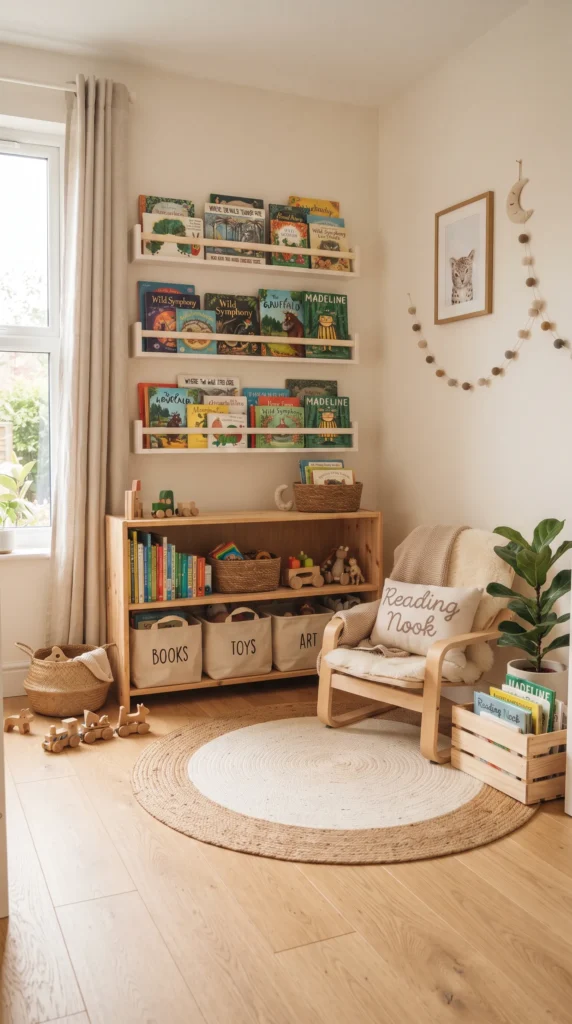
Use an Unused Corner
Stacy and Home recommends using an empty corner of the bedroom for a simple reading area. A small corner near a window, beside a wardrobe, or next to the bed can work well.
Add a comfortable chair, floor cushion, or small bean bag to create a dedicated place for reading.
Add a Soft Floor Rug
A soft rug can make the reading area warmer and more comfortable. Choose a washable rug that can handle everyday use.
A simple pattern or soft color can also help define the reading zone without making the room feel too busy.
Keep the Area Easy to Reach
Children should be able to enter and leave the reading corner easily. Avoid placing furniture where it blocks doors, drawers, or walking paths.
A simple layout makes the space safer and easier for children to use independently.
2. Add Comfortable Seating for Reading and Learning
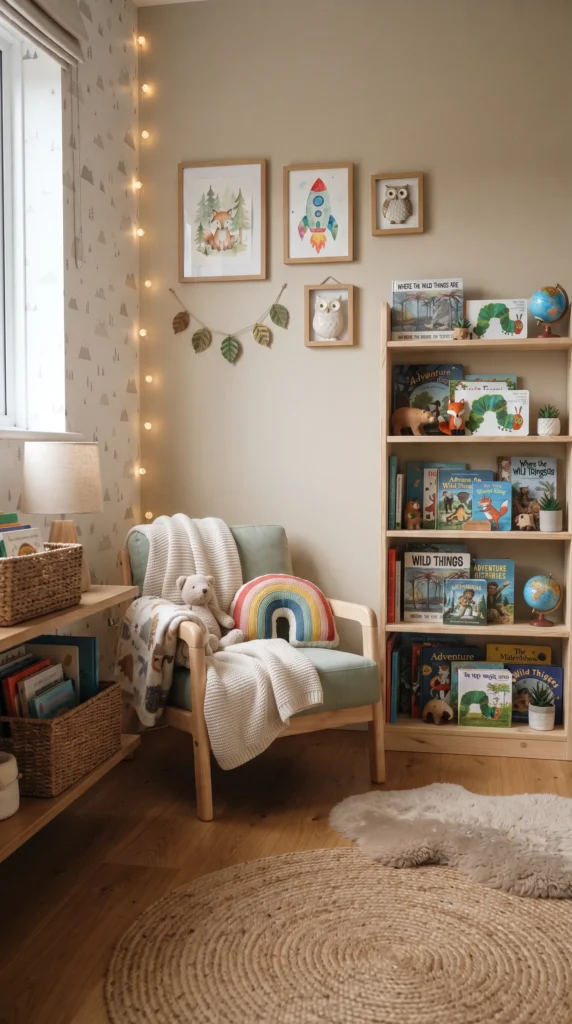
Try a Small Reading Chair
Stacy and Home suggests choosing seating that fits the child’s size and the available space. A small upholstered chair can provide a comfortable place for reading books or doing quiet activities.
Choose a durable fabric that is easy to clean.
Use Floor Cushions
Floor cushions are an affordable option for creating a relaxed reading corner. Place two or three cushions on a soft rug to create a casual learning space.
They can also be moved around when children want more floor space for play.
Consider a Small Bean Bag
A bean bag can make reading feel more fun and relaxed. Choose a supportive design that is easy to move when the space needs to be used for another activity.
3. Make Books Easy for Kids to See and Choose
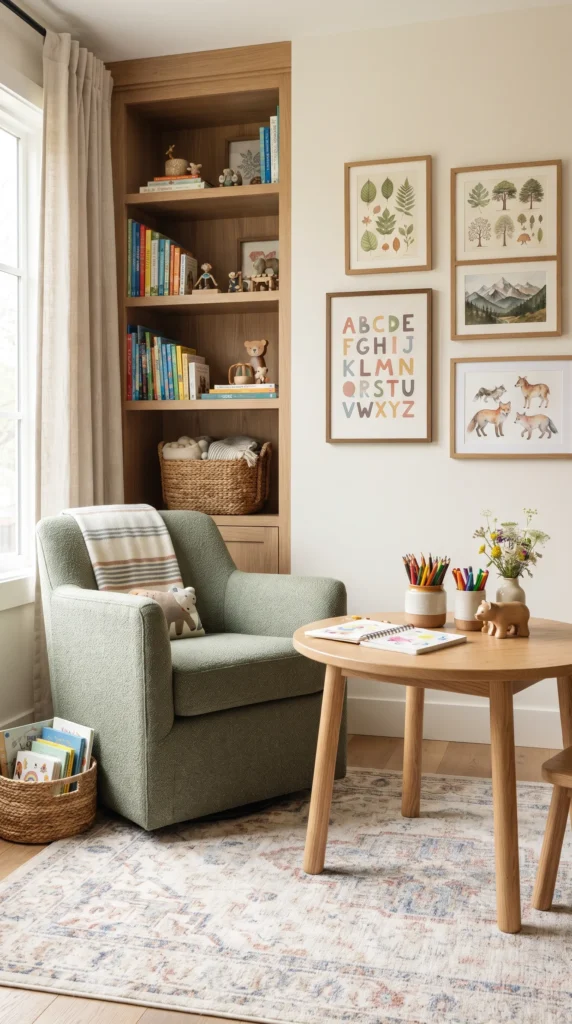
Use Front-Facing Book Storage
Stacy and Home recommends displaying some books with their covers facing forward. This makes it easier for young children to recognize books and choose what they want to read.
A low bookshelf or wall-mounted book ledge can work well.
Create a Small Book Library
You do not need hundreds of books to create an attractive reading corner. Start with a small collection of favorite stories, picture books, educational books, and activity books.
Rotate the selection occasionally to keep the reading area interesting.
Add Labeled Storage
Simple labels can help children learn where books and reading supplies belong. Use easy words or pictures for younger children.
This also makes cleaning up after reading much easier.
4. Add Lighting That Supports Reading
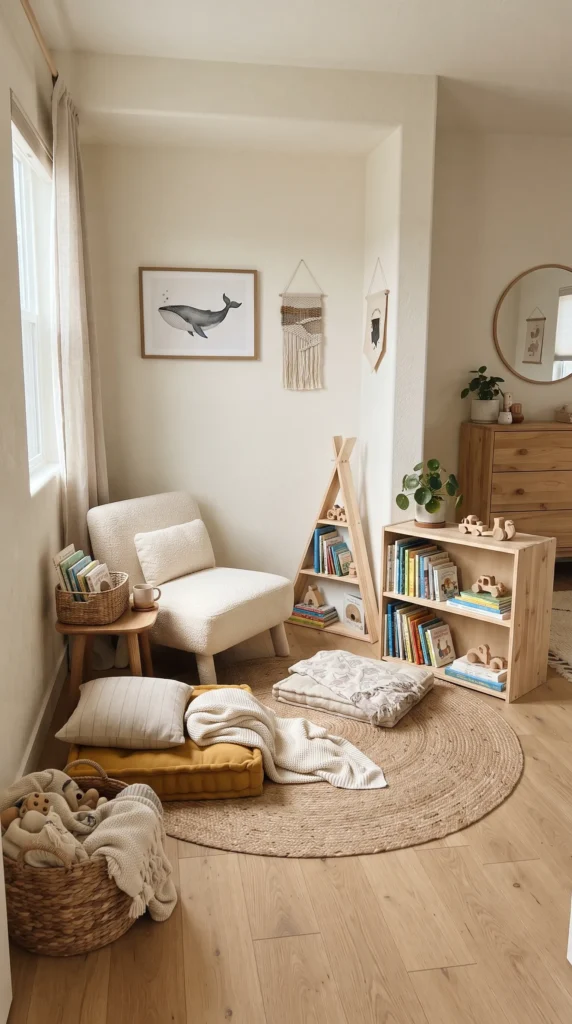
Place the Reading Corner Near a Window
Natural light can make a reading corner feel bright and welcoming. If possible, place the seating near a window where children can read comfortably during the day.
Avoid placing the chair where direct sunlight creates uncomfortable glare.
Add a Small Reading Lamp
Stacy and Home suggests adding a small floor lamp or table lamp for evening reading. Choose lighting that provides enough brightness without creating harsh shadows.
A warm and comfortable light can make the area feel more relaxing.
Use Adjustable Lighting
An adjustable lamp can be useful because children may use the area for different activities. It can provide focused light for reading, drawing, or homework.
5. Make the Reading Corner Creative and Educational
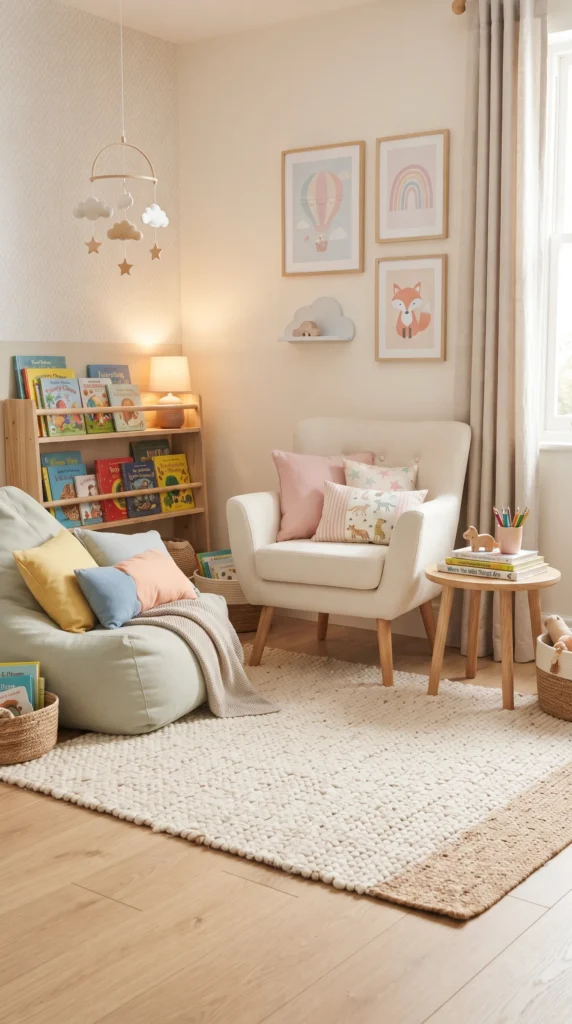
Display Educational Artwork
Stacy and Home recommends adding simple educational décor such as alphabet prints, numbers, maps, nature illustrations, or learning charts.
Choose designs that complement the room instead of covering every wall with information.
Add a Small Writing Area
If there is enough space, include a small desk or table beside the reading chair. Children can use it for drawing, writing, puzzles, or simple learning activities.
This turns the reading corner into a flexible creativity zone.
Encourage Creative Activities
Keep a small container nearby for crayons, pencils, sketchbooks, or coloring materials. Organized supplies make it easier for children to start creative activities without searching through the whole room.
6. Personalize the Reading Corner for More Inspiration
Choose a Fun Theme
Stacy and Home suggests using a theme that matches the child’s interests. Nature, animals, space, adventure, or colorful storybook themes can make the corner feel more personal.
Keep the theme flexible so it can grow with the child.
Add Personal Décor
Display a few of the child’s drawings, favorite books, or handmade crafts. These personal details can make the reading area feel special.
Avoid adding too many decorations because the corner should remain useful and comfortable.
Create a Calm Learning Atmosphere
Use soft colors, natural materials, comfortable seating, and simple storage to create a peaceful environment. A calm space can encourage children to spend more time reading and learning.
The goal is to make the reading corner feel inviting rather than like a formal classroom.
FAQs About Reading Corners Kids Room Ideas
What should I put in a kids’ reading corner?
A comfortable seat, soft rug, accessible books, good lighting, and a small amount of educational or creative décor are enough to create a useful reading corner.
How do I create a reading corner in a small kids’ room?
Use an unused corner, a wall-mounted book ledge, floor cushions, and compact furniture. Keeping the furniture small helps preserve valuable floor space.
Where should a reading corner be placed?
A quiet corner near a window is often a good choice. However, any safe area away from heavy traffic can work if it has enough light and comfortable seating.
How can I encourage my child to use the reading corner?
Keep favorite books within easy reach and make the space comfortable. Let your child choose some books, colors, artwork, or accessories to make the corner feel personal.
Can a reading corner also be used for homework?
Yes. Add a small table, suitable chair, and task lighting if space allows. The area can then support reading, drawing, writing, and other quiet learning activities.
Final Thoughts
Stacy and Home believes a good reading corner should be comfortable, practical, and inspiring. You do not need a large room or expensive furniture to create one. A soft seat, accessible books, proper lighting, and a few creative details can completely transform an unused corner.
Focus on creating a space that children can easily use and organize themselves. Add personal touches, rotate books, and keep the area flexible as their interests change.